Service, Gratitude and a Hunt to Remember
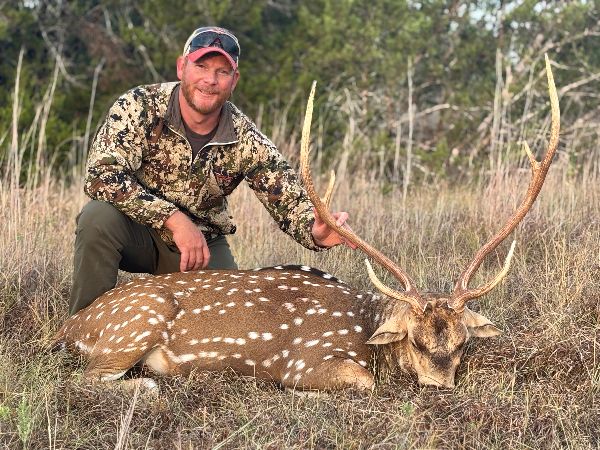
After 20 years of service in the U.S. Army, combat veteran Kyle Tripp was honored through the SCIF Combat Veterans Hunt with an unforgettable experience at Union Hill Ranch in Texas.
Recognizing and honoring the heroes who risk their lives for our freedoms has always been a core tradition at SCI Foundation. Through its Veterans Programs, SCI Foundation pays tribute to their courage and sacrifice with meaningful opportunities in the outdoors.
In 2026, Kyle Tripp, President of the Alaska Chapter and a 20-year Army combat veteran, was selected for the SCIF Combat Veterans Hunt. His award included a three-day, two-night axis deer hunt generously donated by Union Hill Ranch in Kopperl, Texas.
A Hunt I’ll Always Remember
By Kyle Tripp
My hunt began September 25, and from the start, the food, hospitality and staff at Union Hill Ranch were outstanding. Everyone made me feel welcome, and my guide, Will, did a tremendous job helping me successfully harvest my first-ever axis deer.
The axis deer proved elusive. On our final morning sit, we got within range of two good bucks, but a clear shot never developed before they spooked. With one morning left, I asked Will if we could cover some ground and try a stalk. He made it happen, getting me within 100 yards of a fine axis buck. That opportunity led to a successful harvest and a memory I will always treasure. Read more