Grouse/woodcock dashboard improves hunt for all

American woodcock

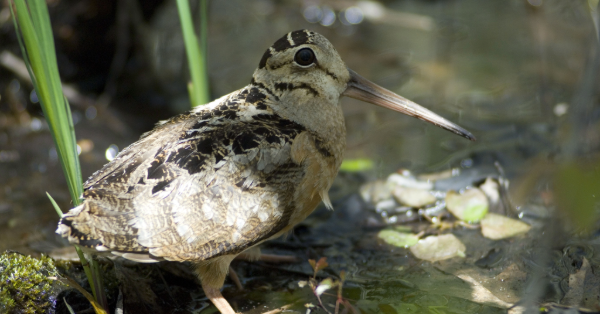
An American woodcock in the forest
As grouse and woodcock hunting ramp up in Michigan, hunters are encouraged to submit their field experiences to an online dashboard that aims to improve the hunt for everyone.

The Michigan Department of Natural Resources launched the Michigan Ruffed Grouse and Woodcock Dashboard in 2025, replacing a longtime paper survey. Hunters made more than 1,100 submissions about hunter effort and flush rates in the first year of the digital tool.

The publicly accessible dashboard provides near real-time data summaries allowing hunters to compare their hunting experiences and identify places to hunt grouse and woodcock. Hunting season for both upland birds opened Sept. 15.

“We a had a strong response in our first year of the program and hope for even more participation this year,” said Adam Bump, DNR upland game bird specialist. “The more hunters who participate, the better the information and the more useful the dashboard becomes.”

Michigan hunters have a long history of collaborating with the DNR to share information on their ruffed grouse and woodcock season experiences. Flush rates offer hunters a standard way to evaluate activity in different areas. By submitting observations, hunters can see how their experiences compare with others in their favorite counties for hunting and across Michigan.

Participation is voluntary, and the survey is designed to be quick and easy to use. Many grouse and woodcock hunters already keep track of flush rates, so reporting requires little extra effort.

How to report

  1. Open the Michigan Ruffed Grouse and Woodcock Dashboard.
  2. Select Submit a Report to begin a report.
  3. Enter hunt details: Add the date, county, hours hunted, information on use of dogs or accompanying hunters, and the number of flushes you observed for each species.
  4. Check your entries, then tap Submit.
  5. Use the dashboard to view totals by county and compare flushes per hour across Michigan. See grouse, woodcock or both species’ flush rates. Compare with hunters who use dogs, or with those who don’t. This standardized metric helps hunters compare their own experiences with those of others.

Open the dashboard ?

Season details

In 2026, ruffed grouse hunting in Michigan is open Sept. 15 – Nov. 14 and Dec. 1 – Jan. 1. Woodcock hunting is open Sept. 15 – Oct. 29. Find bag limits, hunting regulations and more in the 2026 Michigan Small Game Hunting Regulations Summary.

Historic Whitetail Verified as Largest U.S. Typical in Boone and Crockett Records

non-typical whitetail buck

MISSOULA, Mont.—(September 8, 2026) The Boone and Crockett Club announced today that the Sam Aiuppa/James Martin typical whitetail deer has officially been verified at a score of 207 7/8 inches, making it the largest typical whitetail ever taken in the United States.

The score surpasses the famous Jordan buck by 1 6/8 inches and ranks second worldwide behind Milo Hanson’s 213 5/8-inch world record.

Sam Aiuppa killed the buck in late November 1991 during a pheasant hunting trip to LaSalle County, Illinois. He mounted the antlers on a plaque and stored them in his basement, where they remained for 32 years until an electrician noticed their extraordinary dimensions, most notably eye-guards more than a foot long.

Antler collector James Martin later acquired the antlers and had them measured by a Boone and Crockett Club Official Measurer. After the initial score was submitted, the antlers were independently re-measured by two additional Official Measurers to verify the score. The completed score charts were reviewed by Dr. Jon McRoberts, chairman of the Club’s Records of North American Big Game Committee, who confirmed the official score of 207 7/8 inches.

“This is a monumental addition to North American big game records,” said Kyle Lehr, Boone and Crockett Club director of Big Game Records. “We are thrilled to officially welcome the Aiuppa buck into the Boone and Crockett records. It took more than three decades for this remarkable deer to be recognized, but its place in the record books is well deserved.”

Thanks to a generous donation from a long-time Boone and Crockett Club Lifetime Associate and conservation benefactor, the Club waived its $40 entry fee starting January 1, 2026. This gift removes a key financial barrier to submission, encouraging broader participation and expanding records data to support the science-based management of North American wildlife.

For more details on the buck’s history, read “Lost For 30 Years: The New #2 Typical Whitetail and Illinois State Record.”

The Importance of Records in Big Game Management

When you enter your trophy into the Boone and Crockett system, you aren’t just honoring the animal and its habitat. You are participating in a data collection system that started in the 1920s and was refined by Club members in 1950. Read more

Bass Pro Shops and Cabela’s Outdoor Fund Continues Investment in Wild Sheep Conservation

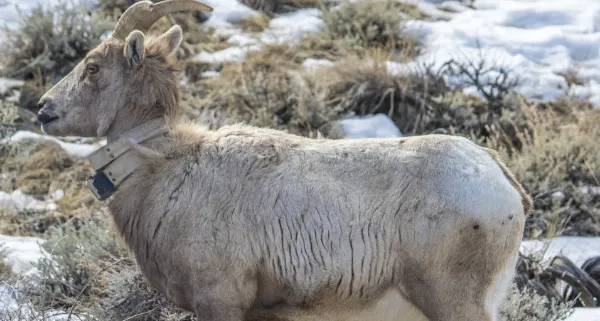
The Wild Sheep Foundation (WSF) is proud to announce a $150,000 grant from the Bass Pro Shops and Cabela’s Outdoor Fund in support of WSF’s Grant-In-Aid Program for fiscal year 2026–27.

For the past eight years, the Bass Pro Shops and Cabela’s Outdoor Fund has been a steadfast partner in WSF’s mission to Put and Keep Wild Sheep on the Mountain®, contributing a total of $926,000 to advance critical conservation initiatives throughout North America.

“The Bass Pro Shops and Cabela’s Outdoor Fund has been one of the most impactful conservation funding partners the Wild Sheep Foundation has ever had,” said Gray N. Thornton, president and CEO of the Wild Sheep Foundation. “Their commitment over the past eight years has helped us address some of the most pressing challenges facing wild sheep while creating lasting conservation benefits across the continent. Their investment is making a measurable difference today and will continue to do so for generations to come.” Read more

2026 Hunting Forecast: Southeast Montana Big Game Forecast (Region 7)

MILES CITY – Habitat conditions in much of southeastern Montana are considerably better than a couple years ago, when the landscape was severely impacted by drought. However, there was very little snow this past winter, which resulted in low winter mortality for many wildlife species but conversely results in very little moisture going into the spring. Much of the region received early summer rainfall this year, which improved habitat conditions across much of the region. But July was extremely hot and dry, which has deteriorated habitat conditions.

Elk

The two core elk populations in the region remain in hunting district (HD) 700 and the Southeastern Montana Elk Management Unit (HDs 702, 704, 705). Access remains challenging, especially in HD 702, where most of the elk occur on private land. Outside of these areas (in HDs 701 and 703), elk numbers are generally low, but numbers have been increasing at a moderate rate, accompanied by a gradual expansion of elk into previously unoccupied habitat.

FWP biologists have observed strong elk numbers and calf recruitment in the Southeastern Montana Elk Management Unit and the bull:cow ratio is at objective (30:-45) as well. In HD 700 the total amount of elk observed during recent surveys decreased and there was a dip in the calf recruitment, too. In HD 700, both the ratio of 25 bulls:100 cows and total observed elk are below objective.

Elk hunters should get familiar with the regulations as they vary across HDs within the region.

Mule deer

Mule deer numbers improved by 15 percent from 2025 and are currently approximately 17 percent below the long-term average across Region 7. The region-wide adult:fawn ratio was 55 fawns per 100 adults, indicating favorable recruitment. Limited winter snowfall resulted in relatively low winter mortality, although the lack of snowpack provided little moisture going into spring. Warm and dry spring conditions limited early-season forage, but early-summer rainfall substantially improved forage conditions across much of the region during the fawning period. Extremely hot and dry conditions in July reduced these benefits and caused forage conditions to decline through the latter part of the summer. Overall, favorable winter survival, improved forage conditions during the fawning period and good recruitment contributed to continued improvement in mule deer numbers across the region. While overall mule deer numbers remain below the long-term average in Region 7, some areas are showing continued signs of recovery.

Antlerless mule deer license quotas remained unchanged from 2025, however hunters are strongly encouraged to review all current regulations prior to hunting this season.

White-tailed deer Read more

2026 Michigan deer hunting preview

Deer seasons are getting underway in Michigan, and whether you hunt the Upper Peninsula, northern Lower Peninsula or southern Lower Peninsula, conditions can look very different from one part of the state to another.

Department of Natural Resources deer staffers have pulled together the latest information on deer populations and habitat conditions across the state, along with important things hunters should know this year. The preview includes:

  • What last winter and this year’s weather and food conditions could mean for deer and hunting this fall.
  • Regional observations on fawn recruitment, antler development and deer numbers.
  • Important 2026 regulation changes, including changes to antlerless hunting opportunities and December firearm seasons.
  • Chronic wasting disease and bovine tuberculosis testing information.
  • Resources to help you find a place to hunt and plan your season.

Conditions and hunting opportunities vary considerably across Michigan, so check out the information for the part of the state where you hunt.

Deer hunting preview ?

New MiHunt map is live in time for fall hunting seasons

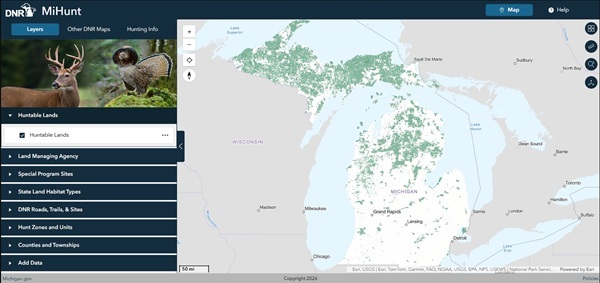
screenshot showing map of huntable lands in MiHuntSept. 10, 2026
Contact: Eric Hilliard, 517-281-5607

GW:  If you are a Michigan outdoors person, this interactive mapping can be very helpful.

Build-your-own approach puts hunters in control of what shows up on the map

Michigan hunters planning a fall trip have a rebuilt tool to work with. The Michigan Department of Natural Resources has launched a new version of MiHunt, the state’s interactive map of lands open to public hunting, available at Michigan.gov/MiHunt.

The map is live just in time for the fall hunting seasons.

“We wanted hunters to build their own adventure rather than be handed a finished one,” said Sarah Mayhew, a data specialist for the DNR Wildlife Division. “The map opens with lands open to public hunting and nothing else. Everything beyond that is up to you.”

This approach does more than clean up the mapping process. Because hunters turn on each layer themselves, they know exactly what they are looking at and why it is there. Nothing appears on the map that the hunter did not ask for.

Some layers hunters can switch on include:

  • Species management unit boundaries.
  • Cover type layers showing forest makeup.
  • Land management agencies.
  • Special hunting areas, including Hunting Access Program properties, Turkey Tracts and Grouse Enhanced Management Sites.

Hunters can also bring their own information to the map. MiHunt now accepts imported spatial data, so a hunter can add a property boundary, a set of waypoints or last season’s tracks and view it alongside DNR-provided layers. Imported data is visible only to the person who adds it. Read more

Historic Whitetail Verified as Largest U.S. Typical Buck in Boone and Crockett Records

Courtesy of the Boone and Crockett Club.

MISSOULA, Mont. — The Boone and Crockett Club announced today that the Sam Aiuppa/James Martin typical whitetail deer has officially been verified at a score of 207 7/8 inches, making it the largest typical whitetail ever taken in the United States.

The score surpasses the famous Jordan buck by 1 6/8 inches and ranks second worldwide behind Milo Hanson’s 213 5/8-inch world record.

Sam Aiuppa killed the buck in late November 1991 during a pheasant hunting trip to LaSalle County, Illinois. He mounted the antlers on a plaque and stored them in his basement, where they remained for 32 years until an electrician noticed their extraordinary dimensions, most notably eye-guards more than a foot long.

Antler collector James Martin later acquired the antlers and had them measured by a Boone and Crockett Club Official Measurer. After the initial score was submitted, the antlers were independently re-measured by two additional official measurers to verify the score. The completed score charts were reviewed by Dr. Jon McRoberts, chairman of the Club’s Records of North American Big Game Committee, who confirmed the official score of 207 7/8 inches.

“This is a monumental addition to North American big game records,” said Kyle Lehr, Boone and Crockett Club director of Big Game Records. “We are thrilled to officially welcome the Aiuppa buck into the Boone and Crockett records. It took more than three decades for this remarkable deer to be recognized, but its place in the record books is well deserved.” Read more

Northeast Montana Big Game Forecast (Region 6)

Several years of extreme drought and the long winter in 2022-23 reduced deer and elk populations in most areas of northeast Montana. FWP adjusted license quotas in many districts as needed, and many districts are at their lowest quota level for antlerless mule deer and elk.

The last three winters were mild, however, and more precipitation has improved habitat conditions in much of the region, resulting in improving trends for most big game populations.

Elk

Surveys conducted in 2026 in the Missouri River Breaks showed elk numbers about 22 percent lower than the last survey in 2024 and 65 percent below long-term averages. In reaction to decreasing elk populations in recent years, biologists have reduced antlerless (cow) licenses by 550 licenses (69 percent) in hunting districts (HD) 620, 621 and 622, and removed the late elk should season starting in 2024. Beyond these adjustments, licenses for archery elk were reduced from 1,500 to 1,000 in HD 620-621-622 and from 200 to 100 in HD 630. For hunters that have drawn one of these limited licenses or permits, you may see fewer elk but also fewer elk hunters.

In the Bears Paw area, which was last surveyed in 2025, elk remain within population objectives. The number of antlerless elk licenses was increased from 300 to 450. There is an opportunity to hunt antlerless elk during the general season with a general license in HD 690.

Mule deer Read more

2026 Hunting Forecast: South-central Montana Big Game Forecast (Region 5)

BILLINGS – Above-average summer temperatures and below-average precipitation across most of the region have resulted in reduced forage for wildlife going into late summer. However, following a mild winter, mule deer fawn recruitment improved in some south-central Montana hunting districts.

Elk

Elk are abundant in Region 5. Surveys this year again showed stable to slightly increasing herd sizes. The majority of elk are observed on private land where gaining hunting access may be difficult.

Mule deer

Mule deer numbers in central and eastern parts of Region 5 are near or above long-term average. Mule deer numbers on trend areas in the remainder of the region range from 30 percent to more than 60 percent below long-term averages. Over the past couple years, mule deer numbers appear to be mostly stable. Some districts showed higher fawn recruitment this spring than has been observed for several years. The mule deer population has shown some improvement, but most districts are still well below the long-term average. For the region overall, mule deer buck harvest is 40 percent below long-term average and has been relatively stable for the past four years. The average age of harvested mule deer bucks remains near 3.5 years old.

White-tailed deer

White-tailed deer numbers across the region have improved slightly, however, many areas continue to have counts below the long-term average.

Pronghorn Read more

2026 Hunting Forecast: North-central Montana Big Game Forecast (Region 4)

GREAT FALLS – Big game species across most of FWP’s Region 4 came out of the 2025–26 winter in good condition, with strong overwinter survival rates for not only adults but also the fawns and calves born in 2025. During the winter and spring much of the region experienced a continuance of the moderate to severe drought that reduced habitat quality, but timely and abundant rainfall in late spring and early summer rapidly and significantly improved forage and overall habitat conditions. As a result, elk, deer and pronghorn are entering the critical fall and winter period of 2026 in very good body condition for the first time in the past several years. This turnaround gives wildlife managers optimism, and barring a particularly harsh winter, they anticipate strong fawn and calf production next year – setting the stage for improved hunter success and big game populations in the seasons ahead.

Access in Region 4 consists of large areas of state and federal land that provide big game hunting opportunities that are open to everyone, although hunters who are willing to hike away from roads and access points and concentrate on less accessible terrain generally have better chances of locating animals. Region 4 also has well over a million acres of private land enrolled in the state’s Block Management Program, which allows public access to private land. Other private lands may also offer some hunting access, especially to hunters willing to harvest antlerless animals. As always, hunters should contact landowners well in advance of the season to secure hunting permission.

Elk

Elk numbers in Region 4 are very strong and generally meet or exceed population objectives in all districts, but the distribution of elk on the landscape varies widely. Many elk concentrate in large numbers on private lands which offer limited or no public access, while nearby public lands may hold relatively few animals.

Access to private-land elk hunting in Region 4 varies considerably, both among districts and among individual landowners. Some landowners allow hunting only for antlerless elk, while others permit either-sex harvest. Opportunities to hunt bulls differs widely depending upon the district, and in many districts, hunters with a general elk license may pursue bulls. But in several districts, especially island mountain ranges, the Missouri River Breaks and certain state-owned wildlife management areas bull hunting is limited to hunters who drew a limited entry permit.

Several hunting districts in Region 4 have shoulder seasons, which offer hunting for antlerless elk outside of the general archery and rifle seasons. Hunters should read their regulations carefully before hunting, and consider taking advantage of these special opportunities to harvest antlerless elk.

Mule Deer Read more

1 2 3 413