Officials express gratitude for advocates’ support for Michigan’s conservation heritage
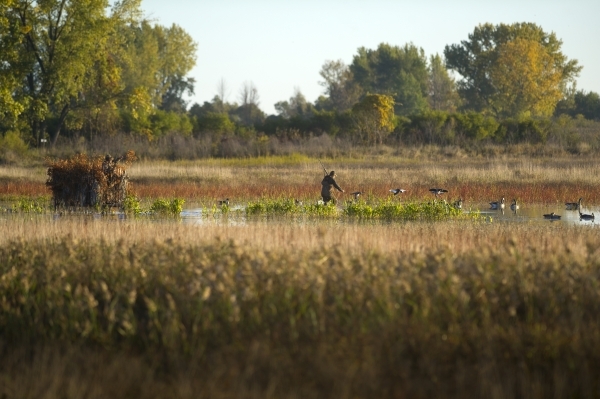
Waterfowl hunting advocates raised $80,000 in recent days to fund operations at four Michigan Department of Natural Resources managed waterfowl areas this fall.
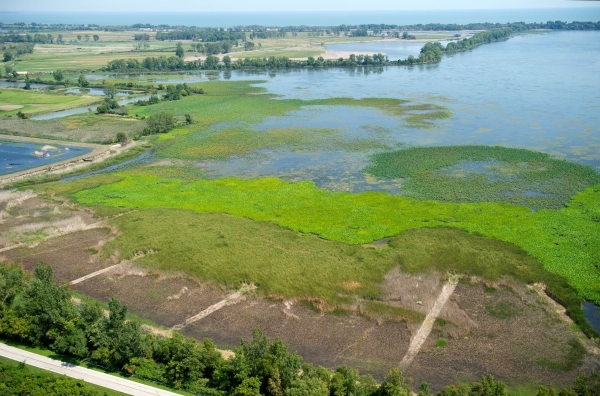
The DNR announced July 30 that budget constraints would mean fewer daily draw opportunities for hunters during the 2026 waterfowl seasons. However, the private fundraising efforts have provided a temporary, one-time solution, allowing the following premier state game and wildlife areas to restore operations to two draws per day, seven days per week for this fall only:
Fish Point in Tuscola County
Nayanquing Point in Bay County
Shiawassee River in Saginaw County
Harsens Island Unit at St. Clair Flats in St. Clair County
Donations will fund two part-time staff at each of the four impacted managed waterfowl areas, from two weeks prior to the waterfowl opener through Thanksgiving weekend.
Kyle Green of The Green Way Outdoors organized the fundraising campaign. Donations include $20,000 from Shiawassee Flats Citizens and Hunters Association, $20,000 from St. Clair Flats Waterfowlers and Harsens Island Waterfowl Hunters Association, $20,000 from Ducks Unlimited, $10,000 from Michigan Duck Hunters Association and $10,000 from Delta Waterfowl.
Shannon Lott, DNR deputy director, expressed appreciation for the leadership shown by State Representatives Ken Borton and David Martin in bringing the DNR and its partners together to discuss the issue.
“We also want to thank the hunters and conservationists who quickly mobilized to raise the money needed to offer twice-daily draw opportunities at managed waterfowl areas this fall,” Lott said. “Waterfowl hunters are showing us that they understand the assignment, and we appreciate their continued engagement in the task of finding a longer-term solution to funding conservation in Michigan.”
Decreasing revenues, increasing costs from inflation and years of deferred maintenance on critical infrastructure had left the DNR with insufficient staffing for the upcoming fall hunting seasons.
Lott points to a triple challenge facing the DNR budget: flat or declining license sales revenue, steadily increasing costs due to inflation, and increased and higher cost emergency repairs.
This has resulted in the DNR Wildlife Division restricting hiring, eliminating positions, scaling back routine maintenance, and postponing critical repairs to dams, wetland infrastructure and buildings that directly support hunting access and habitat quality.
The DNR Wildlife Division has lost $12.5 million in annual purchasing power over the past seven years — equal to 21% of the division’s total budget. Rising costs have forced a 40% reduction in other areas of the budget, such as infrastructure maintenance and staff to do the work. Minimal funding increases have been offset by inflation, showing up in the cost of gravel, fuel, electricity, seed and other core expenses.
“The solution we’ve arrived at for this waterfowl season is a one-time fix and does not solve our root problem,” Lott said. “We have made steep cuts in other areas to keep the managed waterfowl areas operating at 100% in recent years because of the deep commitment that waterfowl hunting communities continue to demonstrate. We’re grateful for their continued partnership in the face of unprecedented challenges to conservation funding.”
Managing Michigan’s public lands for wildlife
The DNR managed waterfowl areas account for about 32,000 acres of Michigan’s public lands managed for wildlife. They are part of 450,000 acres of public land spanning more than 100 state game and wildlife areas that the Wildlife Division manages. In addition, the division co-manages 4 million acres of state forest land, about 600,000 acres of which are purchased with “hunter dollars,” giving the division specific legal responsibilities to preserve these areas for wildlife habitat.Several challenges affect management goals:
Staffing: The division currently has approximately 160 full-time employees and 20 funded full-time vacancies; the vacancies include several key technician and biologist roles for managed waterfowl areas.
Costs: The division spends at least $12 million annually on land management statewide. Managed waterfowl areas’ estimated operating costs range from $400,000 to $1 million each, including costs for staff, materials like seed, gravel and fertilizer, equipment repairs and replacement, and infrastructure improvements and repairs.
Backlog: Beyond managed waterfowl areas, state game area and wildlife infrastructure has deferred maintenance needs of at least $75 million.
Lott said that although annual operating costs for state game and wildlife areas vary widely, the DNR’s managed waterfowl areas are some of the department’s most intensively managed wildlife-administered public lands. The areas include hundreds of miles of earthen levees, dozens of large pumps, culverts, bridges, boat launches and thousands of acres of cultivated land.“We are incredibly grateful for our partners who are making it possible to sustain full operations at managed waterfowl areas this year, but at the same time we’re staying focused on solving our big-picture issues,” Lott said. “Continued insufficient wildlife management appropriations for operations, inflation-related cost increases, statewide staffing shortages and years of deferred infrastructure maintenance are preventing the DNR from sustaining the services hunters and conservationists expect and that future generations deserve.”