Eggs today, trout and salmon tomorrow: Fall and winter egg collections wrapping up at DNR facilities

In all, fisheries staff collected more than 16 million trout and salmon eggs this season

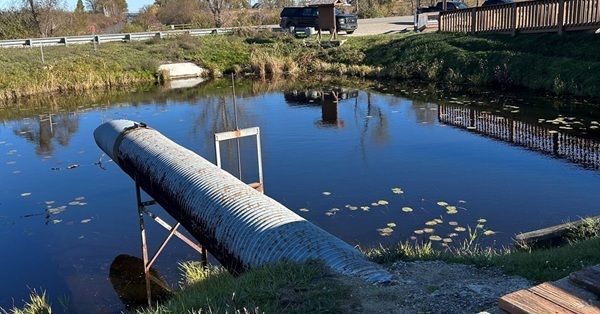
Coho salmon eggs were collected at the Platte River State Fish Hatchery Weir from Oct. 16 to Oct. 28.The Department of Natural Resources stocks fish in Michigan waters every year, providing fishing opportunities and helping maintain healthy ecosystems. Where do the fish being stocked come from? It begins with collecting fish eggs, and the DNR has been working hard this fall gathering the necessary eggs to produce fish for stocking. Fall egg collections have been completed for wild Chinook and coho salmon and for captive broodstocks of brown, brook and lake trout. Egg collection for rainbow trout will soon begin.

Chinook salmon eggs were collected Sept. 29 through Oct. 8 at the Little Manistee River Weir. Eggs and milt (sperm) are gathered from fish during the annual salmon run. At the weir, salmon swim up a fish ladder and into holding ponds. From there, fish are brought into the facility, where eggs and milt are collected and the eggs are fertilized. Read more

Hunt Monkey: Best Gloves and Gear for Extreme Cold Hunting

When winter fully settles in and the woods turn cold and unforgiving, maximum protection is the priority. This is especially true at the higher elevations of the mountainous west but hunters in the east and south can also face brutal cold in pursuit of their quarry. That’s when you need the best cold-weather systems in the game for your head, hands and feet: Hunt Monkey.

Start with your hands. Any hunter knows that having frozen fingers isn’t just uncomfortable but also dangerous. The Heater Hunting Glove is built for those brutal late-season deer hunts, delivering unmatched insulation, wind protection and stealth. Engineered for long sits in the stand, it features a 220-gram Polar Fleece exterior, Sherpa Fleece lining, and 100 grams of Thinsulate insulation for maximum thermal retention without bulk. The flip-top mitten design with magnetic stays allows quick, silent access to your fingers, while built-in glove fingers and a fixed thumb offer dexterity for gear and firearm control. It’s available in Mossy Oak Original Bottomland and Terra Gila camouflage to hide hand motion in the field. This is the ultimate glove for cold-weather concealment and performance. Read more

Ports of Grand Haven, Muskegon and Whitehall/Montague under single-pointed hook regulations Nov. 1–30

Nov. 12, 2025

One single-pointed unweighted hook measuring a half-inch or less from point to shank, as pictured here, is allowed from Nov. 1 to Nov. 30.The Michigan Department of Natural Resources is alerting anglers that the ports of Grand Haven, Muskegon and Whitehall/Montague are covered by new regulations restricting allowable fishing gear at these locations from Nov. 1 to Nov. 30.

The goal of these regulation changes (approved by the Michigan Natural Resources Commission in Fisheries Order 202.25) is to protect spawning lake whitefish by reducing snagging, as well as overall harvest of adult lake whitefish in these areas. Lake whitefish populations in Lake Michigan are in decline, due to pressures from invasive zebra and quagga mussels, which have altered the food web of the Great Lakes. Read more

Retired Barge Enhances Artificial Reef off Georgia Coast

The Coastal Resources Division (CRD) of the Georgia Department of Natural Resources on Tuesday, Oct. 21, 2025, deployed a 130-foot retired barge to Artificial Reef A, located approximately seven nautical miles east of Little Cumberland Island in about 40 feet of water.

The steel-hulled vessel was thoroughly cleaned and inspected by the U.S. Coast Guard prior to deployment to ensure all hazardous materials and pollutants were removed. The barge now rests on the seafloor, where it will soon begin serving as essential fish habitat, providing shelter and structure for a wide variety of marine life, including snapper, grouper, sea bass, and other reef-associated species.

“Artificial reefs like this one play a critical role in supporting Georgia’s coastal fisheries,” said Paul Medders, CRD’s Habitat Enhancement and Restoration Unit lead. “They not only improve fish habitat but also create exciting new opportunities for anglers and divers.”

The project was funded by the sale of Georgia recreational fishing licenses and through the Federal Aid in Sport Fish Restoration Act, a national program that reinvests excise taxes on fishing equipment and motorboat fuel back into conservation and public access projects. Read more

New Trout Regulations Now in Place for Several UP Inland Lakes

The Michigan Natural Resources Commission on Thursday enacted regulation changes on several inland trout lakes in the Upper Peninsula, effective Oct. 10, 2025. Four lakes have changed regulation types and four others have been removed from the list of designated trout lakes and no longer have a type designation. These changes will expand fishing opportunities for other species and better reflect the fish communities present in those waters. Read more

Bass Pro Shops and White River Marine Group Acquires Hobie

Bass Pro Shops, White River Marine Group, North America’s leading outdoor and conservation-focused company, acquires legendary water sports brand Hobie – will return Hobie production and jobs from Mexico back to America’s Heartland, Lebanon, Missouri, U.S.A.

Distributed in 70 countries worldwide, White River Marine Group’s legendary family of brands includes such iconic names as TRACKER, RANGER, NITRO, SUN TRACKER, REGENCY, ASCEND, TAHOE, TRITON, MAKO, HATTERAS and now HOBIE. Read more

Fall electrofishing surveys to start soon as Michigan DNR checks on young walleye

Sept. 3, 2025

Contact: Emily Martin, 231-495-1310 or John Bauman, 906-786-2351

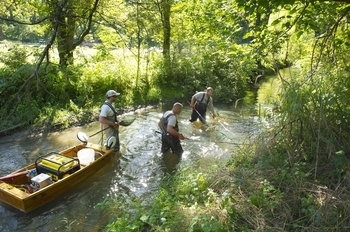
A Michigan Department of Natural Resources crew conducts a nighttime electrofishing survey.Planning to be on the water this fall? Be on the lookout for Michigan Department of Natural Resources personnel conducting nighttime walleye recruitment surveys from late September to mid-October.

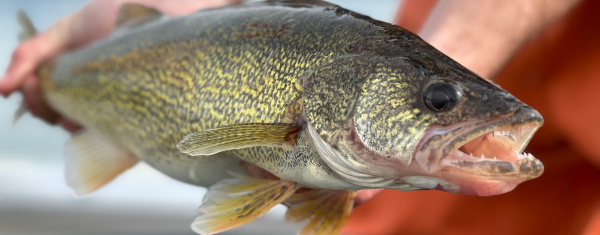
These surveys are an important tool for fisheries managers to determine whether walleye that hatched in the spring (known as young-of-year) hatched in the wild or were stocked, as well as how many of those fish are present in an area. This information about the status of young walleye in lakes helps the DNR make informed management decisions.

Using electrofishing boats, crews will survey shallow areas near the shoreline of lakes at night with the goal of capturing young-of-year walleye. Read more

Labor Day Invasive Species Prevention Outreach Set for Black, Mullett, Burt Lakes

The Michigan Department of Natural Resources’ mobile boat wash program is completing a busy summer season, visiting public access sites in 19 counties, engaging with more than 800 people and washing over 300 boats to help stop the spread of aquatic invasive species. The two-person crew operates each year from Memorial Day through Labor Day.

The crew’s last weekend will be spent in northern Michigan. If you’re traveling north this Thursday, Aug. 28, stop by and see them at the Clare Welcome Center on U.S. 127.

The crew will be at Black Lake Aug. 29, Mullett Lake Aug. 30 and Burt Lake Aug. 31, offering free and fast boat washes at boating access sites to prevent the spread of aquatic invasive species. Even if you don’t have a boat, be sure to say hello and grab some aquatic invasive species swag and information at their booth.

“Plant fragments attached to boats or trailers can move invasive species to a new lake,” said Luc McPherson, DNR boat wash technician. “It’s easy to spend a few minutes to clean, drain and dry your equipment to protect your favorite fishing and boating lakes.” Read more

 Watch for orange flags and buoys when boating on the Great Lakes

Commercial fishing is an active industry in Michigan waters, providing consumers throughout the Great Lakes region with a local, healthy and sustainable food source. That’s why it’s critical that recreational boaters do their part to avoid areas marked by orange flags and buoys, which indicate commercial fishing nets are below the water’s surface.

Nets can cover more than an acre on the lake bottom. If snagged by a boat, a net can be damaged or cause damage to the boat and other equipment.

If you see an orange a flag or buoy while boating, turn the other way and maintain a distance of at least 500 feet. Avoid navigating between flags and pull in any fishing gear. Also, additional flags may be difficult to see due to waves, glare, fog, low light or reduced visibility.

If your boat does get tangled in a net, do the following:

  • Turn off the engine or put the boat in neutral.
  • Cut yourself free using wire cutters, then label any gear left behind that should be returned to you.
  • Attach a buoy or jug to mark the net and leave it in the water.
  • Use GPS to mark the location.
  • Report the net to the DNR hotline by calling or texting 800-292-7800.

For more information, check out Michigan Sea Grant’s Nets of the Great Lakes webpage.

Questions? Email 2nd Lt. Kevin Postma at PostmaK@Michigan.gov.

A Boatfull of Bull

By Glen Wunderlich

Charter Member Professional Outdoor Media Association

For many years I’ve wanted to upgrade my boating/fishing experiences.  The reason?  My 10-foot jon boat is too small to take along anyone but a small child because of the weight limits defined by the Coast Guard information on the boat.  The total weight with equipment and passengers is not to exceed 250 pounds.  (Good thing I’ve lost weight in the past few years.)  In addition, the boat cannot have any type of motor – electric or gasoline – without getting the craft registered with the State of Michigan.  Although I’ve enjoyed the simplicity of rowing, such a watercraft is quite limited as to the waters I can fish.

I’ve pondered getting something a bit larger – at least large enough to take an adult passenger.  My innate cheapness has kept me from splurging on a brand new boat, so I scanned the highways for an affordable used one.  Not far from home I noticed an apparent candidate in front of a home with a for-sale sign attached.  After having driven by several times over the course of a few weeks, I decided to take a close-up look.  Fortunately, the gentleman that owned the boat saw me checking it out and in short order we agreed upon a price.

The 12-foot aluminum boat was big enough to meet my needs and came with a trailer on new rubber, Minnkota trolling motor, two anchors, a fish finder and two tired oars, life jackets and even a landing net.  I forked over the cash and headed to the nearest Secretary of State with the bill of sale for the requisite documents to make everything legal.  This is where the “fun” began.

I was happy to walk right in and was immediately invited to an open window with a rather welcoming gentleman behind the counter.  The first question from him was, “Do you have an appointment?”  I quickly learned that was the only way anyone would actually handle the mandated registration.  Fair enough.  Before going that far, I showed him my bill of sale and he said I would need the registration certificate from the previous owner for the tiny trailer, which was part of the package deal.  I informed him that the seller did not provide the old registration, so he said I would have to take the trailer to a weigh station for certification.  Dang!  I made an appointment for the following week with the Secretary of State, which would have given me time to get the trailer weighed.  However, I had already taken the trailer to a shop to get new waterproof lights and wiring.

One note of instruction was offered by the state employee:  Since the trailer was so lightweight, some scales were such that the weight would not register.  He advised that I should put the boat on the trailer, and as long as it weighed less than 2500 pounds (which it did by over a ton), no additional cost would be involved in the registration process.  Not sure that I would be able to meet the appointed time, because I couldn’t rely on the shop to do its work in time, I drove back to the Secretary of State to cancel the appointment.  I tried to call first, but the telephone system went to a state-controlled number that was too busy to answer my call.  The message allowed me to have them return a call to me, rather than to wait for an undetermined amount of time on the phone.  Of course, when they returned my call, I missed it.  That’s why I made the trip back to their office out of courtesy to cancel the appointment.

I didn’t relish the notion of hauling the tiny boat and trailer to a weigh station and having to pay another stinkin’ fee, so I made another trip to the seller to see if he could provide me with the old trailer registration.  Fortunately, he was able to locate it within a few minutes and gave it to me.  Yay!  I went back to the Secretary of State and made another appointment.

At the appointed time of 9am, the door was unlocked and the same gentleman took a cursory look at my papers and sent me to another man’s window, where I was promptly served.  This guy had the people skills of a baseball bat, but what the heck.  Let’s get on with it, I conceded.

Right off, we had an issue with the trailer.  The seller informed me that the boat and trailer had belonged to his brother, who had passed away.  The employee notified me, that although the trailer and boat were a package deal, I needed a vehicle identification number and value for the trailer.  All this for a trailer that weighed no more than 100 pounds and was probably as old as the 55 year-old boat.  He wanted me to “assign” a value on the trailer in addition to the $600 I paid for the package deal.  My retort was fine:  Let’s make it one dollar.  Not good enough, he said.  Okay, $50, which was $50 more than I paid for the deal.  At least he went along with that concoction and the state would be able to squeeze more fees out of me.  But, he wanted that VIN!  I told him there wasn’t one anywhere on the trailer, so he made one up to get through the process and told me I had to put the new number permanently on the trailer.  I did just that with a piece of copper tubing that I smashed into a small plate and etched the number onto it with a carbide bit and a Dremmel and secured it to the trailer with some epoxy.

While there, I asked to register the old jon boat referenced above and after jumping through more red-tape hoops, I had to sign a statement indicating who I bought the $80 boat from 35 years ago.

When I asked him if the Secretary of State provided the MC numbers, which are required to be affixed to the boats, he said they didn’t do that.  He directed me to either Walmart or Dunham Sporting Goods instead.  In the pouring rain, I went directly to Walmart where I finally found someone who found someone else that looked at me like I was crazy.  About this time I was close to fitting that description, after learning they didn’t know how to respond except to advise me to go back to the Secretary of State.  That certainly was out of the question, so I headed to the nearby Dunham’s store, where someone got someone else to tell me they didn’t know a thing about those MC numbers.

Soaking wet, I headed to the shop and picked up my newly wired trailer and headed home.

Fortunately, I found an online service that could provide the official decals, although I’d have to wait a week or so to get them at a cost of $17 for each boat.  They should be here any day now.

This is the same government that made it illegal to go fishing in one’s boat during the Covid 19 nightmare, if the boat had a motor.  Even a little electric trolling motor!

Maybe I should have been happy with my rowboat after all.

1 2 3 4 5 138