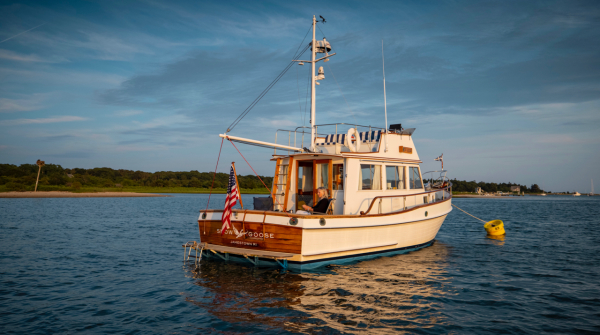
Acclaimed nautical photographer and mariner, Onne van der Wal, refits what may be the most beautiful Grand Banks 32 on Earth.
Born in the Netherlands and raised in South Africa, Onne van der Wal took to the seas at a young age. Early, indelible memories were forged sailing aboard his grandfather’s boat in Holland. Later, working as a commercial fisherman from the port of Hout Bay throughout his teenage years, van der Wal’s love for the ocean compounded. “I liked the vibe of being at sea and catching fish,” he recalls. “Growing up, there were always boats in the family and all our vacations revolved around boating, sailing and fishing.”
As van der Wal grew into a young man, his passions for the sea and for boats matured with him. He became an acclaimed sailor and entered the 1981 Whitbread Round the World Race on Flyer, leaving the competition in his wake. His artful photographs depicting scenes from his maritime adventures became widely published, paving the way for van der Wal to combine his two loves – boating and photography – into a vocation.
Today, Onne van der Wal lives in Jamestown, Rhode Island, where he and his wife, Tenley, own and operate a gallery showcasing his work, which has been published in boating and sailing magazines and other forms of media over the past 35 years. A machinist by trade, van der Wal also enjoys working with his hands. Boat restorations have allowed him to throw this skill into the mix of a life well lived. He completed a well-publicized restoration of a 1972 Pearson 36 sailboat named Snoek a few years ago and is currently wrapping up the refit of a 1986 Grand Banks 32 trawler, Snow Goose.
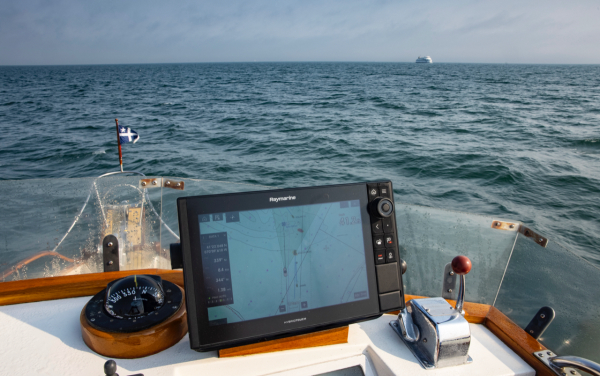
“I’ve been keen on trawlers since my teenage years in Cape Town,” van der Wal says. “We had a lot of fun with Snoek, but my wife isn’t a sailor at heart and we were ready for something different.” Van der Wal says he was fortunate to find the solid Grand Banks 32 under his nose in Jamestown before it was even listed for sale. “We bought it and put it on the hard, where I spent six months restoring it last winter. It’s simply much better for photography than a sailboat; it’s more comfortable with more room and more daylight. Tenley and I just love it.” Read more