FWP Releases Final Environmental Impact Statement for 2025 Wolf Management Plan

Montana Fish, Wildlife & Parks has released a final environmental impact statement (EIS) analyzing potential environmental impacts from the statewide management of gray wolves.?

Issuing the final EIS is a key step in a process that started in 2023, when FWP originally released the draft EIS. The draft EIS was made available for public review and comment from Oct. 20, 2023, through Dec. 19, 2023, and again from Feb. 8, 2024, through March 9, 2024. The additional 30-day comment window was to offer an opportunity for additional input from Tribes and affected counties.

“This final EIS means the update to the 2003 Wolf Plan is nearly complete,” said FWP Director Christy Clark. “We appreciate the comments and feedback we’ve received on our draft documents from people across the state and country. That input is critical in ensuring we have a plan that is effective in managing wolves moving forward.”

FWP analyzed two alternatives in the final EIS. Alternative 1, the “no action” alternative, would represent the status quo. Read more

Mountain Lion Management Is A Cooperative Effort

For the past several years, Montana Fish, Wildlife & Parks has worked with local hound handlers to monitor lion populations. This unique and beneficial relationship is an efficient way to monitor a highly elusive species.

“We contract with hound handlers from the public,” said Molly Parks, FWP’s carnivore coordinator. “The hound handlers are very skilled with highly trained hounds. That’s exactly the skill we need to make this research project work.”

The local handlers bring a high level of integrity to the data being collected.

“They care deeply for the resource and are committed to collecting high quality data. Plus, they are trusted members of the community and can help communicate results,” Parks said.

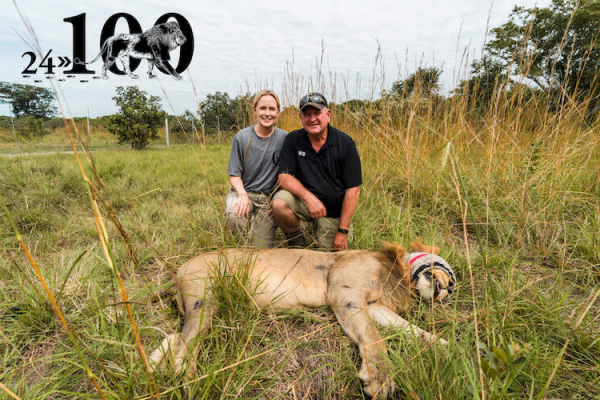
Routine population monitoring began in 2019, when FWP developed a mountain lion monitoring and management strategy. Each winter, the hound handlers contract with FWP to use their dogs to track, tree, and biopsy dart the cats to collect a DNA sample in a new monitoring area.

New this season, FWP biologists are also deploying GPS collars on a subset of the treed cats to collect additional data. The data collected from both biopsy darts and GPS collars will be combined with 25 years of lion ecology research and lion harvest data is combined in statistical models that estimate ecoregional lion abundance and density, predict the effects of lion harvest on those populations, inform management recommendations and set quotas.

The information gathered from field monitoring and results from population models are considered by the Lion Ecoregional Population Objective Committees (LEPOC), which are made up of hunters, livestock producers, hound handlers and others who have an interest in mountain lion management and live in the lion ecoregion. The LEPOC makes recommendations to FWP regarding population targets and highlight localized areas of concern. FWP staff propose quotas to the Fish and Wildlife Commission based on the LEPOC recommendations. The commission makes the final decisions on quotas and regulations each year.

“This field work is really the core of our lion monitoring,” Parks said of the program. “We couldn’t do it without lion hunters and hound handlers.”

WATCH: Mountain Lion Research in SW Montana

The Life of Grizzly 500

Excerpt from Grizzly Bears of Montana, Second Edition

A Montana Fish Wildlife & Parks bear management specialist kept track of the same female grizzly for 21 years. Here are the highlights from his journal of Grizzly Bear 500.
walking_bear_and_captured_1200wide_header_1.1.jpg

January 1979

In a snow-covered den high on a slope of the Rocky Mountain Front in Montana, a grizzly bear is born. The one-pound cub nestles in her mother’s fur. Nourished on rich milk, she grows rapidly. When she emerges from the den in late May with her mother, she weighs about 10 pounds.
Read more

Love Trails? Apply for Michigan’s Open Advisory Workgroup Spots

If you’re as passionate about trails as we are, and you’d like to help shape state-designated routes and pathways throughout Michigan, apply for one of several volunteer positions now open for two of the DNR’s advisory workgroups.

“The DNR’s Parks and Recreation Division, which oversees our statewide trails system, relies on input and guidance from residents to help us maintain, improve and grow the thousands of miles of motorized and nonmotorized trails in communities around the state,” said Tim Novak, state trails coordinator. “We’re excited to share these workgroup openings and continue the work of providing outdoor spaces for everyone to enjoy and explore, efforts that help elevate Michigan’s reputation as the Trails State.”

Positions are available on both the Nonmotorized Advisory Workgroup, or NAW, and the Off-Road Vehicle Advisory Workgroup, also known as ORVAW. Read more

Meet Some of Michigan’s Mighty Winter Birds

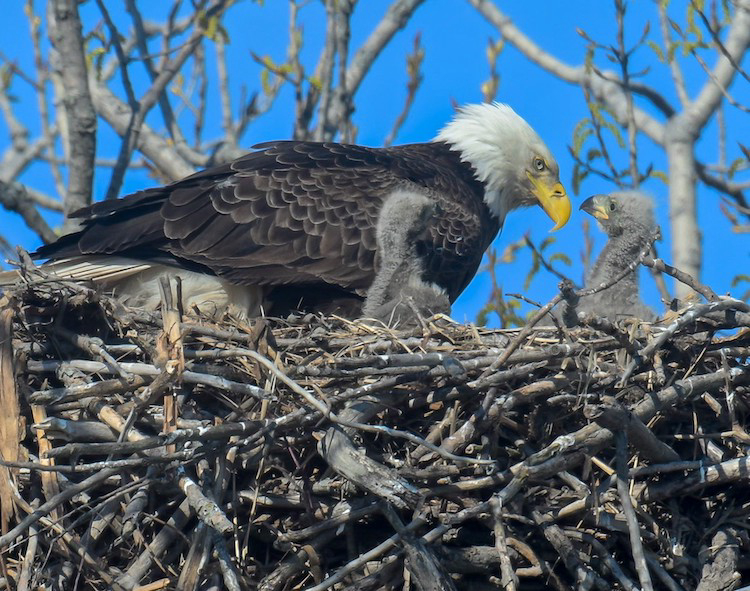
Brrr … it’s cold outside! But for many of our feathered friends, winter in Michigan is just another season. Get to know a few of our small and resourceful winter birds and the clever survival tactics they use to stay warm and find food throughout the winter.

The black-capped chickadee is an expert at staying cozy in cold temperatures – shivering and contracting opposite muscle groups to stay warm, and even lowering its body temperature at night and entering regulated hypothermia to conserve energy. These birds are frequent visitors to backyard bird feeders, carrying sunflower seeds to store in tree bark for later, when food is scarce.

How to ID:  Read more

Lovebirds? The Great Backyard Bird Count begins Valentine’s Day

Valentine’s day isn’t the only big event for birds-of-a-feather this year. The 28th edition of the annual Great Backyard Bird Count is coming up Feb. 14-17, and anyone who wants to join is welcome.

The Great Backyard Bird Count is a joint project of the National Audubon Society, Cornell Lab of Ornithology and Birds Canada to help scientists track changes in bird populations over time.

Roughly 300,000 people worldwide participate in the annual event. Their combined records reported 7,920 species during last year’s citizen science project. These records are extremely valuable to researchers, ornithologists and other conservationists who are keeping tabs on the world’s avian species.

The count takes place each February to get a snapshot of bird distribution just before spring migrations carry many species back to their nesting grounds. Read more

‘Wardens,’ featuring Michigan DNR, kicks off ninth season

By CASEY WARNER
Michigan Department of Natural Resources

Teaching kids fishing, archery and other outdoor activities at the Michigan Department of Natural Resources Pocket Park in the Escanaba.

A survival skills program for women.

Managing Michigan’s elk population in the northern Lower Peninsula.

A charity skeet shooting event with Detroit Lions football players at a DNR shooting range.

Not necessarily things that come to mind when you hear about a TV show called “Wardens,” but the show covered these topics and more in its 2024 season.

Since 2016, the Outdoor Channel series has highlighted the work of DNR conservation officers and other DNR employees, providing an inside look at what staff throughout the department does to conserve, protect and manage Michigan’s natural and cultural resources.

The DNR continues its partnership with the channel on production of the 2025 season of “Wardens.” New episodes begin Friday, Feb. 14, and air on the Outdoor Channel Fridays at 9 p.m. ET.

See a preview of the season’s first episode, featuring officers patrolling November waterfowl hunting and the firearm deer hunting season, plus a segment on the Nayanquing Point State Wildlife Area in Bay County and what goes into managing one of Michigan’s Wetland Wonders. Read more

Garmin Unveils Tactix 8 Smartwatch: Stay Active, Stay Mission Ready

Rugged tactical watch offers two sizes, speaker and mic, and rucking activity to keep you ready for any mission

Garmin (NYSE: GRMN) today announced the tactix® 8its next-gen tactical smartwatch. Available in a new 47mm case size and traditional 51mm size, tactix 8 adds dedicated rucking and dive activities, as well as a speaker and mic to create the ultimate tactical smartwatch. Built to a U.S. military standard (MIL-STD-810) for thermal, shock and water resistance and a 40-meter dive rating with leakproof buttons, users can now take tactix 8 to new depths. And with incredible battery life, it’s easy to always be prepared; the new 47mm AMOLED display offers up to 16 days of battery life in smartwatch mode, while the 51mm solar model with an always-on display offers up to 48 days1.

“Whether you train for a mission, or your mission is training, tactix 8’s premium design and innovative features like the new rucking and dive functionality make it the ultimate tactical GPS smartwatch on land, air or sea.” –Dan Bartel, Garmin Vice President of Global Consumer Sales

Field-ready features Read more

Michigan DNR set to conduct community-based northern Lower Peninsula wolf survey

Feb. 12, 2025

ContactTim Riley, 989-370-7313

The Michigan Department of Natural Resources Wildlife Division is seeking the public’s help in conducting a community-based northern Lower Peninsula survey to detect any potential presence of gray wolves.

The survey, which will rely heavily on reports from the public of wolf sightings and other potential evidence, will take place from Feb. 17 through March 10.

“Our efforts will be concentrated in the norther Lower Peninsula which does contain some limited suitable habitat that could potentially support a small wolf population,” said Brian Roell, Michigan Department of Natural Resources large carnivore specialist in Marquette.

Sightings, photos and other signs of wolf presence can be reported by the public to the

DNR’s Eyes in the Field webpage. Reports including photos or other evidence will be reviewed and a reply will be sent from DNR Wildlife Division staffers.

Those who have wolf information to report, but without access to a computer or smart phone, may contact Tim Riley at the DNR’s Grayling field office at 989-370-7313 or RileyT6@michigan.gov. Read more

1 18 19 20 21 22 371