Dismissed: HSUS Lawsuit to Silence Maine’s Wildlife Professionals

On Friday, April 3, 2015 Maine Superior Court Justice Joyce Wheeler issued a final judgment in the question of the state’s ability to comment on wildlife issues. In her ruling, Wheeler sided with the U.S. Sportsmen’s Alliance and fully dismissed a lawsuit aimed at silencing Maine’s wildlife professionals.

The case started in the closing weeks of the Maine bear campaign over Question 1 on last November’s ballot. The Humane Society of the United States (HSUS), through their front group Mainers for Fair Bear Hunting, sued the state of Maine alleging an improper level of engagement in the. The “state,” in this case, was the Maine Department of Inland Fisheries and Wildlife, whose vocal and public opposition to Question 1 didn’t mesh with HSUS’ wish to stop bear hunting in the state.

The original lawsuit sought an injunction that would remove the TV advertisements being aired by the Maine Wildlife Conservation Council that featured department personnel talking about the dangers of Question 1.

“Political campaigns are won and lost on TV, especially in the case of ballot issue campaigns,” said Evan Heusinkveld, USSA Foundation’s vice president of government affairs. “There is no doubt that our opponents saw the wildlife management professionals at the department as a distinct threat to their campaign. In response, they attempted to silence the only true experts—the professional staff at the Department of Inland Fisheries and Wildlife.”

On Oct. 22, 2014, Maine Superior Court Justice Joyce Wheeler denied the request for a temporary restraining order by Mainers for Fair Bear Hunting, which sought to remove television commercials opposed to Question 1. In her ruling, Justice Wheeler sided with the right of the state to provide comment. This ruling ensured the TV commercials remained on the air, and just a few days later sportsmen were victorious at the ballot box, defeating Question 1 by a 53-46 margin. Despite the victory on the temporary restraining order and at the ballot box on Nov. 4, the lawsuit remained active.

In light of judge’s decision and with the election over, on Feb. 24 the Maine Department of Inland Fisheries and Wildlife moved to have the case dismissed because of mootness—a move wholeheartedly supported by Maine Wildlife Conservation Council. However, HSUS lawyer Rachel Wertheime countered that the lawsuit was still valid because the organization would be filing paperwork to once again put a bear-hunting ban initiative on the state’s 2016 ballot.

In her ruling today, Justice Wheeler responded to that motion by fully and finally dismissing the case at the Superior Court level, leaving HSUS, and their front group Mainers for Fair Bear Hunting, with few options outside of appeal to the state’s Law (Superior) Court.

“The Superior court already ruled that the state was well within its right to speak out on this issue, and now they have now decided that since the election is over, the case is moot,” said Heusinkveld.  “This ruling just reaffirms our position and is a clear victory for sportsmen and women. There should be no doubt left, the people of Maine deserve to hear from the experts when it comes to these issues.” Read more

Food Plots and Habitat Plantings for Game Birds

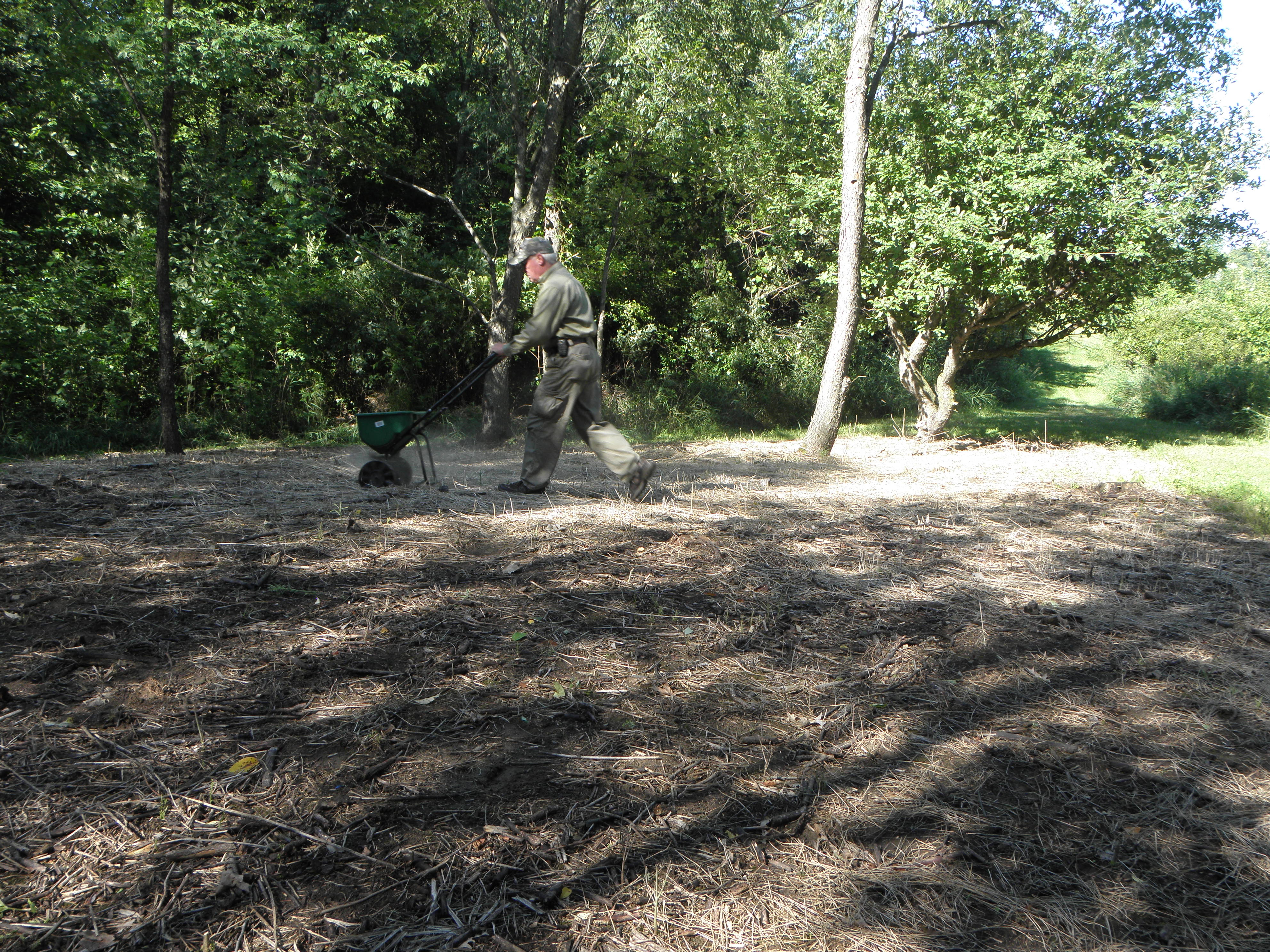
One aspect of wildlife management that is growing rapidly is the restoration of native habitat and growing crops with game birds like quail and turkey in mind. I am of the opinion that loss of habitat may be the number one factor in a list of many reasons for the steady decline in quail numbers over the last several decades. Turkey on the other hand, have had remarkable success and have a population that is abundant across most of the U.S.

Whether you are trying to attract turkeys and keep them on your property or attempting to provide food and cover for a couple coveys of quail, there are several easy to plant annual crops that can be very beneficial. Millets, sorghum, and sunflowers are all easy to plant warm season annuals that can be planted as stand-alone crops or as a blend like BioLogic’s WhistleBack. A lot of people want to plant something that is providing food within a couple weeks like they do for deer, but it really doesn’t work that way for birds. For game birds we are really trying to create food, cover, and brood habitat that they seek out. Giving the birds all they need through the changing seasons will keep them at home and discourage them from wandering to neighboring properties. Read more

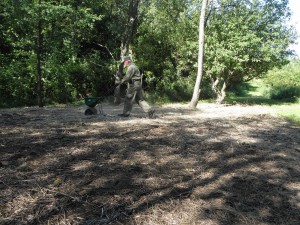
Summer Food Plots Made Easy with The Firminator

Late summer and fall food plots help hunters see more deer during the hunting season. Food plots also supply the deer with nutrition through the cold weather months. Warm-season food plots, however, can be even more important to your deer herd. Summer food plots provide needed nutrition and protein for maximum growth of big antlers and improves body weights. Warm-season food plots also greatly increase the overall health of does and their young during the fawning season.

The folks at Firminator have created the three-in-one planting machine that makes food plot creation and planting an efficient pleasure.

The versatile Firminator helps get summer plots set up in a hurry, letting the operator choose from a wide range of angle and pitch adjustments. For new sites receiving seeds for the first time and heavy with debris, the disk angles can be set aggressively along with a heavy forward tilt of the entire unit for deeper disk penetration. There is no need to disk the soil with other equipment first. Read more

New 360 Cam from Wildgame Innovations

Any hunter who has run trail cameras has marveled at the images they collect, yet no doubt have wondered what might have passed unseen behind or to either side of the camera setup. The newly designed 360 Cam from Wildgame Innovations revolutionizes game scouting with 360-degree image capturing capability. Housed in the cylindrical body are six sensors all tied to a high-quality, 12 mega pixel camera that covers a 360-degree range out to 70 feet. Once movement is detected, the unit internally repositions the camera and flash to the activated sensor. It’s like having six cameras in one! Read more

Partnerships to Save Michigan’s U.P. Deer Herd

By Glen Wunderlich

When I became disenchanted with deer camp in Michigan’s northern Lower Peninsula in the mid-1980s – mostly because of the sheer number of orange hats in the woods – a good friend, “Big John” Stenvig, invited me to hunt in the Upper Peninsula. Knowing full well that the deer population would be much less than what we had grown accustomed to, the promise of escaping to a place where we might see more deer than hunters was enough to send us packing to Iron County in the northwest portion of the U.P in 1986.

The expansive commercial forest land and lack of weekend warriors was just what we had hoped for and I was able to take some five bucks and several does during the ensuing eight years of hunting amid the Yoopers. But, one harsh winter’s deer die-off after our last venture north of the Mackinac bridge in the mid-‘90s, had us cancel plans for another adventure. Little did we know how bad things would become.

The Upper Peninsula deer population had peaked at approximately 700,000 animals back then; today the numbers have continued in a downward spiral to a shocking level of 200,000. And, with this winter’s severity index well beyond the average, the alarming trend continues.

The Lake Superior watershed receives so much annual snowfall that deer will migrate from their summer range to traditional wintering areas to survive the winter, with average movement of about 18 miles. Hemlock and other conifer canopies retain snow and reduce amounts on the ground, which makes it easier for deer to move, conserving their energy. The dense cover also reduces wind, and helps deer retain body heat.

In a recent press release the DNR, Plum Creek Timber Company will work to manage more than 16,500 acres of industrial forest land for winter deer habitat. This unique partnership with the DNR is focused on improving and maintaining conifer cover, which is essential to winter deer survival in the Upper Peninsula.

Foresters and biologists with Plum Creek and DNR wildlife biologists have worked cooperatively to develop the guidelines to retain and enhance hemlock and other conifer species, while promoting forest regeneration and production of forest products.    “We’re maintaining and creating habitat today that will benefit tomorrow’s deer,” said Plum Creek resource supervisor Jeff Joseph. “It’s the right thing to do.”

Many other factors have contributed to the declining U.P. deer numbers and an ongoing study by Wildlife Ecology and Management at Mississippi State University continues to shed new light on the issue of the downward trend.

The study indicates that predators killed 73 percent of collared fawns in the first phase of the study, with coyotes being the leading culprit.  Bobcats came in second and hunters, unknown predators and unknown causes placed third.  Michigan’s 600 to 700  gray wolves account for an additional 17,000 to 29,000 kills, placing them fourth on the list.

The DNR has established the Deer Habitat Improvement Partnership Initiative, which aims to produce tangible on-the-ground deer habitat (summer and/or winter range) improvements in the U.P through grants with sportsmen’s groups and other partners.

Deer Range Improvement Program (DRIP) fund. Public Act 106 of 1971 created the DRIP fund, whereby $1.50 from every deer hunting license sold statewide is allocated into a restricted fund to be exclusively used for the improvement and maintenance of habitat for deer, acquisition of land for deer management, and the payment in lieu of taxes on purchased lands.

Understanding the issues of our deer mortality is only a first step in what we can only hope will lead to recovery our northern deer herd. There is no doubt that habitat improvement is a key factor and that cooperation is needed between stakeholders. However, the question remains: Will it be enough?


Call Game From Your Phone with New iHunt by Ruger Speaker and App Combo

Coming in May, just in time for calling predators during the fawning season, the new Extreme Dimension’s iHunt Speaker will be paired with the iHunt by Ruger app to turn your smartphone into a complete game call system.

Extreme Dimension’s iHunt Speaker, featuring wireless Bluetooth technology, combines with the iHunt by Ruger app to allow hunters to use a smartphone as the controller for more than 600 sounds from 46 animal species. Once you sync the iHunt speaker with your phone, you can then download the complete iHunt app for free. Read more

Tribes in 13 States Receive USFWS Funds

The U.S. Fish and Wildlife Service today announced nearly $4.2 million in Tribal Wildlife Grants to Native American Tribes in 13 states. The awards will support 22 fish and wildlife conservation projects that benefit a wide range of wildlife and habitat, including species of Native American cultural or traditional importance and species that are not hunted or fished.

“Tribal lands encompass millions of acres of important habitat for hundreds of wildlife species across the nation,” said Service Director Dan Ashe. “Tribal Wildlife Grants give us an opportunity for federal and state agencies to work with tribal fish and wildlife partners in the conservation of our shared and highly valued natural heritage; a heritage that we will pass on to future generations of all Americans.” Read more

SCIlogo

Washington, D.C. – Safari Club International is deeply disappointed with the U.S. Fish and Wildlife Service’s (FWS) announcement yesterday that it will continue the ban on the importation of sport-hunted elephants from Zimbabwe for the rest of 2015.  The FWS first imposed an importation ban on sport-hunted elephants from Zimbabwe in April 2014.  Yesterday’s decision will continue the importation ban indefinitely into the future until it is lifted by the FWS.

Despite receiving data and information from Safari Club, Zimbabwe, and many others regarding the benefits of elephant hunting in Zimbabwe, the FWS claims that it remains unable to determine that elephant hunting in Zimbabwe enhances the survival of the species.  The FWS continues to claim that it lacks enough information regarding how Zimbabwe manages its elephants and identifies six specific areas of concern (see links below).  Even though it recognizes that hunting benefits elephant conservation in various ways, the FWS has put the entire burden of addressing poaching on the hunting community.  The FWS refuses to allow importation of legally sport-hunted elephants until it finds that the benefits of hunting outweigh the detrimental impacts of poaching – setting an unrealistic and unprecedented goal for an enhancement determination.  Read more

Feds Approve Rhino Permit

DALLAS – A Texas hunter has received from the U.S. government a permit to bring home the taxidermy from a planned hunt for a black rhino in Namibia.

The U.S. Fish and Wildlife Service – which administers the Endangered Species Act and regulates Americans’ associated activities – approved the import permit based on the scientific and financial validity of the rhino hunt.

Read the agency’s announcement at:http://www.fws.gov/news/ShowNews.cfm?ID=56D54860-AEA6-0EEE-73467FE9B00499F0 Read more

Partnership gives wintering U.P. deer new outlook

The Department of Natural Resources and Plum Creek Timber Company are working together to manage more than 16,500 acres of industrial forest land for winter deer habitat. This unique partnership is focused on improving and maintaining conifer cover, which is essential to winter deer survival in the Upper Peninsula.

“This long-term project shows a serious investment by Plum Creek on how the land will be managed for wildlife and forest products into the future,” said DNR wildlife biologist John DePue. “Hemlock is a species that can live over 300 years, is a preferred winter food for deer, but is difficult to establish. Working together, our goal is to retain at least a 70-percent conifer canopy, because research has shown anything less reduces overwinter survival of deer.”

The Lake Superior watershed receives so much annual snowfall that deer will migrate from their summer range to traditional wintering areas to survive the winter, with average movement of about 18 miles. Hemlock and other conifer canopies catch the snow and reduce the amount of snow on the ground, which makes it easier for deer to move, conserving their energy. The dense trees also reduce the wind, which helps deer retain body heat. Read more

1 232 233 234 235 236 371