Relaxing Michigan’s Coyote Regulations

By Glen Wunderlich

When a Shelby Township, MI woman let her Pomeranian mix dog outside before retiring for the night, it would be the last time she would see her family pet alive. In another incident in Wauwatosa, Wisconsin, a miniature Schnauser spent his last minutes on a leash in front of his home. And, in the sanctuary of a fenced-in backyard in Hacienda Heights, California, a Papillion mix family pet met its fate. The common denominator? Coyote attacks.

As coyote numbers have increased, so have deadly encounters in urban settings. Because of the secretive nature of coyotes, many folks are oblivious to their existence until we hear of such horrific acts of terror.

In an ongoing study of predators in Michigan’s Upper Peninsula by Mississippi State University, 142 fawns were radio-collared and coyotes were found to be responsible for 26 of 53 deaths – as many as bobcats, wolves, bears, and bald eagles combined.

Coyotes are found throughout Michigan in both rural and urban areas.  With an increase in complaints from the public regarding coyotes, the Department of Natural Resources (DNR) believes that an expansion of the opportunities to take coyotes may help reduce these concerns.

The DNR has recommended several coyote hunting regulation changes to the Natural Resources Commission, including year-round hunting opportunities and implementation of a Michigan United Conservation Clubs (MUCC) and Michigan Trappers and Predator Callers Association resolution to allow the use of #3 and #4 buckshot at night for coyotes.

The DNR held discussions with internal staff and many external stakeholders to develop recommendations to amend our state’s Wildlife Conservation Order.  The amendment would include expanding the coyote season statewide, year round, along with clarifying nighttime hunting of furbearers, and to expand the time frame in which nighttime hunting with artificial lights may occur.  The Department is also giving a recommendation to expand allowable ammunition for taking all furbearers which may be hunted at night to include both 3 and number 4 buckshot.

Michigan’s current coyote regulations include daytime coyote hunting from July 15th to April 15th which is a liberal season with a few minor restrictions on the methods of take, devices, and ammunition. The current season for nighttime coyote hunting is from October 15th to March 31st.  However, the nighttime coyote hunting season is a restricted season with limited methods of take, devices and ammunition.  Individuals must possess a fur-harvester or resident base license.  Throughout the entire year, individuals may take a coyote on private property if the coyote is causing or about to cause damage.

Several other proposed resolutions by MUCC that would not become MUCC policy unless adopted at its Annual Convention are as follows:

Coyote Bounty (Straits Area Sportsmens Club) | Reverse MUCC’s opposition to bounties and institute a coyote bounty.

Nighttime Predator Hunting with Centerfire Firearms (Chris Kettler, Michigan Trappers and Predator Callers Association) | Remove restriction on using centerfire firearms for nighttime predator hunting.

Any type of coyote control is difficult but removing some of the encumbrances to willing sportsmen may be the best option available to wildlife managers.  It’s past time that we quit protecting the varmints that are helping to reduce our declining deer herd.

HSUS’s America: Where Wolves Eat Family Pets?

This from humanewatch.org…

A wolf in Duluth, Minnesota, brutally attacked and killed a family’s dog last week, and if the Humane Society of the United States (HSUS) has its way, we can only assume incidents like this are going to happen a lot more often.

Terry Irvin was walking his dog Leo, an 11-year-old retriever-corgi mix, along a wooded trail near Lake Superior – something he does two or three times a week – and decided to let the dog off its leash. Irvin told the Star Tribune he got a little bit ahead of the dog and waited around for him to come, but the dog never made it.

After about five minutes went by, Irvin turned around and went to look for Leo. “I walked into the woods, and I saw him,” Irvin told the paper. “It was a traumatic sight. I will never forget it. … It was heartbreaking.” Read more

Reframing Trophy Hunting

Hijacked by anti-hunters, the term ‘trophy hunting’ has taken on a negative connotation in society – it’s time to take it back. Here’s a start to reframing the trophy-hunting discussion with non-hunters.

Defining a Trophy

When news anchors and the general public throw the term ‘trophy hunting’ around, they’re usually speaking in a very broad sense that assaults their emotions and is an affront to almost everything that modern, regulated hunters and hunting represents. The term is a misnomer, but they don’t even realize it.

A trophy is a very personal thing. For some just killing an animal to eat is reward enough. For others, a mature animal that is more wary is the goal. Still, for others, a very specific animal, or at least one meeting very high standards, is the ultimate goal.

This is all dependent upon the person, their skill level and experience in hunting (see infographic: “Evolution of a Hunter”), as well as understanding of the species they’re targeting.   A trophy is a crowning achievement for an individual. Period.

What it’s not

The popular myth of trophy hunting is that it’s simply hubristic killing by hunters for display upon a wall – which is only done for a head, hide or horns. The underlying belief is that the rest of the animal is left where it died and goes to waste.

This is the perception anti-hunters have created, and which they are framing hunters every chance they get. From “Cecil” the lion in Zimbabwe, Africa, to the proposed black-bear hunt under protest in Florida, anti-hunting activists and organizations cry ‘trophy hunt’ to convey what they believe is the senseless killing of animals – without regard to the associated science, management and ecosystem-wide benefits.

It’s an effective tactic that resonates with the public quickly. Those two words immediately generate an affront to the public’s sensibilities, and creates another hurdle we have to overcome to maintain scientific, and not emotional, management of our flora and fauna.

What it is

The fact is, what animal-rights’ activists portray is not just an affront to the public’s sensibilities, the waste of an animal is a disgrace to the sensibilities of a hunter, as well. When it comes to a ‘trophy hunt,’ two points often overlooked by outraged activists, the media and the public include:  A hunting season is not state-sanctioned slaughter. Every state has wanton waste laws that mandate the harvest and use of meat, hides or other body parts to ensure that the animal is not just wasted, and that the number of individuals taken is in accord with the supporting habitat and predator-prey balance of the area.
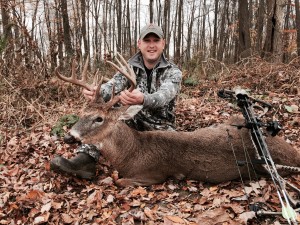
evan_regularA ‘trophy’ animal and its use as table fare are not mutually exclusive. An animal can be a specimen worthy of both taxidermy and the table.

A trophy hunter is simply someone who has placed self-imposed restrictions upon themselves that go above and beyond what’s dictated by the state. They are more selective, and will pass on younger animals, often those barely reaching the minimum standard, in a deeply personal pursuit to further challenge their skills and learn as much as possible about the prey they pursue. Read more

Which Companies Support HSUS?

ProhibitHSUSThis from humanewatch.org

Just as many donors to HSUS have no idea how their money is being used—or misused—a number of companies have partnerships with HSUS and likely have no idea who they’ve gotten in bed with. We’ve encouraged supporters to contact a number of companies in the past to inform them about HSUS, and we’ve had clear success in getting companies to sever ties with HSUS.

Many of our readers don’t want to support companies that support HSUS. Here’s a list of the companies supporting HSUS. We’ll keep it updated with both current and former supporters. We’ll keep reaching out to current supporters—and we’ll need your help, as always. Stay tuned.


Former Supporters

Discover

Bosch North America

Pilot Travel Centers

Precious Kitty

Mary Kay

Yellow Tail Wines

Hill’s Science Diet

Atlantic Publishing

Jordan Vineyard and Winery

Bank of America

Tommy Bahama


Current General Supporters

Bissell

Grounds for Change

Goodshop

glassybaby

Tofurky

TisBest

Candle Café

Petplan Pet Insurance

Wine.com

Fred Meyer Jewelers

SurveyMonkey

GIV Mobile

GreaterGood / The Animal Rescue Site

AmazonSmile

eBay

Rover.com

Zazzle

The Deception that is the Humane Society of the United States

How little of the money raised by HSUS goes to pet shelters in your state? Click the map below, which was made using data from HSUS’s tax return to determine the amount of grant money going to help local shelters care for pets. And if you’re wondering where the money does go, here’s a start: Over $100 million in Caribbean “investments,” a multimillion-dollar bribery lawsuit settlement, and a big fat paycheck for CEO Wayne Pacelle.

US Map HSUS Giving

HSUS Grades Politicians

For those of you who’d like to know how your local politicians are rated by the largest anti-hunting organization in the world, check out the report cards here: http://bit.ly/1QAHb1M.

Another video worth watching covers the HSUS position on hunting with the understanding that anyone who receives high scores with the HSUS lobbyists is certainly no friend of the North American Conservation Model.

Give this one a look and see if you don’t get the notion that HSUS, like some politicians, is definitely flying under a false flag: https://www.youtube.com/watch?v=qk5rjSJYeKg

HSUS Lobbyist Slapped Down in Oregon

GW:  This is from humanewatch.org

It’s January, which means a number of state legislatures are back in session. And that also means HSUS is busy prowling the halls for its “state lobby days” and trying to push a number of bills, from hunting restrictions to farming restrictions to pet-buying restrictions.

Some folks tweeted us a video the other day of HSUS lobbyist Scott Beckstead testifying in Oregon against a proposal to codify the state Department of Fish and Wildlife’s recent decision to delist gray wolves as endangered. HSUS, of course, doesn’t want wolves delisted because it would potentially allow hunting of the animals, and HSUS is very much opposed to hunting. (It’s unclear what limits on wolf populations HSUS supports. You’d think they could be prowling the periphery of every small town in Oregon before HSUS might agree to reasonable limits.)

A couple of state reps from both sides of the aisle challenge Beckstead, with one warning, “Be very careful.” Beckstead warns that opening the door to future wolf hunting could backfire if, say, a hunter posts a pic on social media with his take. The not-so-subtle message is that HSUS would be happy to pour gas on the fire.

But the lawmakers pushed back at this notion, noting that the grizzliest videos they’ve seen haven’t been a hunter with a dead animal—they’ve been wolves chasing down and ripping apart still-alive prey.

It’s an interesting point. Instead of letting HSUS play offense against hunting, what if hunters showed fields of dead sheep and said, “This is what HSUS supports”? It’s not demagoguery if it’s true—and that’s the cost of HSUS’s litigation and lobbying against letting wildlife managers use science to manage dangerous predators.

Oklahoma Bill Seeks to Block HSUS Fundraising

This from HumaneWatch.org


OK_legHSUS has been facing setback in Oklahoma as the state’s attorney general, Scott Pruitt, opened an investigation into HSUS fundraising. Last year, one of Oklahoma’s U.S. Senators, Jim Inhofe, took HSUS CEO Wayne Pacelle to task in front of a subcommittee. And now the legislature is getting involved in trying to stop the deception-for-dollars scheme that HSUS runs.

A new bill by Rep. Brian Renegar (who is also a veterinarian) would only allow animal groups to fundraise for programs conducted inside the state. That’s not a problem to the Central Oklahoma Humane Society and other similar groups that shelter or rescue animals. But that is a problem if you’re HSUS, and you don’t run a single pet shelter in Oklahoma (or anywhere in the U.S., in fact).

You can read the full text of the bill, HB2250, here.

No doubt HSUS’s lawyers will be thinking of any way to claim this is unconstitutional. But the protestations will only highlight one thing: How much HSUS is benefitting at the expense of local animal groups in Oklahoma. The effort should be commended.

Ask Bosch to Wipe the Slate Clean and Ditch HSUS

This from HumaneWatch.org

Bosch, a German automotive company, recently announced a partnership with HSUS. The company started a campaign called StoptheRoadkill.com, which encourages drivers to buy Bosch wipers to see the road better and avoid hitting wildlife during inclement weather. (The company calls it a public service announcement, but it’s not really a PSA if you’re selling something.)

Presumably, HSUS is getting a cut of every wiper blade sold. It’s a bad deal for animals, though.

HSUS doesn’t run a single pet shelter anywhere. And HSUS isn’t exactly starved of funding. The group has some $200 million in assets. Last year, it stuck $50 million of donor money into Caribbean hedge funds. That’s a lot of bowls of food. HSUS ought to already be doing more to feed animals, but instead it shamefully mismanages donor money—whether it’s earning bad grades from charity watchdogs for high spending on overhead, sticking money in the Caribbean, or even paying a racketeering settlement.

Local shelters or rescues that take care of cats, dogs, and other pets could certainly use the money. They’re often in desperate need of help. The same with local wildlife rehab groups.

Email Bosch USA’s CEO, Mike Mansuetti, at Mike.Mansuetti@us.bosch.com and politely ask him to sever ties with HSUS and make sure the money goes to reputable organizations. (If you get a response, feel free to forward it to us.)

African Lion Conservation Crippled by USFWS Ruling

DALLAS, TX – In a year when the vocal anti-hunting minority was as loud as it was uninformed, the U.S. Fish and Wildlife Service is going against its own proven conservation policies and those of foreign countries in an effort to appease anti hunters at home. The end result is severe crippling of lion conservation efforts in Africa.

On December 21, a USFWS press release announced the addition of two lion subspecies to the Endangered Species Act (ESA). This politicizing of wildlife conservation and oppressive restrictions on specimen importation will result in a devastating reduction of funds necessary to conserve the species in their home range, causing African lion populations to plummet.

According the USFWS statement, Panthera leo leo, located in India as well as western and central Africa, will be listed as endangered. However, Panthera leo melanochaita, with a population of more than 19,000 and growing thanks to sportsmen-funded conservation efforts, will now be listed as “threatened.” The USFWS service claims unidentified pockets of P.l. melanochaita populations, a subspecies of lion found throughout southern and eastern Afrcia, remain at risk due to “ongoing threats,” identified as “habitat loss, loss of prey base, and retaliatory killing of lions by a growing human population.” In its release, the USFWS does not list sustainable, lawful hunting as a threat to lion populations. In fact, without lawful, sustainable hunting, the threats faced by these lions will only get worse.

“The Service determined that this subspecies (P.l. melanochaita) is less vulnerable and is not currently in danger of extinction,” the USFWS statement reads. “However, although lion numbers in southern Africa are increasing overall, there are populations that are declining due to ongoing threats. As a result, the Service finds the subspecies meets the definition of a threatened species under the ESA.”

Perhaps the problem is not the people of the USFWS who are doing their jobs and enforcing the law. Maybe the problem is a flawed ESA which denies species in foreign countries classified as “endangered” or “threatened” any opportunity for help from the International Union for Conservation of Nature’s Sustainable Use and Livelihood Specialist Group (IUCN-SULi), the United States government or its citizens. Barring help from these groups, creatures like the African lion are doomed. Now, no one and no entity will do anything to help the remaining lions in west Africa and, in time, the last remnants of these populations will be gone. Read more

1 11 12 13 14 15 61