
Congressional Leaders Introduce New Sportsmen’s Act in 114th Congress
Sportfishing industry is optimistic about chances for passage
Alexandria, VA – The American Sportfishing Association (ASA) applauds the introduction of the Bipartisan Sportsmen’s Act of 2015, which includes numerous legislative measures beneficial to anglers and hunters across the nation. Sponsored by Senators Lisa Murkowski (R-Alaska), Martin Heinrich (D-N.M.), Jim Risch (R-Idaho), Joe Manchin (D-W.Va.), Deb Fischer (R-Neb.) and Heidi Heitkamp (D-N.D.), the Bipartisan Sportsmen’s Act of 2015 contains provisions that will benefit our nation’s sportsmen and women by providing increased access to our public lands and waters, improving fish and wildlife management and protecting the use of traditional fishing tackle.
“This bipartisan package contains many important provisions that are largely non-controversial and that will advance fisheries conservation and recreational fishing access for the benefit of the nation’s 60 million anglers,” said American Sportfishing President and CEO Mike Nussman. “Recreational fishing supports 828,000 jobs and contributes $115 billion to the economy annually. This monumental legislative package will greatly enhance recreational fishing’s social, economic and conservation benefits to the nation.” Read more


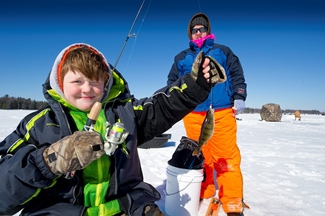 For beginning anglers, ice fishing offers one significant advantage: access. Boat-less anglers, who otherwise are limited to shorelines or fishing piers much of the year, can often access entire lakes. That inspires some anglers to proclaim that ice-fishing season is their favorite time of year.
 TOLEDO, OH – Mark Feldstein & Associates Inc. (MFA), a product development company and importer of unique giftware, housewares and electronics, recently introduced the Illuminator Camo Flashlight with licensed Mossy Oak® camouflage patterns designed for outdoor sports and recreation.