Michigan’s hand netting season opens Thursday, dip netting March 20

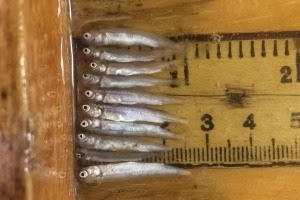
The Michigan Department of Natural Resources reminds anglers about netting seasons as we get closer to spring. The hand netting season opens Thursday, March 1, and closes May 31, while the dip netting season opens Tuesday, March 20, and also closes May 31.

The following species can be taken during both seasons: bowfin, carp, goldfish, gizzard shad, longnose gar, smelt and suckers. Waters open to hand netting include all Great Lakes, Lake St. Clair, the St. Clair River, the Detroit River and the St. Marys River including all tributaries to those waters from the mouth to a half-mile upstream. Waters open to dip netting include all Lower Peninsula and Upper Peninsula streams, except Designated Trout Streams.

All other waters are closed to these activities; visit michigan.gov/dnrdigests for full details.

The use of seines, hand nets and dip nets for minnows is allowed all year on all waters (except Designated Trout Streams and those waters closed to minnow harvest) while cast nets can be used for alewives, minnows, smelt and gizzard shad all year on the Great Lakes, Lake St. Clair, the St. Clair River, the Detroit River and the St. Marys River.

For those interested in dipping for smelt later this spring, visit the DNR’s smelt dipping and fishing opportunities page online.

Boone and Crockett Club Applauds Bill to Advance Hunter Recruitment and Retention

MISSOULA, MT – The Boone and Crockett Club fully supports a new House bill that seeks to advance hunter recruitment and retention. The Modernizing Pittman-Robertson Fund for Tomorrow’s Needs Act of 2017 (H.R. 2591) will provide technical and financial assistance to states for promoting hunting and recreational shooting.

The bill, introduced by Congressman Austin Scott (GA-08) would allow state fish and wildlife agencies the flexibility they need to address the declining number of hunters by using existing funds from the Pittman-Robertson Wildlife Restoration Fund to increase hunting and recreational shooting opportunities. The bill will also serve to clarify that one of the purposes of these funds is to provide financial and technical assistance to the states for hunter recruitment and retention, hunter education programs, and education programs to the non-hunting public.

“When the Boone and Crockett Club helped draft and get the Pittman-Robertson Act passed by Congress in 1934, we had lots of hunters and game populations were still recovering,” said Ben B. Hollingsworth Jr., president of the Boone and Crockett Club. “Today, game is abundant once again, but declining hunter participation means declining funds. This bill is the right thing to do at the right time to ensure healthy wildlife and ecosystems into the future.” Read more

Michigan DNR reminds anglers of ice shanty removal dates and urges caution

The Michigan Department of Natural Resources reminds anglers that mandatory ice shanty removal dates are approaching. Regardless of the date, shanties must be removed as soon as the ice is unable to safely support them. The ice quickly can become unsafe for anglers to retrieve their property in warmer weather.

Ice shanties on Lake St. Clair must be removed by sunset Sunday, Feb. 25.

For counties in the southern Lower Peninsula, shanties must be removed from the ice by midnight Thursday, March 1.

The deadline for removal from waters in the northern Lower Peninsula is midnight Thursday, March 15. Counties in this area are Alcona, Alpena, Antrim, Arenac, Bay, Benzie, Charlevoix, Cheboygan, Clare, Crawford, Emmet, Gladwin,Grand Traverse, Iosco, Isabella, Kalkaska, Lake, Leelanau, Manistee, Mason, Mecosta, Midland, Missaukee, Montmorency, Newaygo, Oceana, Ogemaw, Osceola, Oscoda, Otsego, Presque Isle, Roscommon and Wexford. Read more

Michigan: Enjoy Winter #MiFreeFishingWeekend Saturday and Sunday

Everyone in Michigan is invited to fish for free Saturday and Sunday, Feb. 17 and 18, for the 2018 Winter Free Fishing Weekend. A license is not required to fish those two days, but all other fishing regulations still apply.

These two days make up #MiFreeFishingWeekend – an annual effort to promote Michigan’s world-class fishing opportunities. While many individuals and families will bundle up and head out to fish for free on their own, the Michigan Department of Natural Resources points out that there are many events organized throughout the state to get you started, too. Here are a few: Read more

Coast Guard Cautions Ice Anglers on Great Lakes

CLEVELAND —  Proper preparation is vital for people recreating on or near frozen lakes and waterways as ice coverage across the Great Lakes makes a resurgence this week.

Coast Guard units, working with first responders, have performed more than 40 ice rescue cases since December 2017. Many of the rescues were successful because the survivors were properly prepared prior to going out on the ice.

Proper preparation includes the following: Read more

Michigan: Kids free fishing weekend contest to raise funds for firefighting equipment in Gogebic County

Wakefield Volunteer Fire Department to hold ninth-annual event on Sunday Lake

During Michigan’s winter Free Fishing Weekend, the Wakefield Volunteer Fire Department will hold its ninth-annual ice fishing contest on Saturday, Feb. 17 on Sunday Lake in Gogebic County.

The 224-acre lake located in Wakefield is one of the Michigan Department of Natural Resources’ designated Family Friendly Fishing Waters, home to perch, panfish, walleye and northern pike.

All fishing license fees are waived during Free Fishing Weekend. Residents and out-of-state visitors may enjoy fishing on inland and Great Lakes waters for all species of fish. All fishing regulations still apply.

“We’ve been hosting our fishing contest on Michigan’s Free Fishing Weekend for the past several years in an attempt to attract people who otherwise may not fish, as well as to draw participation from Wisconsin and Minnesota,” said Jennifer Jacobson, secretary of the fire department’s ice fishing contest committee. Read more

Michigan: DNR announces 2018 Black Lake sturgeon season harvest results

Michigan Department of Natural Resources officials announced the 2018 sturgeon harvest season on Black Lake (in the northern tip of the Lower Peninsula) ended after two and a half hours Saturday, Feb. 3, with seven fish being harvested. The fishing season, which included spearing or hook-and-line fishing, was scheduled to run Feb. 3-7, or until the harvest quota had been reached. The allocation of sturgeon for Black Lake this year was seven fish, although DNR officials set a harvest quota of six fish.

There were 426 registered anglers on the ice Saturday, up from 332 the year before. Most anglers registered at the pre-registration held Friday, Feb. 2, which continues to allow for a much more streamlined process. Anglers of all ages and genders participated, including a good number of supervised youth. Read more

Michigan DNR has new online form for reporting fish kills

Winter weather can create conditions that cause fish and other aquatic creatures to die

To simplify the public’s ability to report fish kills, the Michigan Department of Natural Resources recently developed an online form for reporting fish kills in quantities larger than 25 fish. A fish kill of this size could have more factors involved that need further DNR investigation. The new Sick or Dead Aquatic Species form can be found in the DNR’s Eyes in the Field application at michigan.gov/eyesinthefield.

Information requested in the form includes waterbody and location (both descriptive and latitude-longitude coordinates), observation details, and any available photos showing the fish kill. Close-up photos showing any external disease signs such as bloody patches, unusual wounds or odd coloration are particularly helpful to DNR staff as they try to determine the cause of the issue and its seriousness. Entered reports and associated images automatically are forwarded to fish health staff for quicker evaluation and action. Read more

Michigan Arctic grayling habitat better understood following research project funded by Consumers Energy Foundation

Last year the Michigan Department of Natural Resources, the Little River Band of Ottawa Indians and Michigan Technological University received a $117,175 grant from the Consumers Energy Foundation to support Michigan’s Arctic Grayling Initiative, an effort to reintroduce Arctic grayling into the state.

Recently completed work supported by this grant addressed two immediate needs for a successful Arctic grayling reintroduction. The first was to collect stream habitat and fish community data in the upper Manistee River. This data collection allowed for both the evaluation of current stream habitat conditions and the development of criteria to determine which other streams may provide suitable habitat for Arctic grayling.

Additionally, funds from the Consumers Energy Foundation grant supported collaboration among interested partners, including the development of the initiative’s official action plan, which was released in July 2017. This document provides direction for all activities related to Arctic grayling reintroduction, including research, management, fish production and outreach. Read more

1 94 95 96 97 98 138