Michigan DNR seeks public’s help monitoring moose

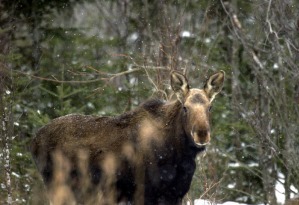
moose in snowy forestThe Michigan Department of Natural Resources asks those who live in Michigan’s Upper Peninsula, or those who are just visiting, to share any moose sightings through the Moose Observation Report form, now available online.

The DNR has been monitoring Michigan’s moose population since the species’ reintroduction to the state in the 1980s. To estimate the population status of Michigan moose, the DNR conducts aerial surveys across the core moose range in the western Upper Peninsula. When determining the aerial survey sample area, observation reports are important resources that help to identify where resident moose occur. Read more

A Birder’s Perspective

By Glen Wunderlich

Have you seen your first robin yet this year? I have.
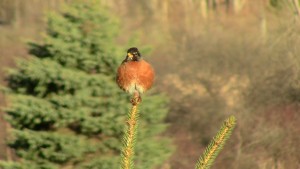
American robin, male Shiawassee County, MI

American robin, male
Shiawassee County, MI

I had just taken a break from chainsaw aerobics and had removed my safety helmet with hearing protection. When I first heard the cheerful tunes, I thought it sounded much like a robin but I was having trouble wrapping my mind around the notion that spring was here already. After all, it was January 21 and not an earthworm in sight.


Intently looking and listening, I heard the sound again. Sure enough, it was a robin alright. That’s when I caught its image atop a naked deciduous tree, just as the forlorned visitor flew off.


A few days later, while observing one of my feed sites, tiny juncos, chickadees, and titmice were dwarfed by another ground-feeding visitor: a wood thrush. They winter in lowland tropical forests in Central America but obviously, this loner didn’t get the memo.


A common sight on the ground is yet another visitor from the far north: the tree sparrow. Plump and long-tailed, American tree sparrows are busy visitors in winter backyards and weedy, snow-covered fields across southern Canada and the northern United States.  Sometimes they number in the hundreds in a particular plot of indigenous pigweed I’ve left for their nourishment. In fact, it’s the primary reason I’ve quit trying to rid the patch of the otherwise undesirable weed.


Hopping up at bent weeds or even beating their wings to dislodge seeds from grass heads, they scratch and peck the ground in small flocks, trading soft, musical twitters. Come snowmelt, these small rusty-capped and smooth-breasted sparrows with a black spot on their breasts
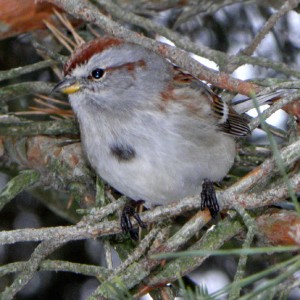
Tree Sparrow

Tree Sparrow

begin their long migrations to breeding grounds in the tundra of the far North.


If you are fascinated by watching and studying birds, you may be interested in an online course at the Cornell Lab of Ornithology in Ithaca, N.Y.  For the first time, lectures will be available online to anyone, anywhere.


Though species native to the Finger Lakes Region of New York will be discussed, course lectures are also packed with information about bird identification, migration, nesting, and other topics that are relevant to anyone hoping to improve their bird-watching skills.


The eight-week course is taking place March 23 through May 15. Visit birds.cornell.edu/sfo to learn about the course schedule, which will run concurrently with each Wednesday evening lecture available to online participants the following day. The online lectures will be hosted on the Cornell Lab’s Bird Academy website.


The course cost is $140 for online participants and is taught by Dr. Stephen Kress, Vice President for Bird Conservation for the National Audubon Society. “I can think of no better way to greet the spring migrants than taking part in Spring Field Ornithology,” says Kress. “Whether people take the course in person or watch the lectures online, they’ll come away knowing much more about birds and appreciate them so much more. There’s great value in that at a time when so many species are in trouble. Plus, bird watching is just great fun.”

Deer With Upper Canines

February 4, 2016

Last December, Brad Wiley – QDMA committee member with the Upper Hudson River Valley Branch in New York – killed a big 4 1/2-year-old buck on the Otter Creek QDM Cooperative, of which he is a member. In this case, however, it wasn’t the age or the size of the antlers that made the buck such a unique trophy. It was the two upper canine teeth that Brad discovered on the deer’s skull. To read the full article, click here.

To Be a Birder

By Glen Wunderlich

Have you seen your first robin yet this year? I have. I had just taken a break from chainsaw aerobics and had removed my safety helmet with hearing protection. When I first heard the cheerful tunes, I thought it sounded much like a robin but I was having trouble wrapping my mind around the notion that spring was here already. After all, it was January 21 and not an earthworm in sight.

Intently looking and listening, I heard the sound again. Sure enough, it was a robin alright. That’s when I caught its image atop a naked deciduous tree, just as the forlorned visitor flew off.

A few days later, while observing one of my feed sites, tiny juncos, chickadees, and titmice were dwarfed by another ground-feeding visitor: a wood thrush. They winter in lowland tropical forests in Central America but obviously, this loner didn’t get the memo.

A common sight on the ground is yet another visitor from the far north: the tree sparrow.

Tree Sparrow

Tree Sparrow

Plump and long-tailed, American tree sparrows are busy visitors in winter backyards and weedy, snow-covered fields across southern Canada and the northern United States.  Sometimes they number in the hundreds in a particular plot of indigenous pigweed I’ve left for their nourishment. In fact, it’s the primary reason I’ve quit trying to rid the patch of the otherwise undesirable weed.

Hopping up at bent weeds or even beating their wings to dislodge seeds from grass heads, they scratch and peck the ground in small flocks, trading soft, musical twitters. Come snowmelt, these small rusty-capped and smooth-breasted sparrows with a black spot on their breasts begin their long migrations to breeding grounds in the tundra of the far North.

If you are fascinated by watching and studying birds, you may be interested in an online course at the Cornell Lab of Ornithology in Ithaca, N.Y.  For the first time, lectures will be available online to anyone, anywhere.

Though species native to the Finger Lakes Region of New York will be discussed, course lectures are also packed with information about bird identification, migration, nesting, and other topics that are relevant to anyone hoping to improve their bird-watching skills.

The eight-week course is taking place March 23 through May 15. Visit birds.cornell.edu/sfo to learn about the course schedule, which will run concurrently with each Wednesday evening lecture available to online participants the following day. The online lectures will be hosted on the Cornell Lab’s Bird Academy website.

The course cost is $140 for online participants and is taught by Dr. Stephen Kress, Vice President for Bird Conservation for the National Audubon Society. “I can think of no better way to greet the spring migrants than taking part in Spring Field Ornithology,” says Kress. “Whether people take the course in person or watch the lectures online, they’ll come away knowing much more about birds and appreciate them so much more. There’s great value in that at a time when so many species are in trouble. Plus, bird watching is just great fun.”

HSUS Grades Politicians

For those of you who’d like to know how your local politicians are rated by the largest anti-hunting organization in the world, check out the report cards here: http://bit.ly/1QAHb1M.

Another video worth watching covers the HSUS position on hunting with the understanding that anyone who receives high scores with the HSUS lobbyists is certainly no friend of the North American Conservation Model.

Give this one a look and see if you don’t get the notion that HSUS, like some politicians, is definitely flying under a false flag: https://www.youtube.com/watch?v=qk5rjSJYeKg

Idaho Wolf Management A Success

— Virgil Moore, Director, Idaho Fish and Game

When Idaho Fish and Game took over wolf management in 2011, the wolf population had grown unchecked for more than a decade after reaching federal recovery levels of 10 breeding pairs and 100 wolves eleven years earlier. This was due to repeated lawsuits that stalled delisting and delayed transfer of wolves to state management.

As a result, wolf conflicts with livestock and elk populations were rampant in most parts of Idaho north of the Snake River and livestock producers and hunters grew increasingly frustrated.

After five years of state management of wolves in Idaho, we’re seeing positive results:

  • In 2010, the year before wolves were delisted, there were 109 confirmed wolf depredations on livestock in Idaho. Now livestock depredations by wolves are down by almost 50 percent (59 in 2015).
  • The most recent livestock attack by wolves occurred last October. We haven’t had a depredation-free stretch last this long since 2004. Read more

The Pope and Young Club Helps Protect Bighorn Sheep


Chatfield, MN – The Pope and Young Club’s Conservation, Education and Outreach Fund awarded a grant to the National Wildlife Federation’s Howe Peak and Deadman Domestic Sheep Allotment Retirements. The purpose is to help remove domestic sheep from Forest Service and BLM allotments in close proximity to bighorn sheep. The Pope and Young funding grant will help decrease the susceptibility of wild sheep from contracting disease from domestic animals. Read more

Pheasants Forever Annual Report: 1.7 Million Wildlife Habitat Acres Impacted in ’15


Quail Forever celebrates 10th anniversary, sets new membership recordSt. Paul, Minn. – In 2015, Pheasants Forever, Inc., including its quail division, Quail Forever, worked with more than 35,000 individual landowners and its chapter affiliates completed more than 12,700 wildlife habitat projects, which combined to improve habitat for pheasants, quail and other wildlife on more than 1.7 million acres. Read more

Cornell Spring Field Ornithology Course Goes Online

Eastern Bluebird by Glenda Simmons.

A vision of spring, the brilliant Blackburnian Warbler usually arrives in the southern U.S. by March or early April. It reaches the northern limits of its range in Canada by mid-May, crossing the Gulf of Mexico during its long journey from South America. Photo by Luke Seitz.

Lectures on birding and Northeast species available to everyone

Ithaca, N.Y.—The annual Spring Field Ornithology course is celebrating its 40th anniversary by reaching out to those who cannot take the course in person at the Cornell Lab of Ornithology in Ithaca, N.Y. For the first time, lectures will be available online to anyone, anywhere. Though species native to the Finger Lakes Region of New York will be discussed, course lectures are also packed with information about bird identification, migration, nesting, and other topics that are relevant to anyone hoping to improve their bird-watching skills. Read more

1 … 223 224 225 226 227 … 380