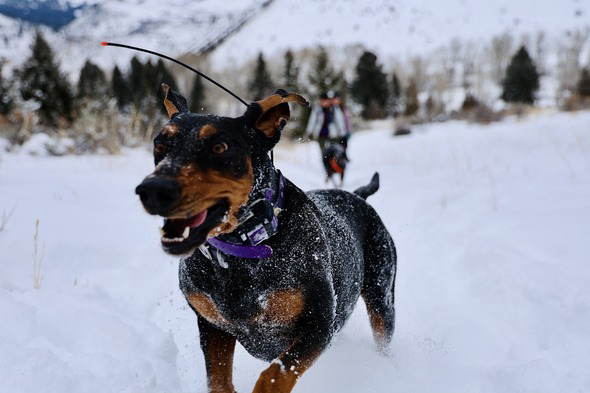
For the past several years, Montana Fish, Wildlife & Parks has worked with local hound handlers to monitor lion populations. This unique and beneficial relationship is an efficient way to monitor a highly elusive species.
“We contract with hound handlers from the public,” said Molly Parks, FWP’s carnivore coordinator. “The hound handlers are very skilled with highly trained hounds. That’s exactly the skill we need to make this research project work.”
The local handlers bring a high level of integrity to the data being collected.
“They care deeply for the resource and are committed to collecting high quality data. Plus, they are trusted members of the community and can help communicate results,” Parks said.
Routine population monitoring began in 2019, when FWP developed a mountain lion monitoring and management strategy. Each winter, the hound handlers contract with FWP to use their dogs to track, tree, and biopsy dart the cats to collect a DNA sample in a new monitoring area.
New this season, FWP biologists are also deploying GPS collars on a subset of the treed cats to collect additional data. The data collected from both biopsy darts and GPS collars will be combined with 25 years of lion ecology research and lion harvest data is combined in statistical models that estimate ecoregional lion abundance and density, predict the effects of lion harvest on those populations, inform management recommendations and set quotas.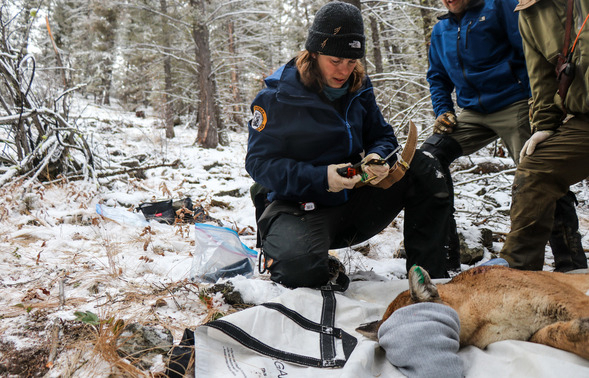
The information gathered from field monitoring and results from population models are considered by the Lion Ecoregional Population Objective Committees (LEPOC), which are made up of hunters, livestock producers, hound handlers and others who have an interest in mountain lion management and live in the lion ecoregion. The LEPOC makes recommendations to FWP regarding population targets and highlight localized areas of concern. FWP staff propose quotas to the Fish and Wildlife Commission based on the LEPOC recommendations. The commission makes the final decisions on quotas and regulations each year.
“This field work is really the core of our lion monitoring,” Parks said of the program. “We couldn’t do it without lion hunters and hound handlers.”
WATCH: Mountain Lion Research in SW Montana