Fast Bows and Lighted Nocks

By Glen Wunderlich

The evolution of archery equipment continues in various forms with faster bows in both vertical and horizontal configuration.  Understandably, archers’ desires tend to gravitate to more velocity, which translates to flatter trajectories in the flight of arrows.  The concept allows aiming points to be stretched, thus minimizing range-estimating errors – especially at closer ranges, where deer are typically taken.  Speed kills and it sells, too.
 

However, in historical terms, today’s bows, including compound bows manufactured some 20 years or more ago, are relatively fast.  And, in one over-riding aspect of sheer velocity, today’s bows lessen the chance of a deer “jumping the string” – a term used when a deer hears an arrow being launched and crouches down to begin its flight from imminent danger.  Since the speed of sound is some 3 times more than the fastest bows of today, the longer it takes an arrow to reach its target, the more chance a deer will not be in the same position, as when the shot was taken. 
 

From an ethical perspective, it behooves an archer to reduce the distance to the target animal.  That’s the bottom line, whatever archery equipment one uses.  While some many refer to crossbows as “crossguns,” there simply is no comparison to any firearm that propels a trajectory at supersonic speed – some 2 to 3 times the speed of sound.  There is no such thing as “jumping the bullet”.
 

Upgrading a bow can cost upwards of $1,000.  While some may feel the need for speed, a relatively recent technological advancement in archery hardware has now become a “must have” and costs about $10:  the lighted arrow nock.
 

Gone are the string trackers of yesteryear, in which a problematic spool of visible line was affixed to a bow.  The archer would in theory follow the string to his or her prize.  Of course, what could go wrong, did.  Enter the electronic age.
 

By replacing the conventional arrow nock (the end of the arrow that engages the string) with a highly visible LED nock, the flight of the arrow can be traced.  Some states consider them to be an unfair advantage, but that thinking is ludicrous!  They only help a person locate and arrow.  Whether the arrow missed its target or passed through a deer or left the scene with the animal, it is a good thing.  Period.
 

The system I had been using turned on by means of a switch in the nock and a magnet mounted on the bow.  I never really trusted the seemingly complex system and have since abandoned it in favor of a Lumenok lighted nock.  (Other brands are available, but I have no experience with them.)  It is extremely bright and quite visible in broad daylight.  But, its simplicity in design and relatively low cost make it standard equipment for me – that is until something better comes along.
 

Instead of a magnet, the bow’s string pressure closes the electronic circuit when the arrow is released.  It’s easy to install and Lumenok has videos on its website to walk a person through the installation, if the printed instructions are not enough.  All anyone must do is to insure that the nocks are compatible with the inside diameter of the arrows being used, so that the fit is proper.
 
Retrieving expensive arrows, broadheads, and ultimately freezer-filling venison has never been easier.

 

RMEF, SAF Maintain Support to Delist Yellowstone Grizzlies

MISSOULA, Mont.—The Rocky Mountain Elk Foundation and Sportsmen’s Alliance Foundation today spoke in favor of keeping grizzly bears in and around Yellowstone National Park under state management while addressing a Montana federal court. Plaintiffs want to place the population back under federal protection.

“We stand shoulder-to-shoulder with the U.S. Fish and Wildlife Service and state wildlife agencies in maintaining that the grizzly population in the Greater Yellowstone Area met all delisting criteria as determined by scientists and should remain subject to state management,” said Kyle Weaver, RMEF president and CEO. “State agencies manage elk, mountain lions, deer and other wildlife as per the North American Conservation Wildlife Model, and the same should hold for grizzly bears.” Read more

SCI, NRA Defend Grizzly Delisting in Montana Court

Attorneys from Safari Club International and National Rifle Association of America today participated in a hearing held in Montana federal court to decide the fate of the U.S. Fish and Wildlife Service’s delisting of the Greater Yellowstone Ecosystem (GYE) grizzly bear population.

During the hearing the judge informed all parties that he would not rule from the bench but would make his decision on the delisting as expeditiously as possible.

All Defendants, represented by attorneys for the U.S. Fish and Wildlife Service, the states of Wyoming, Idaho and Montana and several non-governmental organizations including SCI and NRA, made strong arguments in defense of the delisting and the use of hunting as a grizzly bear management tool.

As of the date of the publication of this article, the grizzly bear hunts set to begin in Wyoming and Idaho on Sept. 1, 2018, are still scheduled to go forward. Read more

Wildgame Innovations New Trail Cam

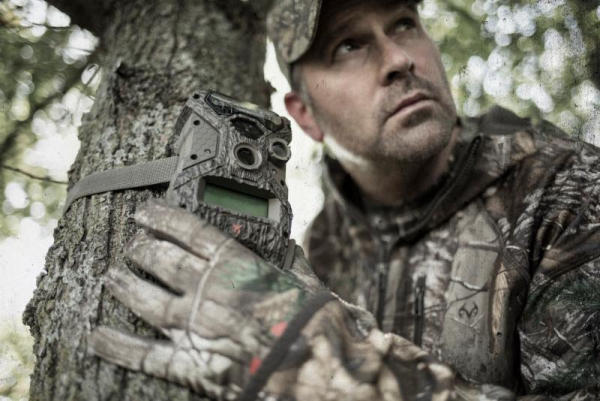
Grand Prairie, TX – Most digital scouting cameras utilize mechanical filters that allow them to “see” the infrared illumination produced by their infrared flash systems and record nighttime images of deer and other game. The clever system works, but has its drawbacks. First, the mechanical filter deploys – turning either on or off – anytime when light levels reach a predetermined value. Consequently, images taken

during these “transition periods” can often appear too light or too dark. Secondly, mechanical filters typically make noise when deployed, which can alert or even startle nearby game. Read more

Showcasing the Michigan DNR: Getting wild in the classroom

Critter cards help introduce young readers to Michigan wildlife species.

Connecting children to wildlife and other natural resources can be one of the most exciting, rewarding and fulfilling endeavors for educators and students.

With another school year beginning, some people may not know the Michigan Department of Natural Resources provides numerous opportunities to help teachers make those valuable connections between the state’s natural and cultural resources and students of all ages.

Elementary students get wild

Through the Go Wild for Michigan’s Wildlife curriculum, elementary school educators can introduce young learners to Michigan’s wildlife species and their habitats.

“Go Wild for Michigan’s Wildlife brought an excitement into my class that I wasn’t anticipating,” said Charlotte Simpson of Shettler Elementary, part of Fruitport Community Schools in Muskegon. “My youngest of learners – kindergartners – were engaged in the lessons and materials and were making connections to their beautiful home state.” Read more

BDX Rangefinder and Riflescope System Now Available in Retails Stores

Newington, N.H. – SIG SAUER Electro-Optics is pleased to announce that the award-winning Ballistic Data Xchange (BDX™) Rangefinder and Riflescope System is now available in retail stores for hunting season. BDX is a rangefinder and riflescope system that uses your ballistics, environmental conditions, and Bluetooth to illuminate the exact holdover dot. The BDX System is simple, fast, and intuitive – just Connect The Dot™.

To use the BDX Rangefinder and Riflescope system, simply download the “SIG BDX” app, pair the KILO BDX Rangefinder and SIERRA3BDX Riflescope, set up your ballistic profile, and you are ready to hunt. Once you are in the field, range your target, put the ballistic holdover dot on the target, pull the trigger, impact.

The BDX family of rangefinders includes: KILO1400BDX, KILO1800BDX, KILO2200BDX, KILO2400BDX, and KILO3000BDX rangefinding binocular. These rangefinders include many of the unrivaled features that the KILO name was built on: Lightwave DSP™ digital rangefinder engine, Hyperscan™ with 4 times per second scan rate, RangeLock™, and the Lumatic™ auto-adjusting display.

The SIERRA3BDX riflescopes are available in 3.5-10x42mm, 4.5-14x44mm, 4.5-14x50mm, and 6.5-20x52mm, and have the look, feel, weight, and size of traditional riflescopes. The riflescopes feature HD glass for superior resolution and optical clarity, 30mm main tubes, side-focus parallax adjustments, and the LevelPlex™ digital anti-cant system. The BDX-R1 Digital Ballistic Reticle is the evolution of holdover, with a second focal plane reticle that scales your ballistic holdover dot with magnification like a first focal plane reticle, providing a ballistic solution out to 800 yards with 1 MOA of accuracy.

Rounding out these superior features is SIG SAUER’s kinetic energy transfer indicator: KinETHIC™. KinETHIC provides hunters assistance in assuring an ethical hunt by indicating when energy on target drops below a threshold that can be set by the hunter using the BDX App. Read more

Gun Digest 2019, 73rd Edition

APPLETON, Wisconsin – Gun Digest Media LLC, publisher of Gun Digest the Magazine and Gun Digest books, has released the 73rd Edition of the Gun Digest Annual. Known as “The World’s Greatest Gun Book,” Gun Digest 2019 is jammed full of comprehensive information that firearms fanatics crave. No matter if your passion is long-range rifles, fancy shotguns, gritty Old West single-action revolvers or sleek semi-auto pistols, Gun Digest 2019 delivers.

At the heart of Gun Digest 2019 is a roster of in-depth feature articles from some of the top names in gun writing today. Whether you’re a discerning gun collector or practical gun buyer, you’ll enjoy seeing the newest makes and models picked to go under the microscope in the “Testfire” section. If vintage firearms are your thing, the “One Good Gun” stories will inspire you to find the next collectible for your gun safe. On top of all that, our 2019 Firearms Catalog provides you with endless hours of window shopping for hundreds of new and popular models. Read more

Viridian X Series Gen 3 with Camera

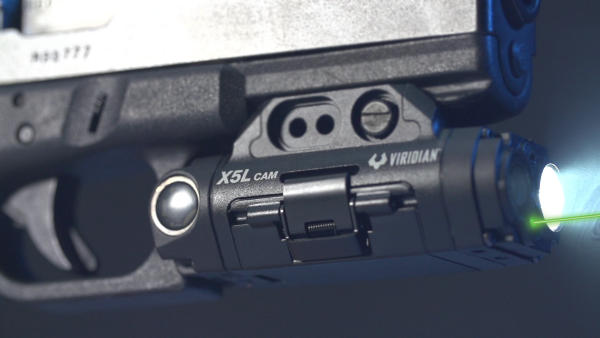
MINNEAPOLIS, Minn. –– Viridian Weapon Technologies has expanded its popular X Series Gen 3 product line to deliver even more robust features with the addition of a full-HD digital camera and microphone. The new X Series Gen 3 with Camera product line creates an entirely new category for personal protection, training and recreational/competitive shooting. The first two products from the lineup—X5L Gen 3 Green Laser with Camera and XTL Gen 3 Taclight with Camera—have begun shipping and are now available for purchase online and at select retailers.

“In 2017, we introduced the world’s first Weapon-Mounted Camera with a light and optional laser designed to clearly capture full-HD video and crisp audio from handguns and long guns,” said Viridian President and CEO Brian Hedeen. “This technology was developed specifically for law enforcement, addressing limitations officers can face with body cameras. Today, we’re excited to give consumers the same HD video and microphone capability on our popular X Series Gen 3 product offerings. The X5L® Cam and XTL Cam are designed to give customers a convenient, high-tech solution for capturing footage while training, competing, defending, or just having fun.” Read more

Affordable new Halo XL600 rangefinder

Dallas, TX – Regardless of how much practice one puts in at the range or the type of firearm, bow or crossbow one carries into the field, no variable plays a greater role in hunting success than knowing the distance to the target. Just a few yards of misjudged distance can result in a miss or worse – a wounded animal. For this reason, a quality laser rangefinder is one of the most important tools a hunter can carry into the field.

Delivering accuracy to +/- one yard, the Halo XL600 provides fast ranging out to 600 yards – plenty of distance for most hunting situations. Versatile 6x magnification provides bright, clear viewing and fast target acquisition, while an easy-to-read internal LCD displays the reticle, battery status, mode setting, numerical display and unit of measure, which is selectable by yards or meters. Read more

SAF Joined by Other Groups in Filing Amicus Brief in Mass. Gun Ban Case

BELLEVUE, WA – The Second Amendment Foundation has been joined by several other groups and Second Amendment scholars in filing an amicus brief with the First U.S. Court of Appeals supporting a challenge of the Massachusetts semi-auto rifle ban.

Joining SAF are the Cato Institute, the Citizens Committee for the Right to Keep and Bear Arms, Jews for the Preservation of Firearms Ownership, Millennial Policy Center and the Independence Institute. The case is known as Worman v. Healey.

The case centers on a simple question: Can a state ban arms that are in common use by law-abiding citizens? Read more

1 1,132 1,133 1,134 1,135 1,136 2,085