Michigan Inland Waterway survey gives insight on muskie numbers

Fisheries staff in the northern Lower Peninsula have been busy tagging muskellunge in the Inland Waterway in an effort to gain better insight into the area’s populations. The Inland Waterway is a roughly 38-mile series of rivers and lakes connecting Lake Huron and Lake Michigan. Anglers who catch any muskies in the area are encouraged to report it, particularly if a fish has an external tag or any evidence that a tag was on the fish at some point.

Tagging these fish allows the DNR to learn a lot about the area’s population: things like fish growth and densities, spawning locations, exploitation, and how recent fishing regulation changes are affecting them. Read more

Michigan conservation officers complete active shooter response training

DNR conservation officers now are federally certified in responding to active shooter attacks, enhancing their abilities to protect Michigan citizens.

The DNR is one of the few agencies in Michigan to earn this certification. All 232 conservation officers completed the intensive, 16-hour training at the Camp Grayling Joint Maneuver Training Center. The program, certified by the U.S. Department of Homeland Security, instructs officers on the latest tactics for responding to attacks on places like schools, places of worship and employment centers.

“Conservation officers are fully certified peace officers who may be called upon to respond to active shooting situations,” said Gary Hagler, chief of the Law Enforcement Division. “All too often we see these incidents of terrorism play out on our televisions across America. These are real, dangerous situations, and the need for a rapid, coordinated response is imperative to stopping the threat as soon as possible.” Read more

They Cull Lions, Don’t They?

By Steve Scott

Editor’s Note: This feature first appeared in The Outfitters Wire (www.outfitterswire.com)

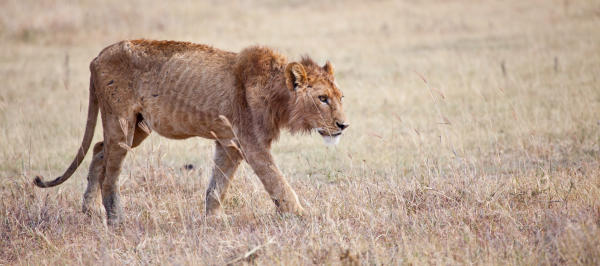
Remember Cecil the lion; the “iconic” lion shot by an American client of a professional hunter who didn’t have the requisite permit? The fallout was memorable:  from internet trolls to the Ricky Gervais’ and Jimmy Kimmel’s of the world condemned the hunter in particular and lion hunting in general as a barbaric act with no place in our modern society. And with the outcry of the masses, the Obama administration leapt into action, barring any further import of lions into the United States. It was a victory for the lions, right? Well, not exactly.

In what has come to be known as the “Cecil effect,” big-game hunting in Zimbabwe, especially for lions, has seen hunter’s numbers diminish to historic lows. And though a few lions from certain countries under certain conditions can be imported under new Trump administration rules, lion hunters are not exactly coming back in droves. The fear of capricious prosecution from a third-world government, or more likely, the fear of the social media equivalent of a tar and feathering has led to reluctant hunters and a dangerous lion overpopulation in one of Zimbabwe’s few quality wildlife areas, the Bubye Valley Conservancy. Because the lion’s numbers are skyrocketing due to lack of a sustainable hunting harvest, Bubye Valley Conservancy will likely have to cull at least 200 of the 500-plus apex predator’s roaming within its borders.

In a dramatic case of lions behaving…as lions, the big cats are taking a bite out of the populations of numerous species of antelope as well, including sable, kudu, and giraffe just to name a few. But it’s not only the antelope who suffer. Lesser predators such as leopard, cheetah, and the endangered wild dogs are finding it harder to make a living in the dwindling game fields.

Fortunately, there is a solution, but it is a harsh one; Nature’s solution. Lions will devour the ever decreasing herds of antelope to a point where there are so few game animals left, the hungry predators start killing domestic cattle, goats, dogs, indigenous people, you know, a sequel of The Ghost and the Darkness until eventually, mass die-offs of most species and then voila! No more lions. Oh a few will survive, but in such small numbers there will be time for the other species to rebound. It is Nature’s way. For in a world with 7.3 billion people and growing, wildlife has to pay its way. And since lions are no longer pulling their metaphoric conservation weight, 200 of their number are going to have to die anyway. Only this way, it is without the approximate $1,000,000 sustainable use hunting would have generated for the benefit of conservation. So congratulations to the anti-hunting lynch mob. You win and lions lose.


Rattlesnake Safety Tips for Summer

Give snakes plenty of space

Rattlesnakes often strike fear in the hearts of people. But they shouldn’t. Knowing a little about the animal, and doing a few simple things — like keeping your distance and not harassing a snake — can go a long way to keeping you safe.

If you see a rattlesnake, give it plenty of space. And don’t harass it.

Kevin Wheeler, biologist with the Utah Division of Wildlife Resources, says rattlesnakes in Utah are on the move right now, looking for water and rodents after emerging from their dens in May.

Wheeler says the snakes will likely have to travel more to find food this year. “Drought conditions have reduced Utah’s rodent population,” he says, “so snakes will be roaming more, looking for rodents. Because the snakes will be active, there’s a greater chance you’ll see one in the wild this year.”

So, if you see a rattlesnake in the wild, what should you do? Read more

2018 Federal Duck Stamp Features A Big Change

Artwork for the 2018 Federal Junior duck stamp.

RW85, the 2018 Federal duck stamp.

On June 29, 2018, in Hanover, Md., the U.S. Department of the Interior will issue the $25 Migratory Bird Hunting and Conservation stamp for the 2018-2019 waterfowl hunting season (RW85). The stamp is valid through June 30, 2019. The stamp features mallards by Robert Hautman of Delano, Minn. This is the third Federal stamp featuring Mr. Hautman’s winning artwork, (his other federal stamps are RW64 and RW68).


The First Day of Issue will take place at the Bass Pro Shop in Hanover. The event is free and open to the public. Check fws.gov for starting time and additional event information.


The 2018 stamp will be issued in three different formats: a pane of 20, an 85th Anniversary souvenir sheet of four and a self-adhesive single. This year will also see a BIG change for the stamp program. Read more

Canada Seeks to Reduce Lead in Fishing Tackle

An average Canadian angler can lose 11 to 15 jigs and sinkers per year while fishing due to snags and other reasons. This adds up to about 460 tonnes of lead jigs and sinkers lost every year into Canada’s lakes and waterways. This represents the most significant source of lead releases into Canadian waters.

Lead is a highly toxic metal that can cause detrimental effects to the nervous and reproductive system in humans. With respect to wildlife, the ingestion of small lead fishing sinkers and jigs is a major cause of death in breeding Common Loons in Canada, often exceeding the death rate caused by trauma, disease and entanglement in fishing gear. Ingesting them can lead to blindness, muscle paralysis, reduced ability to reproduce, seizures and death.

Alternatives

There are several viable non-lead sinkers and jigs available in the Canadian market. Anglers can use sinkers and jigs made from non-poisonous materials such as tin, bismuth, antimony, steel, brass, tungsten, terpene resin putty and polypropylene. These alternatives have minimal cost compared to overall fishing expenditures. Read more

Michigan DNR Seeks Environmentally Sensitive Lands for Habitat Restoration

Contact: Mike Parker, DNR conservation partners program specialist, 517-898-3293

Goal is to encourage more monarch butterflies, pheasants, ducks and grassland birds to frequent southern Michigan

Starting Monday, June 4, 2018, the United States Department of Agriculture will accept offers from rural landowners in 41 southern Michigan counties who want to voluntarily restore pollinator and wildlife habitat on their property. The solicitation is through the USDA Conservation Reserve Program (CRP) State Acres for Wildlife Enhancement (SAFE), Southern Michigan Pheasant and Monarch Recovery, in partnership with the Michigan Department of Natural Resources and Pheasants Forever, Inc.

“Any landowner in an eligible area is invited to visit their nearest Michigan USDA Service Center to learn about the Conservation Reserve Program and the pheasant and monarch recovery effort,” said DNR Director Keith Creagh. “We will accept up to 40,000 acres of environmentally sensitive land for the program, and work closely with the USDA, partners and landowners to improve wildlife habitat.”

SAFE is a federally funded voluntary program that assists agricultural producers and landowners with the cost of restoring, enhancing and protecting certain grasses, shrubs and trees to improve water quality, prevent soil erosion and reduce loss of wildlife habitat. In return, participants are provided annual rental payments, cost-share assistance and other financial incentives.

Eligible Michigan counties include Allegan, Arenac, Barry, Bay, Berrien, Branch, Calhoun, Cass, Clare, Clinton, Eaton, Genesee, Gladwin, Gratiot, Hillsdale, Huron, Ingham, Ionia, Isabella, Jackson, Kalamazoo, Kent, Lapeer, Lenawee, Livingston, Mecosta, Midland, Monroe, Montcalm, Muskegon, Newaygo, Oceana, Ottawa, Saginaw, Sanilac, Shiawassee, St. Clair, St. Joseph, Tuscola, Van Buren and Washtenaw. Read more

NMMA Issues Condemnation of Tariffs on Canada, EU and Mexico

Following the announcement by U.S. Commerce Secretary Wilbur Ross that Section 232 tariff exemptions for Canada, Mexico, and the European Union expired, resulting in a 25 percent tariff on steel and 10 percent tariff on aluminum, respectively, NMMA is sounding the alarm to the Trump Administration and Congress on the damage to the recreational boating industry.

NMMA President, Thom Dammrich, noted, “The decision to impose tariffs on major trading partners severely harms the $39 billion U.S. recreational boating industry and the 650,000 American workers it supports. Of the marine manufactures that build aluminum boats, the majority use domestic aluminum. The issue with these tariffs is not so much about having to pay higher prices for imported aluminum as it is about the drastic price increases our members are already experiencing from domestic aluminum mills and the severe blow to the competitive global market manufacturers depend on.”

Dammrich continued, “Simply put, these tariffs are a disaster for our industry. All types of recreational boats are on the retaliatory lists from both Canada and the EU. As a result, rather than protecting American manufacturing, these tariffs directly harm the entire recreational boating industry—one of our country’s enduring American-made industries. To make matters worse, Canada, Mexico, and the EU are the top three export markets for American-made marine products and in 2017 they accounted for nearly 70 percent of marine exports.” Read more

Canada Announces Retaliatory Tariffs to Include U.S. Built Boats

GW: Just the beginning of a new consumer-pays era!

The decision by the Trump Administration to implement 25 percent tariffs on steel and 10 percent tariffs on aluminum from Canada, the European Union and Mexico, has already ignited a trade war with both the EU, Mexico, and Canada. All three regions are top export markets for the U.S. recreational boating industry. Canada’s Department of Finance announced that in response to the U.S. tariffs, “Canada intends to impose surtaxes or similar trade-restrictive countermeasures against up to C$16.6 billion in imports of steel, aluminum, and other products from the U.S., representing the value of 2017 Canadian exports affected by the U.S. measures.  The Government is also considering whether additional measures may be required.” These retaliatory efforts include a 10 percent tariff on U.S. boats exported to Canada.

Canada’s countermeasures will take effect on July 1, 2018 and, according to Canada’s Department of Finance, will remain in place until the U.S. eliminates its trade-restrictive measures against Canada. The countermeasures will not apply to U.S. goods that are in transit to Canada on the day on which these countermeasures come into force. Read more

Bird Treaty Ruffles Feathers

By Glen Wunderlich

Recent news from Washington indicates the economy is growing at a rapid pace and that the country is deemed to be at full employment.  The Trump administration has eliminated encumbrances to progress, and in so doing, has ruffled the feathers of a gaggle of environmental groups that seek protection for migratory birds.  Recently filed litigation challenges the current Administration’s move to eliminate longstanding protections for waterfowl, raptors, and songbirds under the Migratory Bird Treaty Act (MBTA) enacted over 100 years ago. 


At issue in the suit by the National Audubon Society v. Department of the Interior, is the claim that the Act’s prohibition on the killing or “taking” of migratory birds has long been understood to extend to incidental take from industrial activities — meaning unintentional but predictable and avoidable killing. Under the Administration’s revised interpretation, the MBTA’s protections will apply only to activities that purposefully kill birds. Any “incidental” take — no matter how inevitable or devastating the impact on birds — is now immune from enforcement under the law based on a memo issued by the U.S. Department of Interior of December 2017.


The government’s memorandum in question analyzes whether the Migratory Bird Treaty Act, 16 U.S.C. § 703 (“MBTA”), prohibits the accidental or “incidental” taking or killing of migratory birds. Unless permitted by regulation, the MBTA prohibits the “taking” and “killing” of migratory birds. “Incidental take” is take that results from an activity, but is not the purpose of that activity.

Interpreting the MBTA to apply to incidental or accidental actions hangs the sword of Damocles over a host of otherwise lawful and productive actions, threatening up to six months in jail and a $15,000 penalty for each and every bird injured or killed says the Interior Department.

Neither the plain language of the statute nor its legislative history support the notion that Congress intended to criminalize, with fines and potential jail time, otherwise lawful conduct that might incidentally result in the taking of one or more birds.  

The government’s position on the Act’s intention relates to the early 1900s, when commercial killing for feathers to adorn ladies’ fancy hats had had taken its toll on many bird species.  As a result of commercial hunting, several species, such as the Labrador Ducks, Great Auks, Passenger Pigeons, Carolina Parakeets, and Heath Hens were extinct or nearly so by the end of the 19th century.

The government’s assertion is that neither the plain language of the statute nor its legislative history, support the notion that Congress intended to criminalize, with fines and potential jail time, otherwise lawful conduct that might incidentally result in the taking of one or more birds.

Said Mike Parr, President of American Bird Conservancy, “The new policy makes it much harder to protect birds from major bird traps — threats like oil pits, wind turbines, and communication towers in bird migration hotspots.”

Should we then give up driving cars in an effort to protect birds or four-legged animals – let alone humans – from inevitable, yet incidental, deaths?  No doubt, progress has its cost and the question of where to draw the line is now on the table.

1 … 1,181 1,182 1,183 1,184 1,185 … 2,102