MDT: New Training Shot Timer

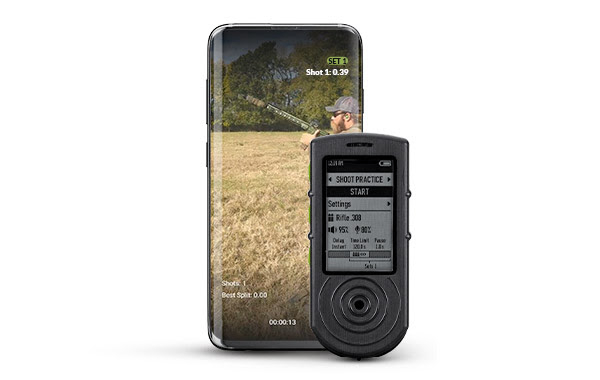
The MDT Training Shot Timer is a versatile and advanced shot timer designed for shooters of all skill levels. It features adjustable sensitivity, allowing it to be used with a wide variety of firearms and calibers as well as dry fire practice and suppressors. The device saves all of your shooting data and pairs with an accompanying app, which enables users to record video with live stats and share them on social media. The app also supports the ability to create and run through virtual shooting stages, providing a unique and customizable training experience. With the MDT Training Shot Timer, you can take your shooting skills to the next level.

The MDT Training Shot Timer features a weather-resistant design for use in all climates and conditions. It has a two-piece magnetic backing with a belt clip. It’s easy to remove from your clothes or gear to swap between preset training drills. The internal battery is recharged wirelessly, or through a USB-C cable, and can last for weeks on a single charge.

The MDT Training Shot Timer is now available with a starting price of $299.95 USD. Details can be found at https://mdttac.com/mdt-training-shot-timer/ Read more

Plan now for spring treatment of hemlock woolly adelgid

If hemlock trees on your property show signs of hemlock woolly adelgid infestation, now is a good time to plan for spring treatment of this invasive species. Hemlock woolly adelgid, native to Asia, is known to be present in areas of Allegan, Benzie, Mason, Muskegon, Oceana and Ottawa counties in Michigan. These small insects suck sap from hemlock needles and ultimately can cause tree death.

Insecticides are available to control the insect, and in many cases, landowners can apply them easily by carefully following label instructions and application rate guidance. In Michigan, the label is the law. Due to certain restrictions on the use of these insecticides, you may need the services of a licensed pesticide application business.

If one or more trees are infested, make plans to act this year. Without treatment, trees infested with hemlock woolly adelgid are likely to die within four to 10 years. Weakened trees on a home landscape could spell disaster during high winds or storms, and eventually they will have to be removed. Loss of hemlocks in forested areas can reduce shade, winter cover, food and habitat for birds, fish and mammals.
Products containing either imidacloprid or dinotefuran as the active ingredient and labeled for treatment of hemlock woolly adelgid are effective in combatting the insect.

  • Imidacloprid moves slowly through trees, taking at least a year to reach the top of a large tree. However, one application will protect the tree for approximately four years.
  • Dinotefuran moves through hemlock trees more quickly, making it ideal for heavily infested trees. Dinotefuran protects trees for one to two years.

No matter which treatment you select, be sure your treatment plan includes all hemlocks on your property over the next few years. If hemlock woolly adelgid is on your site, hemlocks without symptoms are very likely to be infested over time. This includes trees on your property as well as neighboring properties. It’s a good idea to discuss treatment plans with neighbors and coordinate efforts when possible.

Can I treat trees myself?

Application of imidacloprid or dinotefuran is simple enough for many landowners to do themselves. Products containing these chemicals are available at garden supply stores, packaged under various trade names in liquid or granular form. Check the label or ask for assistance in selecting the right product.

Imidacloprid and dinotefuran products available at garden supply stores generally are applied to the soil close to the tree trunk, where they are absorbed through the root system. Plan your application for a time between early April and late October when the ground has thawed and soil moisture is moderate – not too dry or saturated. The sooner you treat, the more successful your treatment will be. Follow all label directions, wear appropriate safety gear and determine the right application rate to ensure positive results. To protect the environment, do not allow pesticide to enter or run off into storm drains, drainage ditches, gutters or surface waters.

Some products have restrictions on the amount that can be applied to an area per year. Be sure to read the label carefully to determine if the amount you need falls within these limits. If not, you may need to adopt a multiyear plan or hire a professional.

More information on do-it-yourself treatment can be found in the MSU Extension bulletin Guidelines for homeowner treatments of hemlock trees infested with hemlock woolly adelgid, available at Michigan.gov/HWA.

When should I call a professional?

Licensed pesticide application businesses have a broader range of options for applying treatments than consumers, and their professional skills are recommended in certain situations. A county-by-county list of businesses holding pesticide application licenses can be found on the Michigan Department of Agriculture and Rural Development’s website,Michigan.gov/MDARD. For lawn or landscape trees, look for a professional licensed in the ornamental category (3B); for forest trees, choose the forestry category (2).

If your hemlock trees are within 75 feet of a body of water or in areas with a high-water table, or if flowering plants or shrubs are growing around the hemlocks you wish to protect, a trunk injection or bark treatment may be necessary to avoid affecting the environment, groundwater or other insects. Professional applicators can provide these types of treatments.

What should I expect after treatment?

Hemlock woolly adelgid’s cottony, white ovisacs will linger for a time following treatment. If trees are treated in the spring with dinotefuran, check new growth in late fall or winter for any fresh signs of infestation. With imidacloprid, wait until a year after treatment to gauge effectiveness.

After treatment, trees should be checked every year. If the insect has returned after dinotefuran was used, reapplication may be needed after one to two years. For imidacloprid, consider retreatment every four to seven years.

Do my trees have hemlock woolly adelgid?

If you have hemlock trees on your property, it is important to check them for signs of hemlock woolly adelgid, which infests only hemlock trees. If you are not sure whether your trees are hemlocks, use the Michigan Invasive Species Program’s eastern hemlock identification guide.

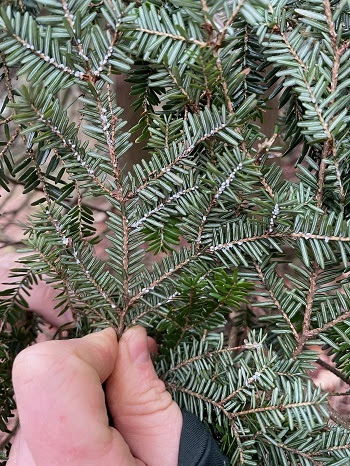
The adelgid’s round, white, cottony ovisacs are most visible in the winter and are located on the undersides of hemlock branches at the base of the needles. The publication Hemlock Woolly Adelgid Look-Alikes, available at Michigan.gov/HWA, provides images and information on identifying this and other pests commonly mistaken for it.

How do I report an infestation?

If you suspect trees on your property have hemlock woolly adelgid, report it using the Midwest Invasive Species Information Network at MISIN.MSU.edu. You can report from the field using the MISIN smartphone app, which will log the location and allow you to upload photos of the suspected signs of the insect.

You also can take pictures, note the tree’s location and email the information to MDARD at MDA-Info@Michigan.gov or report by calling 800-292-3939. Someone will respond to let you know if hemlock woolly adelgid is present or not.

Please do not clip infested branch samples and transport or mail them. This could accidentally spread the insect to new areas. A state interior quarantinemakes it illegal to move hemlock anywhere within or out of Allegan, Ottawa, Muskegon, Oceana or Mason counties. Waste hemlock material in the quarantined counties may be moved to approved disposal sites within the quarantine zone.

For more information on identifying and managing hemlock woolly adelgid, visit Michigan.gov/HWA.


Michigan’s Invasive Species Program is cooperatively implemented by the Michigan departments of Agriculture and Rural Development; Environment, Great Lakes, and Energy; and Natural Resources.

Contact: Joanne Foreman, 517-284-5814 or Rob Miller, 517-614-0454

Barrett Showcasing Model 99 with 1 Mile Target at ‘The Gathering’

Barrett Firearms Manufacturing, Inc., will be attending Palmetto State Armory’s “The Gathering” at The Clinton House Plantation in Clinton, South Carolina from March 24 – 25, 2023. Barrett will be showcasing the M99 rifle, chambered in the premier ELR cartridge the .416 Barrett to novice and expert shooters alike with at a target located at 1 mile (1760 yards). If successful, shooters will receive a 2023 Barrett/The Gathering One Mile Challenge coin.

For more information visit www.barrett.net.

Colorado Group Owes Over $6,000 for Poaching Fish in Michigan

The six men pleaded guilty to taking fish by an illegal method along the Manistee River last October. Contact: Sgt. Grant Emery, 906-285-2085

Colorado group owes more than $6,600 for poaching fish in Michigan

Six Colorado men have pleaded guilty to taking fish by an illegal method, stemming from an incident along the Manistee River in October. Michigan Department of Natural Resources conservation officers caught the group illegally fishing following a tip from a concerned angler.

The last of the six men was charged earlier this month in the 85th District Court in Manistee County. Each of the men, all from Colorado, owes more than $1,100 in restitution, fines and costs:

  • Agustin Barrera, 29, of Denver.
  • David Cobaxin, 48, of Denver.
  • Alfredo Hernandez, 56, of Denver.
  • Gregorio Hernandez, 49, of Aurora.
  • Leonel Lopez, 38, of Aurora.
  • Raul Lopez, 37, of Aurora.

One positive result from the group’s poaching: conservation officers were able to donate more than 460 pounds of fresh fish to Manistee County families in need.

Michigan conservation officers are fully commissioned law enforcement officers who provide natural resources protection, ensure recreational safety and protect people by providing general law enforcement duties and lifesaving operations in the communities they serve. Learn more at Michigan.gov/ConservationOfficers.

Big Horn Armory Mourns the Loss of its Friend, John Linebaugh

John Linebaugh, 67, of Clark, Wyoming, passed away on March 19, 2023.

Watch Linebaugh and Buchel fire their 500 Linebaugh revolvers and lever gun together.

Cody, Wyo. – Big Horn Armory (BHA), makers of big-bore firearms, is saddened by the recent loss of its dear friend and industry legend, John Linebaugh. Linebaugh passed away on March 19, 2023, at his home. A fellow Wyomingite, Linebaugh was an American gunsmith who gained international renown for creating custom revolvers in the largest calibers in the world. He invented the .500 Linebaugh caliber — the first successful .50 caliber revolver (and cartridge) in 1986. He is also credited with inventing the .475 Linebaugh cartridge, which he perfected in 1988.

“John was a pioneer in the use of big bore, heavy bullets in handguns. He predates Smith & Wesson’s 500 S&W by almost 20 years. They probably would not have created the X Frame guns without his inspiration,” commented Greg Buchel, president of Big Horn Armory. Read more

Vortex Edge Launches YouTube Series for New Gun Owners

BARNEVELD, Wis. – It’s no secret an unprecedented number of new guns owners have joined our community in recent years, including 5.4 million in 2021 alone. And, while resources like YouTube are full of useful content for gun owners in general, help for brand new shooters is harder to find. New to Guns is a YouTube series from Vortex Edge™ that fixes that problem, talking directly to new gun owners buying and using firearms for the first time.

In New to Guns, we take as close to a “zero assumptions” approach as possible while explaining the buying, owning, and use of firearms. Pistols, AR-15’s, precision rifles, hunting rifles, and everything related to these guns will be covered in our weekly videos. Read more

Michigan DNR collecting walleye eggs on Muskegon River this spring

Muskegon River anglers should be on the lookout this spring for Michigan Department of Natural Resources personnel collecting walleye eggs below Croton Dam, which is in Newaygo County.

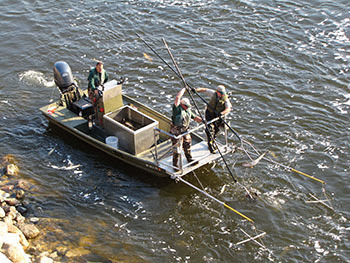
Electrofishing boat crews will collect walleye starting as early as the week of March 27 and concluding by April 14. The date these collections begin will depend on water temperatures, the presence of ripe fish and other factors. Most work likely will be completed from the last week of March through the first week of April. Five days of electrofishing are planned, with four of those being egg-take days.

“This adult population consists of mostly stocked fish,” said Ed Pearce, DNR fisheries technician supervisor who coordinates the egg take. “The Muskegon River has the largest run of walleye in the Lake Michigan watershed south of Green Bay.”

Electrofish sampling usually begins at Croton Dam each day at about 8:30 a.m. and proceeds downstream to the Pine Street access site. If more eggs are needed, additional collections may occur downstream to the Thornapple Street access site.

Anglers who wish to avoid the walleye collection activities should fish downstream of the Pine Street access site. The DNR asks everyone to use caution when fishing near the electrofishing boats, and anyone wading will be asked to exit the water when a boat approaches and during electrofishing work. Read more

The Good and Bad of Floating Weeds

It used to be that we went looking for sargassum.

Find a weedline of this gold-brown floating stuff and you find mahi, sailfish, wahoo and maybe even marlin. The gamefish hung on the weeds, which formed in the current breaks, because it was full of baitfish.

Now, sargassum is coming looking for us.

A massive blob of sargassum thousands of miles long is headed to Florida, the Caribbean and eventually the Gulf of Mexico, scientists say.

While a little sargassum is great for fish and fishermen, a whole bunch of it is bad for not only anglers but for the massive tourist trade generated by beaches from the Caribbean to Florida and Alabama. Read more

Taylor’s & Company Introduces 1875 Outlaw Revolver in 9mm

Winchester, VA – Taylor’s & Company, the world’s leading marketers and importers of state-of-the-art historical firearms utilizing the latest innovative designs, is pleased to announce the launch of their new 1875 Outlaw 9mm Revolver to their Lifestyle Series for 2023. Taylor’s & Company partnered with Uberti to create this exclusive iconic reproduction.

The new 1875 Outlaw 9mm Revolver is a faithful reproduction of the 1875 Remington® single-actions, which kept the solid frame and overall styling of Remington’s 1858 percussion models. Ordinary citizens and Old West lawmen alike recognized the sturdy quality of the new Remington revolvers. The infamous Frank James even carried one for most of his outlaw career in .45 caliber.

“We couldn’t be more excited to bring this classic firearm reproduction to the modern gun enthusiast,” said Tammy Loy, Owner/CEO, Taylor’s & Company. “We wanted to offer this versatile caliber to broaden our audience and add a familiar caliber to a six gun. The 1875 Outlaw is a perfect complement to our very popular Lifestyle Series. This 9mm with a classic revolver look is sure to be very popular with firearm enthusiasts that want the look of a historical pistol with the performance of a modern handgun.” Read more

Legacy Sports International Pointer Side–By–Side Shotgun

Reno, NV – Legacy Sports International is happy to announce the addition of the much-requested Pointer Side–By–Side Shotgun lineup for 2023, packed with quality, dependability and value at an affordable price. You asked and we listened.

The New POINTER side-by-side comes in a Turkish Walnut stock, chrome-lined barrels with 3” chambers, 12 & 20 gauge options, and includes 5 interchangeable choke tubes. These shotguns come standard with manual extractors to provide a smooth, effortless operation of the action, will serving as a convenient way of keeping spent hulls from littering the range or hunting field. Read more

1 … 529 530 531 532 533 … 2,088