Wild Turkey Conservation Aids in Delisting of Endangered Tortoise
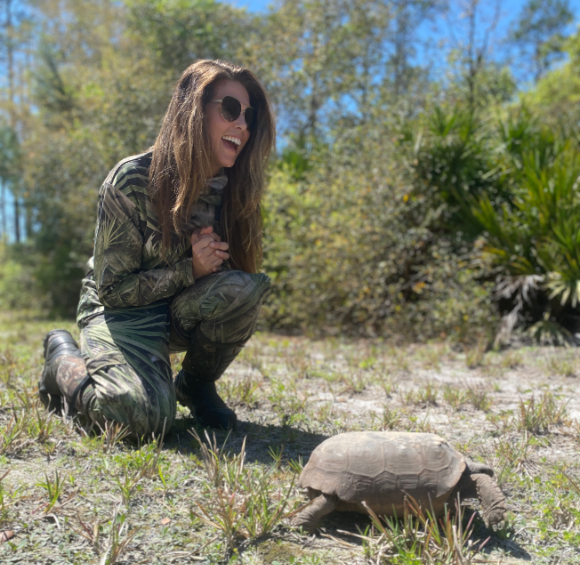

From increasing opportunities to go afield to making forests safe against catastrophic wildfires, the NWTF’s conservation work has far-reaching impacts that benefit overall ecological value. The delisting of the gopher tortoise in much of its historic range is a recent demonstration.
Just as wild turkeys benefit from active forest management, so does the Southeast’s celebrated burrowing turtle, Gopherus polyphemus.
The keystone species was listed under the Endangered Species Act in 1987 as a threatened species in the western portion of its range, namely from Alabama to Louisiana. Since its initial listing over three decades ago, the species has undergone various levels of listing, which eventually encompassed the entire Southeast.
However, through the efforts of private landowners, state and federal agencies and conservation partners, the species has been delisted as threatened in the eastern half of its range, including in Florida, Georgia, South Carolina and most of Alabama. The turtle will retain its status as threatened in western Alabama, Mississippi and Louisiana. The announcement was made in October by the U.S. Fish and Wildlife Service.
The NWTF’s role in helping the gopher tortoise is a result of the organization’s longleaf pine conservation efforts.
Longleaf pine ecosystems once dominated the Southeast, extending from Virginia to Florida and expanding as far west as eastern Texas, almost mimicking the gopher tortoise’s range. Today, however, estimates show that longleaf pine ecosystems encompass about 3% of their historic range and are highly fragmented. Read more