Boone and Crockett Club Welcomes Research and Media Partnership with International Wildlife Crimestoppers

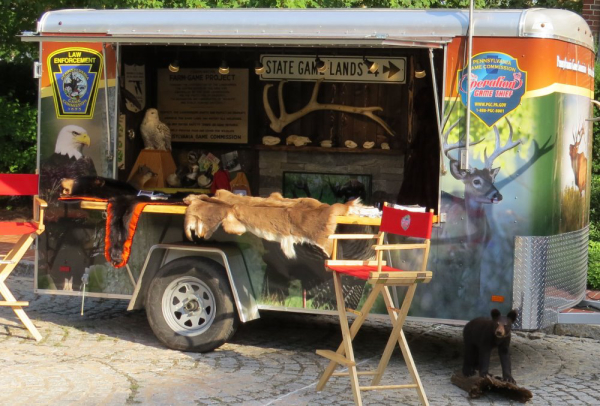
MISSOULA, Mont. – International Wildlife Crimestoppers, Inc. (IWC) has joined the Boone and Crockett Club as a research and media partner in their coordinated efforts against poaching. Through the strategic partnership, the Club is supporting conservation law enforcement and will help IWC promote and continue providing specialized law enforcement equipment to officers. In addition, one key part of this outreach includes IWC’s Wall of Shame trailers, traveling exhibits that educate both adults and our nation’s youth about the differences between poaching and legal, ethical hunting. As part of the partnership, IWC will also be actively engaged in the Club’s Poach & Pay initiative supporting the development of communications materials and connection to conservation officers.

“For over one hundred years, conservation of our nation’s resources has come through the dedication of ethical hunters abiding by the regulations put in place to maintain sustainable wildlife resources. Conservation officers have been essential to that model by working to identify and stop poachers—but their job is incredibly hard. The Boone and Crockett Club is excited for this collaboration with International Wildlife Crimestoppers as the Poach & Pay project develops. Strategic partnerships like this one will help to increase successful prosecution of poachers, and make sure the penalties fit the crimes with fines and restitutions that support state agency wildlife conservation efforts,” commented Club President James F. Arnold.

Since it was founded by Theodore Roosevelt in 1887, the Boone and Crockett Club has focused on conserving wildlife using scientific management principles, while also promoting the highest ethical standards of Fair Chase® and sportsmanship in hunting. The organization has played a critical role in enacting many of the conservation laws that now serve as the foundation for wildlife management in this country. Protecting wildlife resources in North America is an ongoing mission for conservation law enforcement officers and International Wildlife Crimestoppers, Inc. IWC members consist of conservation law enforcement agencies and conservation minded organizations with the primary responsibility to enforce laws and regulations regarding the protection of fish, wildlife, and habitat within their state or province and promote sustainable conservation models for the future. Currently, the association is made up of U.S. states and Canadian provinces with a diverse executive board consisting of conservation law enforcement officers from across the country. Read more

Season 7 of DU Films Premieres in March

Trailer video online now showcases another exciting season

MEMPHIS, TN – March 12, 2021 – Ducks Unlimited (DU) has released the video trailer for its popular online series DU Films.

DU Films is a unique online film series from Ducks Unlimited, the world leader in wetlands and waterfowl conservation. Each film features thrilling hunting footage that tells a story about waterfowl hunters who are passionate about hunting and giving back to the resource.

Season 7 of DU Films travels from the prairies of southeast Texas, to the historic Mississippi Delta, to the Illinois heartland, capturing the stories of the people and places that make the waterfowl hunting and wetlands conservation world special. Read more

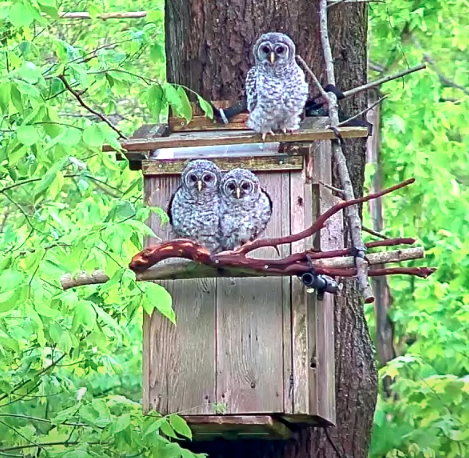
WBU Live Barred Owl Nest Cam

The Barred Owl nestlings ready to fledge last May at the WBU big nest box.
Today the female is in the egg-laying and incubation period inside the big nest box. You can follow her progress throughout the spring.

The Barred Owls have returned to their infamous big nest box, and Monday the female laid the first egg! As verified by the live feed from the nest cams – one inside and one outside – the female made her first visit back on February 13th, and the pair has been more and more active at the nest box ever since with occasional calling back and forth. The male has been bringing the female food periodically, and the female brings her own food to the nest box sometimes. Now, there’s a good chance she will lay the second egg today (Wednesday).

There will be a wealth of things that will interest you as incubation leads to hatching and the growth of downy young owls, through the feathered nestling and fledging stages, along with the activities of the adults throughout the nesting period. The nest box and live feed cameras are brought to you by Wild Birds Unlimited, whose founder, Jim Carpenter, built and installed the big nest box in 1998, 23 years ago. It took 8 years for Barred Owls to use the nest box the first time, but it’s been an active nest site each spring since then!

You can check in on the action anytime, day or night, and follow the activities of the owls through the nesting season at https://www.wbu.com/owl-cam/

And if you want to zoom through a the highlights of a full nesting season, you can view the activities of past seasons, which are provided in concise video form at https://www.wbu.com/owl-cam-highlights/

Practicing Bird Song IDs

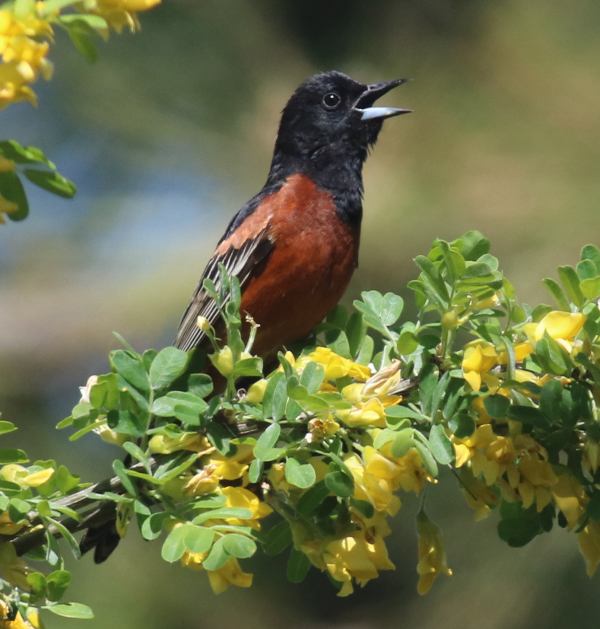
It’s time to start refreshing your memory to be able to identify the parade of migrating birds by their songs, including this singing Orchard Oriole (photos by Paul Konrad).
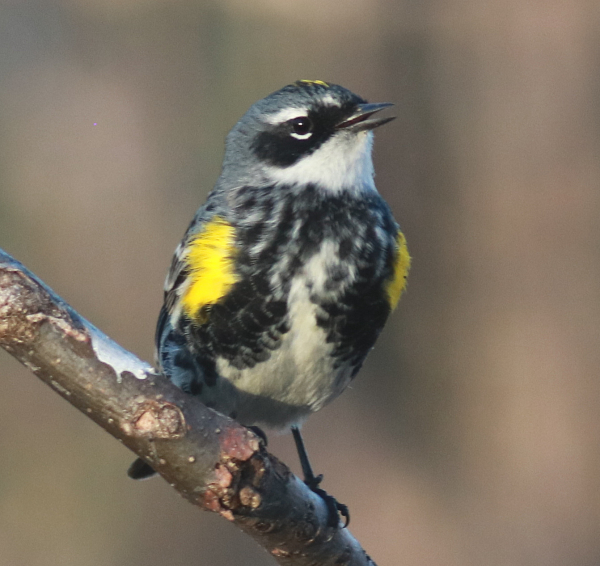
How are you at “birding by ear?” Could you identify this singing Yellow-rumped Warbler by its song?

With birds beginning to sing in earnest this spring, and new birds migrating into your neighborhood now through early June, it’s time to start practicing your birding by ear skills. That is, it’s time to refresh your memory, or relearn bird songs and calls you have forgotten since last spring. Those songs will come back to mind quickly, but it’s also a great time to learn new songs to add to the list of birds you can identify when you hear their songs. Overall, learning bird songs and calls makes you a better birder – and it’s fun!

Any veteran birder will tell you that learning bird songs is a great way to identify distant birds, birds hidden by dense foliage, birds at night, and birds that look almost identical to each other. In fact, when biologists count birds in the field, the majority of species are identified by hearing their songs rather than by seeing them. Same thing for most World Series of Birding and Big Day birders – many of the birds on their species lists are heard and not seen.

When you reach a given birding destination, you can do a quick survey of what’s around before you begin a hike. If you hear a song or call you don’t recognize, you zero in your attention on that location to find the singer. And throughout times afield, your experiences will be enhanced when you get to know the birds you see by their songs and calls. Same thing in your yard and workplace. If you are looking for some direction to get started, The Cornell Lab provided a great primer on how to make bird song identification easier and more rewarding:

– 5 Tips to Help You Learn or Refresh Your Bird Song IDs This Spring Read more

Indiana: How to Prevent or Reduce Canada Geese Conflicts

Changing habitat now can help prevent human-goose conflicts later.

Once Canada geese have started using a site, it can be difficult to discourage them from staying there through the season. Preventive action is the best way to deter Canada geese.

Many breeding pairs of Canada geese start looking for nesting locations this time of year. Geese frequently return to areas where they’ve been successful nesting before. They prefer areas within 150 feet of open water that are surrounded by turf grass, which is their favorite food.

If geese are being fed by people, this only encourages them to congregate in large groups and renders attempts to manage them useless. Feeding Canada geese — or any other wildlife — causes the animals to lose fear of humans, increasing the likelihood of conflicts with humans, especially those who have no food for them. Read more

Michigan DNR partnerships, sponsorships offer chance to connect with outdoor enthusiasts

DNR partnerships, sponsorships offer chance to connect with outdoor enthusiasts

The Department of Natural Resources, this year celebrating 100 years of caring for Michigan’s outdoors and history, invites businesses and organizations to get involved as sponsors and partners in conserving natural and cultural resources, while connecting with the millions of people who enjoy these resources.

With less than 15% of the DNR’s annual budget coming from general tax dollars, new and creative revenue sources are vital to fulfilling the department’s mission.

“We are open to a wide variety of sponsorships and partnerships to help people enjoy and appreciate Michigan’s natural and cultural resources and, at the same time, highlight the many businesses that are growing the outdoor recreation industry and the state’s economy,” said Kristin Phillips, DNR Marketing and Outreach Division chief. “It’s also the DNR’s centennial year, which brings additional opportunities.” Read more

AFWA Issues Statement Supporting Introduction of the Abandoned Mine Land Reauthorization Act

Statement from the Association of Fish and Wildlife Agencies Supporting the Introduction of the Abandoned Mine Land Reauthorization Act

Washington D.C. – The Association of Fish & Wildlife Agencies strongly supports the introduction of the Abandoned Mine Land Reauthorization Act. This bipartisan legislation would reauthorize the Abandoned Mine Land Trust Fund, which is set to expire in September 2021. Representative Matt Cartwright (D-PA-08) and Representative Glenn Thompson (R-PA-15) introduced this bill today in the House of Representatives in Washington, D.C.

“On behalf of our state agencies and the public they serve, I applaud Mr. Cartwright and Mr. Thompson for championing reauthorization of this critical program,” said Sara Parker Pauley, Director of the Missouri Department of Conservation and President of the Association of Fish and Wildlife Agencies. “These lands represent billions of dollars in unfunded projects and continuing the Trust Fund is now more important than ever. These projects are exactly the type of future-focused investments we count on Congress to support, enabling our agencies to accomplish even more in their work to ensure healthy fish and wildlife while providing thousands of jobs to hard working Americans.” Read more

Michigan: Invasive zebra mussels found in aquarium moss products

Alert employee’s report launches nationwide response

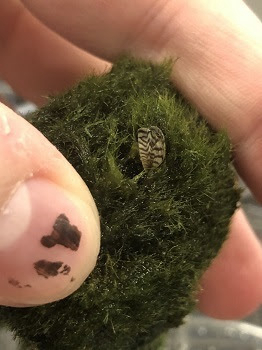
When an observant employee at a Petco store in Seattle, Wash. reported finding invasive zebra mussels in moss balls sold as aquarium plants, it set off a rapid response across the U.S.

March 3, aquatic invasive species coordinators across the country received notification from the U.S. Geological Survey about the concerning report made to the agency’s Nonindigenous Aquatic Species online reporting system.

Within 24 hours, aquatic invasive species program staff from several states confirmed finding zebra mussels in supplies of moss balls distributed as Mini Marimo Moss Balls (SKU 5292944) and Marimo Moss Balls (SKU 5164031) at local Petco and PetSmart stores.

Marimo moss is a form of algae from Northern Europe and Asia, and marimo moss balls are a popular aquarium plant used to generate oxygen and remove nitrates from tanks.

While the corporate stores were working to quarantine stock in compliance with an order from Petco headquarters, inspectors began finding contaminated stock on the shelves of independent stores and in store aquarium systems. The Michigan Department of Natural Resources Law Enforcement Division confirmed that infested moss balls have been found in several stores throughout the state.

As the effort to track down infested stock continues, reports indicate that other brands including Betta Buddies and Shrimp Buddies products also may contain the invasive mussels.

Consumers should note that potentially infested products have been sold online as well as through retail outlets. It is not clear how long these products have been on the market or what other brands may be infested. Read more

NSSF: How Industry Benefits from Firearm and Ammunition Excise Tax Payments

NSSF Announces How Industry Benefits from Firearm and Ammunition Excise Tax Payments

With support from an AFWA grant, new study reveals

long-term value to industry and firearm owners alike

NEWTOWN, Conn. – Each year firearm and ammunition manufacturers pay millions of dollars in excise taxes into the Wildlife and Sport Fish Restoration (WSFR) program that result in long-term benefits to industry, target shooters and hunters. A new study, announced by the National Shooting Sports Foundation, reveals how these payments—some $792 million in 2020 alone—provide not only bedrock funding for enjoyment of the shooting sports but also a major return on investment for industry.

With support from a grant awarded by the Association of Fish and Wildlife Agencies’ (AFWA) Multistate Conservation Grant program, a new report titled “Benefits & ROI of Wildlife & Sport Fish Restoration Funds” highlights for industry leaders the financial returns their businesses receive from investing in the WSFR program. Read more

Fish Art Contest Deadline Approaching

WHITE BEAR LAKE, MN – The deadline to enter the 2021 Art of Conservation™ Fish Art Contest, supported by Title Sponsor Bass Pro Shops, is quickly approaching. Free and open to youth in Kindergarten to 12th grade, the contest is accepting entries until March 31st, 2021. You must enter to win!

To compete, young artists create an original illustration of any species from the Official Fish List, found at www.FishArt.org. A one-page creative writing piece answering the question “Why do you think it is important to protect our lakes, rivers, estuaries and coastlines,” is also required and awarded for contestants in grades 4-12.

“The Johnny Morris Foundation is committed to introducing a new generation to the wonders of the natural world. With children spending more time in front of screens, programs such as the Fish Art Contest are vital to inspire the next generation of anglers and conservation stewards,” said Misty Mitchell, Director of Conservation Programs. Read more

1 834 835 836 837 838 2,086