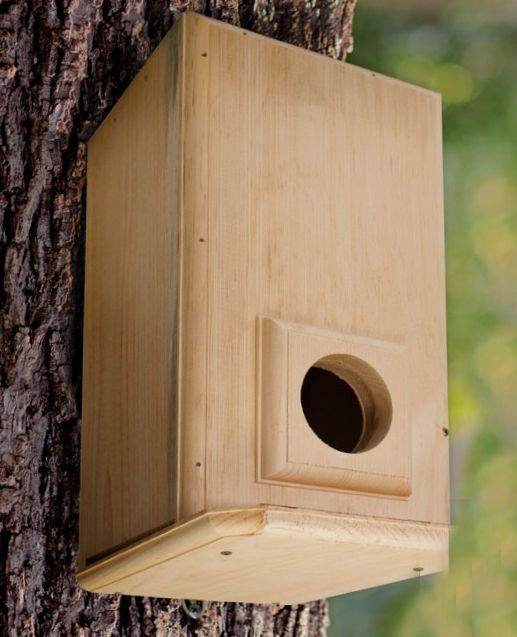
 An example of a nest box positioned upside down so the entrance hole is at the bottom of the box. The extended roof was trimmed so rain or snow won’t accumulate.It’s all relatively simple, but if you are successful in attracting a small owl, you will never forget the experience, whether it lasts a couple days during a migration stopover, or throughout the cold season. What a memorable experience that can be! There is one catch though; it takes a little modification to improve on any of the “roost boxes” available on the market today. That said, you can use a “traditional” owl roost box, which is actually a nest box, renamed. So what’s the difference?
Recently, the idea of a creating a better roost box has been turned upside down – literally. Today, some birders are appreciating the merit of placing the entrance at the bottom of a roost box, and it makes perfect sense to us. During cold-weather months, it would be more beneficial to try to keep as much warm air created by the body heat of the owl inside the box. But because hot air rises, outdated “roost boxes” with the entrance hole at the top of the box permit the warm air to escape easier, instead of keeping it inside the box. By having the entrance hole near the bottom of the box, the bird’s body heat will rise and fill the roost box with warmer air, even if the small owl or another bird stands at the base of the box to look outside. Then, by adding a wooden rod for a perch inside the roost box, the bird can perch higher in the roost box, where the air is warmer.
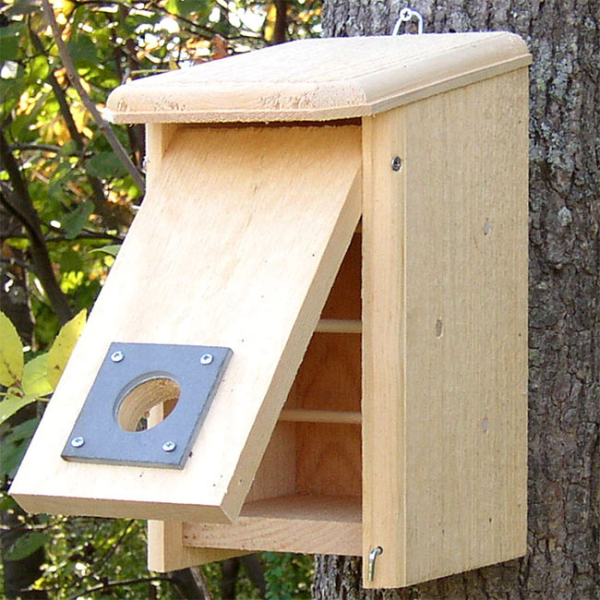
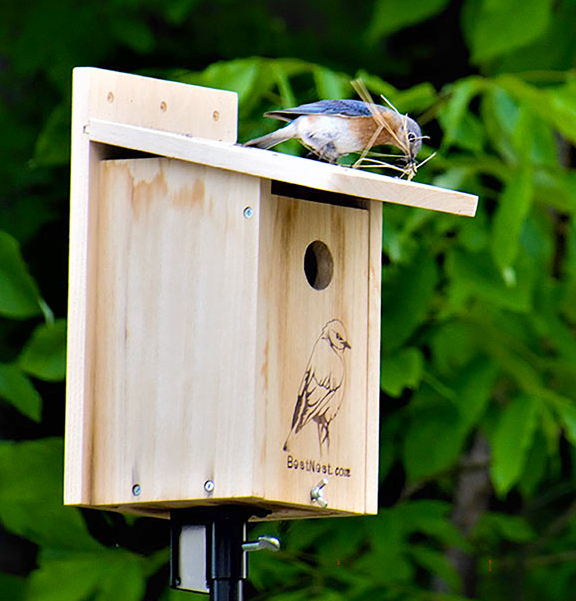
This idea has transferred to nest box manufacturers on the songbird level, with a couple companies providing “convertible” nest–and–roost boxes. These boxes have a reversable front panel that can be used with the entrance hole at the top position during the nesting season, and in the down position during the cold-weather periods of fall and winter.
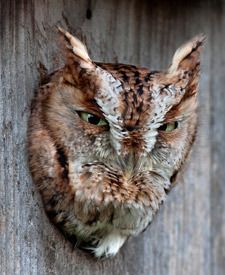
Who wouldn’t enjoy seeing a small owl using a roost box in their yard (Eastern Screech Owl photo by Kurt Hasselman).U
nfortunately though, nest box builders and businesses that market nest boxes haven’t reacted to the growing interest in using this great idea for Big roost boxes yet. So for a roost box for screech owls and other small owls, we birders are left to our own “upside-down” conversions. But wait, maybe we’re onto something there: Maybe it’s just a matter of flipping the entire nest box upside-down – perhaps that’s a simple option. Then, you can lift the hinged side panel of the nest box to add an elevated perch inside. One catch is that most nest boxes have a roof that extends out from the front to divert rain and snow, which will accumulate water and snow if the box is in the upside-down position. We simply cut the roof short and top it with a longer roof when spring nesting season is eminent.
OK, that’s one option, and the other options are to either build a big roost box with the entrance hole at the bottom, or buy a big nest box and modify it into an upside-down roost box. Both options are fairly simple, and the effort can be a special family project with children, which will to make it all the more significant. But while you are at it, why not make it a completely “reversable” nest box–roost box, by making the box fully convertible. Give it a try – build or modify a nest box into a functional convertible roosting-and-nesting box for small owls.
Here’s How: On an existing big nest box, simply remove the screws or nails on the front entrance panel, flip the front panel upside down, and screw it back into place with a minimum of screws. When re-installing the panel, we suggest using short screws, which should make taking them out and screwing them back in easier. And remember to add a horizontal perch a distance above the entrance hole so a small owl can perch in the warmer, upper area of the roost box. If you wish to build a roost box, we think using the convertible design is also the best option for any birds, large or small.
For more information about how to build the best nest box for small owls (and other cavity nesting birds), refer to NestWatch, starting with Features of a Good Birdhouse – NestWatch and progressing to the screech owl instructions at Western Screech-Owl – NestWatch and Eastern Screech-Owl – NestWatch
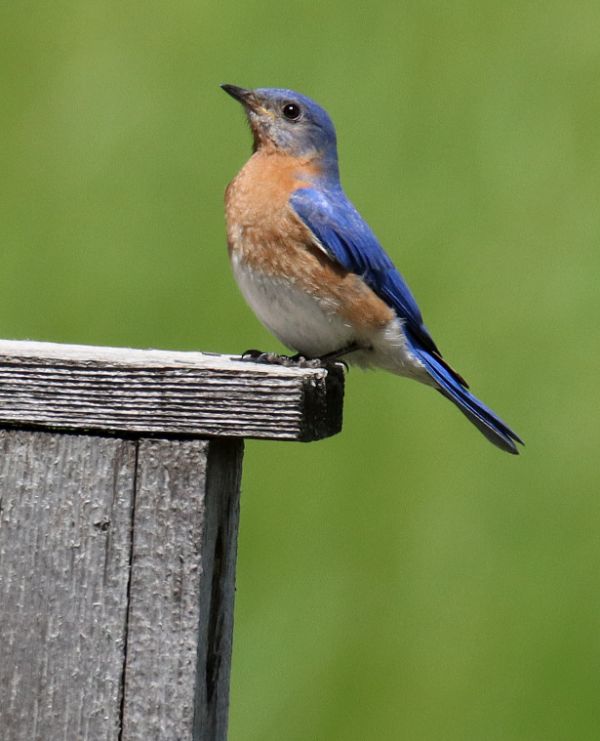
Songbirds Too: In many ways, we are learning as we go, and these new roost box options and convertible nest-and-roost boxes are good examples of that. You can extend these roost box improvements to your bluebird and chickadee nest boxes too. Modifying an existing nest box is a great way to convert a bluebird house into a roost box for bluebirds and similar-sized cavity-oriented birds after the nesting season; the same goes for smaller chickadee boxes.
The good news is that companies are now offering convertible bluebird nest boxes, so you can buy one that is ready to install in your yard. A convertible nest-and-roost box is really a game changer for birders who wish to attract and benefit cavity nesting birds, as well as birds that roost in cavities during the offseason. During the roosting season, a perch consisting of a crossbar or a ladder-perch, allows the birds to perch above the entrance hole where the warm air concentrates inside. Sometimes, more than one bluebird or chickadee will roost together, adding body heat to the box’s interior. In fact, these small songbirds are known to huddle together for added warmth inside a box while roosting.
To check out a convertible roost-and-nest box, see the option from Duncraft at Convertible Roost House | Warm Winter Bird House | Duncraft. BestNest was the first company to offer a convertible box but, as we publish this week, their model is temporarily out of stock. You can check to see when they are available again at Coveside Convertible Bird House/Winter Roost at BestNest.com. The fact that the BestNest convertible boxes are sold out suggests they are especially popular, and that there is ample room for expansion to provide more wooden bird boxes.
Similarly, we hope an enterprising company or companies will soon fill the void by producing big wooden roost-and-nest boxes for small owls that will be available on the market soon. Until then, it’s really a small change to modify an existing big nest box into a convertible box that provides an improved roosting option during cold-weather months, and a top-notch cavity nesting site during spring and summer. One more thing that can be helpful is to position any roost box so the entrance faces away from the dominant cold-weather wind direction, which usually means facing away from north winds.
Cavity nesting birds will be seeking natural cavities this fall and winter, but a roost box or convertible nest box will provide a great service to these birds, ranging from small owls to chickadees that look for a place to get out the wind, stay warmer, and for added protection from would-be predators. Believe us, it really becomes a special experience when an owl or even a chickadee uses your roost box during inclement weather – and it’s definitely an experience to appreciate and encourage.
Share your backyard birding experiences and photos with The Birding Wire at editorstbw2@gmail.com