FWS Ignores Science In Upholding Elephant Ban

Washington, D.C. – Safari Club International (SCI) and millions of hunter conservationists worldwide are shocked and disappointed by the U.S. Fish and Wildlife Service (FWS) decision to continue the ban on the importation of elephants from Zimbabwe for the rest of 2014.

“Like my fellow hunters, I am disappointed in the FWS decision to persist in upholding a ban that has no sound basis in science and undermines conservation,” said SCI President Craig Kauffman.  “This administration continues to talk publicly about the benefits of hunting while siding with anti-hunting extremists time after time.  SCI’s Washington team will do everything within its power to reverse this misguided and baseless policy.” Read more

What to Feed Your Summer Bird Feeder Visitors

 Outdoor Wire Editor’s Note: Today’s feature first appeared in The Birding Wire (www.birdingwire.com)
Great information for the bird lovers like me…GW


Sure, winter is a prime time for feeding birds – natural foods are less abundant and cold weather makes windowside birding that much more inviting. But birds flock to feeders in summer, too – especially in midsummer, after they’ve fledged a brood from their nest and they’ve got new mouths to feed.

Summer bird feeding can bring you different species, such as Neotropical migrants that aren’t around in winter. It’s also a fun time to try offering some different kinds of foods. Here are some tips for creating a summertime backyard buffet that might bring a few new faces to your feeders.

Nectar for Hummingbirds

A Ruby-throated Hummingbird enjoys feeding from a red hummingbird feeder. Photo by Kevin Click via Birdshare.

Attracting hummingbirds to your yard can be as easy as hanging a hummingbird feeder and filling it with a sugar water solution (1/4 cup sugar per cup of water). There’s no reason to add food coloring to turn the water red; you’re providing a substitute for flower nectar, which is clear. Don’t locate the feeder in direct sun, as the sugar water will spoil rapidly. In the shade your sugar water should last two or three days, except for very hot days, in which case it’s wise to change your hummingbird feeder water daily.

Why are hummingbird feeders red? It’s not because hummingbirds are inherently attracted to the color red, because these peripatetic featherweights feed on flowers of many colors: white, purple, yellow, red, even ultraviolet colors that we can’t see. But the key here lies in the eyesight of nectar-feeding insects, not hummingbirds. Bees, wasps, and butterflies are better at locating pale-colored flowers than red flowers. In nature, red flowers tend to have more nectar in them, because they aren’t being visited as often by insects. So hummingbirds are indeed attracted to red, not because they can see it better, but because they have learned from experience that red flowers tend to have more nectar than flowers of other colors.

Oranges for Orioles

Baltimore Orioles have a sweet tooth for fruit like oranges. Photo by Dave LaDore via Birdshare.

Flashy orange orioles are even simpler to lure in for backyard viewing pleasure. Just slice an orange in half and set it on a platform feeder or skewer it on your feeder pole. Other fruits will work too, such as cherries or grapes. Orioles seem to prefer dark fruit and will ignore yellow cherries or green grapes. They also LOVE grape jelly. Put a spoonful of jelly on your platform feeder, and once the orioles find it, it won’t last long!

Why do orioles love fruit? It could be that they develop a sweet tooth while wintering in Central America, where they forage for a variety of wild fruits in tropical forests. Orioles sometimes use their slender beaks to feed in an unusual way, called gaping: they stab the closed bill into soft fruits, then open their mouths to cut a juicy swath from which they drink with their brushy-tipped tongues.

Sunflower Seeds for Grosbeaks

Rose-breasted Grosbeaks’ big beaks make short work of crushing seed hulls. Photo by Robin Arnold via Birdshare.

Grosbeaks are one of the best reasons to keep your seed feeders stocked in summer. The males are handsome, decked out in black-and-white formal wear with a pop of color (a red chest patch for Rose-breasted Grosbeaks, warm cinnamon-orange bodies for Black-headed Grosbeaks). Females of both species are drab mottled brown and may be confused with finches or sparrows.
Grosbeaks are seed-eating machines. They’ll eat millet but their favorite is good ol’ black-oil sunflower seeds.

Why are grosbeak beaks so big? The better to eat large seeds with, my dear. Grosbeaks are one of the classic birds with beaks that indicate what they eat-big, sturdy beaks are best for crushing seed hulls. Those beaks are also mighty good at crushing insects and grasshoppers, another primary food source. A female grosbeak’s big beak is the first clue that you’re not looking at a finch or a sparrow, both of which have decidedly more petite beaks.

Mealworms for Bluebirds

Insectivores like this Eastern Bluebird always welcome a mealworm snack. Photo by Lindell Dillon via Birdshare.

Many people entice bluebirds to take up residence on their property by putting up nest boxes (also called birdhouses). If you have bluebirds in your neighborhood, you can get an up-close look at them by setting a few mealworms out on your platform feeder. Bluebirds are insectivores, and an offering of a few mealworms-alive or dried-is a protein boost that’s hard to resist, especially during the energy-intensive breeding season.

What to do with leftover fishing bait? If you fish with wax worms, set them out for bluebirds. Mealworms and wax worms are interchangeable for bluebirds, and some folks even say bluebirds will pick through a pile of mealworms to eat the wax worms first. Read more

Threatened and endangered species feature: piping plover

Piping plovers are special and beautiful birds – there are only 50-60 nesting pairs in the entire Great Lakes area and less than 7,000 individuals worldwide. Cryptically colored for a life among rocky and sandy soil, these birds can be distinguished from most other shorebirds by their black headband and the single black band around their neck. They may legitimately be described as “cute” throughout their lives.

The Great Lakes population of piping plovers is one of only three small populations in the U.S. During the winter all of these birds congregate on the Gulf Coast, but they travel to the separate areas during the breeding season. When it comes time to nest, piping plovers prefer gravelly beaches. Nests can be found on the Michigan shorelines of the Great Lakes, including Sleeping Bear Dunes National Lakeshore, from early April through mid-August.

piping ploverDisturbance can cause the birds to abandon their nests. Serious threats to these birds include dogs and careless off-road driving. Raccoons and raptors are common natural predators.

Both parents participate equally in incubating (sitting on) the eggs. When it is time to trade duties, one bird hops off and quickly runs away while the other scurries over and pops onto the nest, quite a comedic sight. Comedians and occasionally actors, piping plovers have a clever distraction tactic when threatened by a predator. Adult birds act as if their wing is broken and wobble and chirp to draw the predator away from their nest. Once the predator has been duped the bird flies off! Read more

DSC Praises Tanzania’s Crackdown on Green Mile Safari Co.

DALLAS — Reacting to egregious, alleged violations in hunting ethics and laws, Tanzanian wildlife officials have revoked all hunting licenses and concessions for Green Mile Safari Co. The Dallas Safari Club (DSC) had urged the crackdown and is praising the move as a strong step for hunting and conservation.

According to media reports, the safari company, a private outfit owned by United Arab Emirates families, is threatening to sue the Tanzanian government for lost revenue caused by the revocation.

Allegations against Green Mile include hunting with automatic weapons, hunting female and young animals, using vehicles to chase and knock down animals and hunting protected species. Read more

Peregrine falcons in southeast Michigan: banding season comes to a close

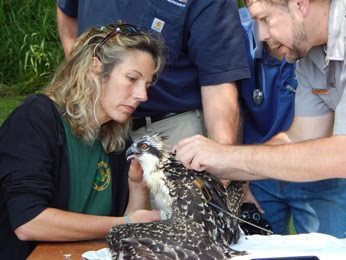
peregrine falcon chick with leg bandThe Department of Natural Resources has banded 15 peregrine falcon chicks in the Southeast Region this spring. The Southeast Region, extending from the Ohio border to the Thumb, includes Monroe, Lenawee, Hillsdale, Jackson, Washtenaw, Wayne, Macomb, Oakland, Livingston, Genesee, Lapeer, St. Clair, Sanilac, Tuscola, Saginaw, Bay and Huron counties.

At about three weeks of age and before they can fly, peregrine falcon chicks are given two bands on their legs – one bi-colored band with large numbers that can be read from a distance and a U.S. Fish and Wildlife Service Band, which is usually purple and bears a serial number specific to that bird. These bands are placed on young birds so that scientists can monitor and track the dispersal, migration, life span, reproductive success, behavior and population growth of the falcons. Read more

Helpful Tips for Planting in the Dry Season

Let’s face it, sometimes planting in the late summer through the early fall can be tough. Except for the extreme North, the ideal planting time for cool season food plots coincides with three of the driest months of the year, August-October. Much of the country starts seeing the summer thunderstorms dry up around the first of August. With many landowners, hunting clubs, and outfitters planting in August and September, the conditions can be really dry. With the absence of rain in the forecast and soil moisture being almost non-existent, a lot of folks will have fields that are not up and growing until late fall. Not having a nice, lush, tender field to hunt over on opening day of bow season seems like the worst thing to some guys, but don’t give up yet. Late planted plots can be plenty effective for attracting deer and also providing cold season nutrition. Read more

Michigan Improves Wildlife Management

By Glen Wunderlich

When Michigan’s new hunting and fishing license structure was introduced, along with increases in license fees, reactions were predictably mixed.  With jaundiced eyes, many of us took a wait-and-see attitude.


With the cost of food and fuel at all-time highs, who wants to pay more for anything?  Nobody.   Government, on the other hand, likes to employ code words and phrases, such as “investments in the future” to soothe our trepidation.   “Grants” is another word which meets with widespread approval from those on the receiving end but raises suspicion from those funding them – and, in this instance, it’s the outdoors enthusiasts that pay to hunt and fish.


Michigan’s Department of Natural Resources (DNR) has expanded its efforts to do what it said it would do with our money through the issuance of wildlife habitat grants, specifically designed to enhance food and cover for deer on private land.  Again, this is only one means cited in a dizzying array of grant programs available to applicants, but evidence of the new thinking has already materialized. Read more

1 267 268 269 270 271 376