
SCI Leads The Charge Protecting Wildlife Management In Michigan
Lansing, Mich. — Yesterday, Safari Club International’s (SCI) Michigan Chapters worked in conjunction with the Citizens for Professional Wildlife Management (CPWM) to submit over 350,000 signatures to the Michigan Secretary of State in support of the ballot committee sponsoring a citizen-initiated law called the Scientific Fish & Wildlife Conservation Act.
“The voice of Michigan hunters and conservationists cannot be ignored. We are proud of everyone who has worked on the campaign to ensure that fish and wildlife are managed with sound science. Their work will be a lasting legacy to protect hunting and fishing rights from attacks by out-of-state anti-hunting organizations,” said SCI Past President and current CPWM Chairman Merle Shepard. “I want to thank SCI for their leadership in helping to collect signatures, as well as its financial commitment to fighting for our hunting rights.” Read more
 I don’t really care for the terms “no-till” or “no-plow” when it comes to food plot products. I believe it gives many newbie’s a false sense of hope. It tells them that it’s acceptable to cut out an important step in the planting process and everything will be OK. The problem being – these types of products are often sold to those first-timers or food plot farmers that don’t have the equipment necessary to complete all the plantings steps according to the book. The more steps you skip in the planting process, the more you will sacrifice in attraction, yield and palatability to a point where you have a total failure. Is it possible to plant a food plot without working/turning the soil? Absolutely; however, if you’re going to skip this very important action, some of the remaining steps become much more essential and must be completed correctly.

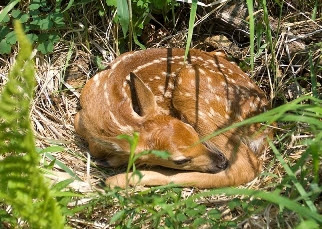 It’s spring, and baby animals are out and about as wildlife is giving birth and hatching the next generation. Baby red foxes are being spotted, and the first litters of cottontails will soon appear. Great-horned owls have already hatched and are growing up in stick nests high above the ground. Mourning doves have made nests and some have already laid eggs. Soon there will be nestlings and baby critters all over the place – the natural cycle for population replenishment is at work.

 One of the biggest problems with warm season food plots is weed competition. Some are grasses and some broadleaf weeds, but they are all an eyesore and steal moisture and nutrients from your wildlife plots. Here are two of the most common food plot weeds in the south. It seems to be giving a lot of food plotters problems this year in their fields across the country. Most anyone who has spent time farming or food plotting is familiar with Johnson Grass. If you don’t have any to deal with on your property, count yourself blessed. It is a notorious invasive weed that is very drought resistant, fast spreading, and can be tough to eliminate.