Henry Repeating Arms Introduces First New Models of 2018

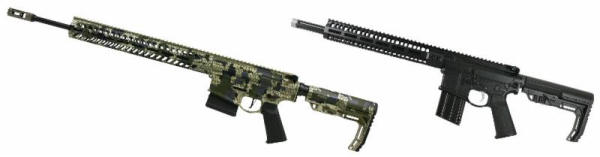
BAYONNE, NJ – – Henry Repeating Arms, one of the leading firearms manufacturers in the United States introduced over two dozen new models in 2017, including shotguns for the first time in the company’s 20-year history. The offerings are expanding again in early 2018 to include a new tribute edition, an additional finish option for the popular Big Boy line of lever action rifles, and an emergency preparedness kit that includes the U.S. Survival AR-7 rifle, among others. Read more

Coyotes over Baitcicles

By Glen Wunderlich

While there is no way to estimate the number of coyotes that inhabit given areas of Michigan one thing is certain: They’re everywhere. Although our neighbors in the Upper Peninsula can point to wolves as their number one apex predator, coyotes, through sheer numbers, have become an omnipresent danger to game animals, livestock and family pets throughout the state. If ever hunters should be inclined to take matters into their own hands, it is now.

From late January through mid-March is coyote mating season and with it comes a bevy of adventurous males and certain vulnerability for them. Their drive to mate will have them traveling for miles on end in search for satisfaction and wise hunters can use this knowledge to their advantage. Although control strategies include trapping and myriad hunting techniques, one particular method of baiting is worth sharing: baitcicles.

The term “baitcicles” is a coined word used to describe a frozen concoction of table scraps and meat juices within a 5-gallon bucket. It is then released from the container and placed strategically as bait for a varmint hunter. Unlike typical bait, the frozen formula can withstand coyotes’ attempts to carry off or otherwise quickly devour the bait.

Here’s how it works. With temperatures below freezing, a bucket is placed outdoors and filled with aromatic meat products. As the bucket is filled, adding hot water to the mix will create juice that will solidify the contents into a block of delectable ice. When full, the bucket is placed at the site and the contents released by heating the exterior of the bucket. (I like to use a soil torch for this purpose.)

Once in place, it’s basically a hide-and-watch proposition best done from a comfortable hunting blind some 100 yards or so downwind of prevailing breezes. Once located by the targeted predators, they’ll return time after time – and, even after the last morsel is gobbled up.

Obviously, game cameras can provide valuable information as to visiting times, but typically most action will occur near dusk or dawn or at night. However, unlike using vocalizations to attract the demons and trying to scan surrounding areas for motion, the focal point will be wherever you want it to be. And, this is especially helpful when hunting in darkness.

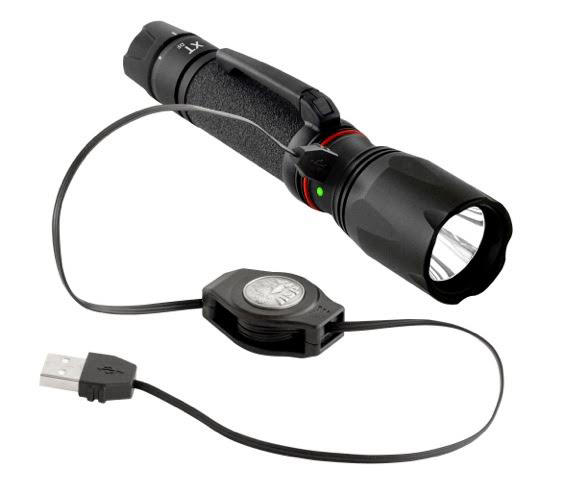
While having a partner to operate a red or green light is helpful, it is not altogether necessary with the proper setup. Gun-mounted lights can be used, but I much prefer not waving a firearm all over creation to spot potential game. Without a partner, a light can be placed on a rest aimed directly at the baitcicle and turned on from time to time as a check.

Remember to check the game laws for allowable firearms, because the laws have changed recently for night hunting. Specifically, .269 or smaller diameter cartridges must be used below the shotgun line (Zone III) on private land only.
Above the shotgun line (Zones II and III) centerfires on state parks or recreational areas are not legal, but they are elsewhere in northern Michigan. It is also important to note that rifles are prohibited from elevated platforms after dark anywhere.

Nothing is easy about hunting coyotes, but adding baitcicles to your bag of tricks may be just the ticket to prey on predators.

Michigan Sportsmen and Women to Support House Bill 5321

BAN STERILIZATION OF GAME SPECIES

CALL YOUR REPRESENTATIVE NOW TO SUPPORT HB 5321

Around this time last year, the Michigan DNR gave the City of Ann Arbor the go-ahead to sterilize free-ranging whitetail deer in some parts of the city while culling deer in other parts of the city, all by White Buffalo, Inc., the same company behind the plan to give vasectomies to bucks on Staten Island, New York.

Introduced by Representative Triston Cole (R-Mancelona) at the beginning of December, HB 5321 would prohibit the Department from issuing permits that authorizes the sterilization of game.

The Humane Society of the United States (HSUS) has been pushing communities and state agencies around the country to adopt sterilization as a way to prevent urban bowhunting or future culling.

Sterilization as a wildlife management tool is not only impractical and expensive, it could even be considered less humane than a well-placed bullet (or arrow).

Next Wednesday, January 24, the House Natural Resources Committee will be taking up this important piece of legislation. Call your representatives today and support HB 5321!

Members of the House Natural Resources Committee can be contacted here, please urge them to support HB 5321:

Gary Howell (R) Committee Chair, 82nd District: (517) 373-1800

Beau LaFave (R) Majority Vice-Chair, 108th District: (517) 373-0156

David Maturen (R) 63rd District: (517) 373-1787

Joseph Bellino (R) 17th District: (517) 373-1530

Daire Rendon (R) 103rd District: (517) 373-3817

Curt VanderWall (R) 101st District: (517) 373-0825

William Sowerby (D) Minority Vice-Chair, 31st District: (517) 373-0159

Stephanie Chang (D) 6th District: (517) 373- 0823

Sara Cambensy (D) 109th District: (517) 373-0498

Also, find out who your representative is here and call them today!

Amy Trotter, Deputy Director
Michigan United Conservation Clubs
PO Box 30235
2101 Wood Street
Lansing, MI 48912
Ph: 517.346.6484
F: 517.371.1505
www.mucc.org

Celebrating 100 years of wild Michigan elk

By KATIE KEEN
Michigan Department of Natural Resources

Michigan’s native herd of elk – massive animals standing 4 to 5 feet tall at the shoulder and weighing more than 600 pounds – had disappeared from the state by about 1875.

What followed has been a pretty remarkable conservation story. This year marks the centennial of elk restoration efforts in Michigan, which represents the contributions of many led by the Michigan Department of Natural Resources.

Today’s healthy and abundant elk population is found in the northeastern Lower Peninsula. During a January 2017 elk survey, approximately 1,100 elk were estimated to be in Michigan’s elk range, which includes the Pigeon River Country State Forest. Read more

RCBS Announces New Reloading Product

OVERLAND PARK, Kansas
Quality handloads start with quality brass, and the new Brass Boss delivers. Getting brass ready to reload used to be a long, arduous process. No more. The RCBS Brass Boss features six variable speeds, rotating stations that completely prepare trimmed brass for reloading, all in one stop. The Brass Boss includes tools for all six stations: an inside VLD chamfering tool, outside deburring tool, primer pocket cleaner (small/large), military crimp remover (small/large), primer pocket (small/large), case neck brushes (four diameters) and a tub of dry case neck lubricant. Save time, elbow grease and process brass efficiently with Brass Boss, with an MSRP of $189.95. Read more

FN-SCAR-SC Now Available to U.S. Law Enforcement Customers

(McLean, VA – January 17, 2018) FN America, LLC is pleased to announce the release of the FN SCAR®-SC carbine, available to U.S. federal, state and local law enforcement agencies. The 5.56x45mm-caliber FN SCAR-SC builds on the FN SCAR heritage with an extremely compact design that’s ideal for special response teams and SWAT. The new FN SCAR-SC will be on display at FN’s booth (#13662) at 2018 SHOT Show in Las Vegas, Nevada, Jan. 22 – 26, 2018.

Specifically adapted for mobility and flexibility, the FN SCAR-SC is offered in the U.S. as select-fire only with a non-reciprocating charging handle and telescoping buttstock. Existing users of FN SCAR® will already be familiar with how to operate this rifle, minimizing training time. Read more

Michigan awards $3.6 million in grants to combat invasive species

The Michigan departments of Environmental Quality, Natural Resources, and Agriculture and Rural Development Thursday announced that 23 projects will share $3.6 million in state grants through the Michigan Invasive Species Grant Program, an initiative launched in 2014 to help prevent and control invasive species within the state.

The program targets four key objectives:

    • Preventing new introductions of invasive species through outreach and education.
    • Monitoring for new invasive species and the expansion of existing invasive species.
    • Responding to and conducting eradication efforts for new findings and range expansions.
    • Strategically managing and controlling key colonized species.

Read more

Taurus Model 856 .38 Special Revolver

(Miami, FL) – Taurus USA introduces the new 856 into their expansive revolver line for 2018. The DA/SA action and 2-inch barrel on the 856 optimizes on-body or off-body carry, and home defense usage.

The 856 is a reliable 6-shot .38 Special revolver that features soft rubber grips, making it comfortable to shoot at the range while the double/single action increases speed and accuracy for follow up shots. The 856 is offered in either a matte blue or matte stainless finish. Known for its easily managed recoil impulse, the .38 Special round of the 856 can accommodate ammunition ranging from light target loads to self-defense rounds. Read more

RMEF Conserves Wisconsin Elk Habitat

MISSOULA, Mont.—The Rocky Mountain Elk Foundation permanently protected key elk habitat in Wisconsin elk country by first acquiring and then conveying a 360-acre inholding to Jackson County Forest.

“This is a crucial transaction because it prevents the potential of development and fragmentation within an area that is vital to Wisconsin’s newest elk herd,” said Blake Henning, RMEF chief conservation officer. “It also both improves and increases public access for hunting, fishing and other outdoor activities.”

The Morrison Creek property is surrounded on three sides by the 122,000-acre Jackson County Forest and is located less than three miles east from where more than 70 elk were released in 2015-2016. The area also provides year-round habitat for black bear, whitetail deer, wild turkey and an array of other wildlife species. Read more

1 1,184 1,185 1,186 1,187 1,188 2,054