Michigan: Two Huron County Men Arraigned for Over the Limit Gamefish

Men will pay a total of more than $8,500 in mandatory restitution

Stanley Garbacz Jr., 68, of Caseville, and Bruce Warren, 53, of Pigeon, were arraigned in Huron County District Court recently for illegal possession of panfish, perch and walleye.

Garbacz turned himself in to authorities the week of May 10 and faces two charges of over limit possessions; one charge for perch and one charge for walleye, and must pay $7,930 in restitution.

Warren surrendered earlier this week and was arraigned on one charge of taking a daily over limit of perch and owes $600 in mandatory restitution. Both men face additional court fines and costs and could lose their fishing privileges when they are sentenced at a future court appearance.

“Fish rules and regulations are in place to maintain a healthy natural resource,” said Lt. Dave Shaw, Michigan DNR Law Enforcement Division. “Taking over limits by one or more individuals can impact the harvestable population and which could potentially reduce fish species for future generations.”

Michigan Department of Natural Resources Conservation Officer Josh Wright received a tip from the DNR’s Report All Poaching Hotline in March that Garbacz was potentially at his residence in possession of a few hundred perch.

While in route to the Garbacz’s residence, Wright requested assistance from Huron County Sheriff’s Office Deputy Joshua Loss, who arrived at the suspect’s home first. Loss confirmed that there were “a lot” of perch being filleted.

Wright arrived at the residence and received permission to count the 170 perch that Garbacz and Warren caught earlier in the day – putting them each over the daily catch limit by 60 perch.

As Wright continued the investigation, he found 85 bags of frozen fish in four of Garbacz’s freezers. Wright thawed and counted the fillets. Based on the Saginaw Bay area daily and possession limits, Garbacz was over limit by:

  • 35 walleye; the daily limit is eight. Anglers may possess an additional two days’ limit of walleye as long as they are processed, with a total possession limit of 24.
  • 245 panfish; the daily limit it 25. An angler may possess an additional two days’ limit of panfish as long as they are processed, with a total possession limit of 75.
  • 393 additional perch; the daily limit it 25. Fishers may possess an additional two days limit of walleye as long as they are processed, with a total possession limit of 75.

Processed fish from previous days must be canned or frozen.

Suspected poaching violations may be reported 24 hours a day, seven days a week to the DNR’s Report All Poaching hotline at 800-292-7800. Tips may be submitted anonymously and rewards may be offered for information leading to the arrest and conviction of suspects.

SCI Prevails in Lead Ammunition Case: State Regulations Upheld

By Safari Club International

Tucson, AZ – Safari Club International (SCI) has successfully defended a lawsuit brought by anti-hunting groups attempting to ban lead ammunition in Arizona’s Kaibab National Forest.

That lawsuit aimed to restrict hunting access on the fabricated grounds of a federal environmental law violation, and the issue has bounced around the courts for the last several years. In April 2021, however, a federal judge once again sided with SCI and the National Rifle Association (NRA) in allowing the use of lead ammunition as provided by Arizona law.

“This ruling not only preserves the freedom to hunt in an accurate, cost-effective, and accessible way, but it also upholds state authority in the regulation of ammunition use on Forest Service lands,” said Laird Hamberlin, CEO of SCI. “And it is yet another SCI win against anti-hunting groups seeking to destroy our hunting heritage.”

The case is part of a long-running series of lawsuits brought by the Center for Biological Diversity (CBD), a group that opposes hunting, that has challenged the use of lead ammunition in the Kaibab National Forest. CBD has claimed that the U.S. Forest Service violates the Re- sources Conservation and Recovery Act (RCRA), a federal solid waste law, by allowing the use of lead ammo for hunting. Although this law is typically applied to manufacturing and industrial sites, CBD has tried repeatedly to expand its reach to cover lead ammo left behind in gut piles, arguing that the leftover solid waste has negatively impacted populations of the California condor, which is listed under the Endangered Species Act.

Since the first challenge in 2012, the case has ping-ponged back and forth between the district court in Arizona and the Ninth Circuit Court of Appeals.

Arizona law permits the use of lead bullets. The CBD cases have been an obvious attempt to diminish state law and move more control to federal regulation. However, the federal government has no authority over ammunition use on the state level, and the judge’s decision affirms that the RRCA, a law intended for industrial waste, cannot be convoluted to limit hunting access.

As SCI has always maintained, hunters, of course, are free to choose alternatives to lead ammunition–yet the choice must remain with the individual hunter. While it is commonly understood that excessive lead exposure can be harmful, there is insufficient research and data to show that hunting with lead ammunition can hurt habitat or wildlife, or humans eating game meat harvested with lead ammunition.

As the NRA has pointed out, California, in 2007, banned the use of lead ammunition for hunting big game in the California Condor zone. Despite 99-percent hunter compliance, the ban has failed to reduce lead poisoning in condors. It is likely that industrial lead compounds, which are much different from the metallic lead used in ammunition, are responsible for many of the lead poisonings falsely attributed to lead ammunition. Read more

Michigan: Great Lakes frontage, acres of forest and more DNR surplus lands available at online auction

Great Lakes frontage, acres of forest, prime residential lots – these and more DNR surplus lands available at online auction

Keeping your eyes open for the right piece of Michigan property? Don’t miss the current auctions of surplus public land from the Department of Natural Resources.

After careful consideration of properties it manages on behalf of Michigan residents, the DNR has selected 10 that are much better suited for private ownership. The department is preparing these surplus properties – in Antrim, Baraga, Benzie, Berrien, Delta, Gogebic, Midland and Oakland counties – for sale via online auctions open now through June 15 and 16.

Scott Goeman, DNR Real Estate Services manager, said that while these properties no longer fit the department’s goals of efficient management and broad access to public outdoor recreation opportunities, they could fit nicely into potential bidders’ future plans.

“We are responsible for more than 4.6 million acres of public lands, and we regularly review those lands to evaluate how well they fit with our overall management strategy,” said Goeman. “Sometimes, it becomes clear that, due to a number of factors – for example, if a parcel is landlocked by private property, isolated from other DNR-managed land or doesn’t support optimum outdoor recreation opportunities – it makes more sense to remove that parcel from our management. Read more

Michigan: Shooting Closures at Rogue River, West Unit of Muskegon State Game Areas

Rogue River State Game Area with trash strewn aroundTarget shooting activities are indefinitely prohibited at the Rogue River State Game Area and the Rogue River State Game Area Extension Unit in Kent County and the West Unit of the Muskegon State Game Area in Muskegon County.

An approved Michigan Department of Natural Resources land use order of the director implementing this target shooting closure was brought forward due to growing concern for public safety.

Despite efforts to create safe and clean target shooting sites, the amount and type of target shooting have increased substantially at these areas over the last two years. Increased use has led to concerns about target shooting in unsafe locations without proper backstops, target shooting after shooting hours, shooting beyond existing berms into adjacent game area property, causing damage to forested wetlands, and disrupted flow of traffic due to parking along county roads.

The order will help protect the state game areas from damage and help prevent further safety issues, trash and noise complaints, and conflicts with trail users and hunters.

For more information, please call the DNR Plainwell Customer Service Center at 269-685-6851.


SIG SAUER Academy to Offer Classes at American Police Hall of Fame Shooting Center

Beginning in June exclusive SIG SAUER Academy course offerings will be taught by the world-renowned SIG SAUER Academy instructors onsite at the APHF Shooting Center. The course offerings are as follows:

  • Handgun 101This comprehensive course provides hands-on training and the basic knowledge necessary to safely handle, load, fire, and maintain most types of semi-automatic pistols. Classroom and range time offer ample opportunity to achieve the skills for success in a casual, stress-free environment.
  • Handgun 102This is step 2 in the SIG SAUER Academy foundational handgun series. Utilizing the principles of training in Handgun 101, this course takes students through the efficient and safe use of a handgun. Working from the holster, performing reloads, clearing stoppages, and correctly manipulating a trigger to maximize accuracy are all thoroughly taught in a relaxed, hands-on environment.
  • P320 Armorer Course: Learn the mechanical functioning, disassembly/reassembly, maintenance, troubleshooting, and field repair of the SIG SAUER P320 pistol. This is a hands-on class that guides students through the step-by-step armorer operations for the P320. Upon successful completion of the course a three-year factory armorer certification is issued to students.

To register and review the in-depth course outlines, pre-requisites, and equipment requirements for the SIG SAUER Academy courses at the APHF Shooting Center visit sigsaueracademy.com.

About SIG SAUER, Inc.

SIG SAUER, Inc. is a leading provider and manufacturer of firearms, electro-optics, ammunition, airguns, suppressors, and training. For over 250 years SIG SAUER, Inc. has evolved, and thrived, by blending American ingenuity, German engineering, and Swiss precision. Today, SIG SAUER is synonymous with industry-leading quality and innovation which has made it the brand of choice amongst the U.S. Military, the global defense community, law enforcement, competitive shooters, hunters, and responsible citizens. Additionally, SIG SAUER is the premier provider of elite firearms instruction and tactical training at the SIG SAUER Academy. Headquartered in Newington, New Hampshire, SIG SAUER has over 2,300 employees across nine locations. For more information about the company and product line visit: sigsauer.com.

Michigan: registration for DNR bear and elk hunt waiting list open

The Bear and Elk Hunt Transfer Program allows hunters who are successfully drawn for a bear or elk license to transfer their drawing success to an eligible person they know, or to an individual on the DNR hunt waiting list.

Those eligible to receive a hunt through the transfer program are:

  • Youth hunters, up to 16 years of age, who applied for the current-year bear and elk drawings and were not selected for a license.

Complete the Registration for Bear and Elk Hunt Waiting List form by July 10 to be entered to receive a donated hunt in 2021.

Don’t delay, apply for a license today!

The application periods for bear and elk are open now through June 1. Applications for a license, preference point or chance are $5 and can be purchased at license retailers or online at eLicense.

Utah: Apply for antlerless hunts, starting May 27

Want some local elk or deer meat? Apply for antlerless hunts, starting May 27

SALT LAKE CITY — If putting locally sourced, nutritious meat on the table while enjoying Utah’s beautiful outdoors sounds good to you, take note that the application period for Utah’s 2021 antlerless hunts opens soon.

Depending on the age, a cow elk can provide between 120 to nearly 200 pounds of boneless meat. That meat can then be eaten in a variety of ways, including hamburger, roasts, steaks, stews, stir-fry or in fajitas. A doe deer will provide approximately 40 pounds of boneless meat.

Beginning on Thursday, May 27 at 8 a.m., you can apply for a permit to hunt Utah’s antlerless big game animals, including cow elk, cow moose, doe deer, doe pronghorn and ewe bighorn sheep. (Although you cannot apply for both a cow moose permit and a ewe bighorn sheep permit in the same year — you must pick one or the other.)

You must submit your application no later than 11 p.m. on June 17 to be included in the drawing for hunting permits. Before you can apply for a 2021 antlerless permit, bonus point or preference point, you must have a valid Utah hunting or combination license. You can buy a license on the Utah Division of Wildlife Resources website, by calling 1-800-221-0659 or by visiting a license agent. Read more

White River Marine Group Acquires Legendary Boat Builder Hatteras

Company announces expansion of Hatteras with iconic MAKO and Ranger Saltwater boat brands to relocate to modernized state-of-the-art coastal manufacturing center

NEW BERN, NC – Noted angler and conservationist Johnny Morris, who founded and grew both Bass Pro Shops and White River Marine Group to become North America’s premier outdoor and conservation company, today announced plans for a significant expansion of its saltwater manufacturing footprint with the acquisition of Hatteras Inc. The legendary maker of saltwater fishing boats is based in New Bern, North Carolina, a premier location for saltwater fishing.Hatteras leapt to the forefront of the sportfishing industry more than 60 years ago, with ruggedly built saltwater boats that earned a reputation for high-performance. Just how impactful is the influence of Hatteras Yachts on the offshore boating landscape? Transformational. When Willis Slane, Hatteras’ founder, built the 41’ Knit Wits in 1959, it was the world’s first fiberglass boat over 40-feet in length.

From the groundbreaking hull number one, Hatteras has earned a reputation for industry-leading performance, innovation and seaworthiness. Engineered to stand up to the unforgiving conditions of North Carolina, Hatteras Yachts can be found all over the world. The brand’s trademark lies not only in technical innovation, but in the effortless blending of luxury with performance.

Today, it continues to build exceptional yachts and quality sportfishing boats. The White River Marine Group provides an incredible platform to usher in the next era of the historic brand. Read more

Michigan DNR firefighters continue to suppress 68-acre fire in Marquette County

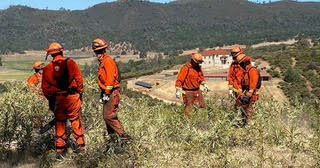
A crew of 10 Michigan Department of Natural Resources firefighters is continuing to construct a containment line around a fire that ignited Tuesday afternoon in a remote area of Marquette County, near the south end of Goose Lake in Richmond Township.

The crew is working with hand tools in a rocky area inaccessible to larger equipment, with the fire reported today as 75% contained.

The area burning is situated south of Marquette County Road 480 and north of County Road NC, which leads to the DNR’s boating access site on Goose Lake.

“We don’t anticipate any problems with the fire at this point,” said Pete Glover, the DNR’s incident commander on the fire. “We will continue to be out here monitoring the fire over the next few days.”

The so-called “gravel pit fire” was fought initially Tuesday afternoon by more than 30 firefighters from the DNR, the Sands Township Fire Department and the U.S. Forest Service, which had a crew from Oregon on fire stand-by in the region. Read more

Michigan: conservation officers assist in multi-agency search for missing angler in Luce County

Michigan Department of Natural Resources conservation officers assisted in a multi-agency search and rescue that concluded Tuesday for an angler who was reported missing Monday.

Conservation Officer Cole VanOosten received a call from the Chippewa, Luce and Mackinac Counties Central Dispatch at 9:40 p.m., Monday, reporting a 64-year-old angler, from Free Soil, located near Manistee failed to meet up with his fishing partner earlier in the day.

The man, who is not being identified by the DNR, was reported missing at 8 p.m. by his fishing partner.

VanOosten and Conservation Officer Colton Gelinas reported to the Luce County Sheriff’s Office Incident Command Post that was established near the angler’s last known location, near the intersection of Luce County Road 421 and the Tahquamenon River.

VanOosten and Gelinas kayaked the river until the search was postponed at 1 a.m. Tuesday. At 7:30 a.m., Conservation Officers Mark Zitnik and Cpl. Kevin Postma, Luce County Sheriff’s Office and U.S. Border Patrol agents joined VanOosten and Gelinas to continue searching the river. Read more

1 792 793 794 795 796 2,073