Montana Wild Sheep Restoration Progressing

Bozeman, MT — The Wild Sheep Foundation (WSF) today announced a historic day for wild sheep in Montana. Two new trap and transplant projects were approved by Montana Fish, Wildlife, and Parks (MTFWP), as well as a conservation easement agreement in prime bighorn sheep habitat.

“This was a big day for us and all our partners and supporters who work tirelessly for wild sheep,” said Kurt Alt, Conservation Director for Montana and International Sheep and Goat Programs for WSF. “We thank MTFWP and the Fish and Wildlife Commission for moving forward with these reintroduction efforts that will begin this fall in Montana’s Little Belt Mountains, and wild sheep restoration in the Tendoy Mountains.

The Commission also approved the Lone Tree Conservation easement in bighorn sheep Hunting District 680. With this 11,285-acre conservation easement, the land will remain in private ownership and agricultural management, while preserving critical habitat for wild sheep and other species and ensuring public hunting access for future generations. Read more

Colorado Receives $2.57 Million to Benefit Elk, Other Wildlife

MISSOULA, Mont. — Colorado’s wildlife is receiving a $2,571,838 boost thanks to funding provided by the Rocky Mountain Elk Foundation and its partners. RMEF directly granted $611,000 and leveraged an additional $1,960,838 in partner dollars.

“These funds assist three research projects including one that helps biologists learn more about why elk recruitment is ailing and another focusing on how elk are impacted by human recreational activity,” said Blake Henning, RMEF chief conservation officer. “Habitat enhancement projects include forest thinning, prescribed burning and repairing water developments, all to help elk, deer and many other species of wildlife.”

Fourteen projects will benefit 18,911 acres across Archuleta, Costilla, Custer, Delta, Eagle, El Paso, Fremont, Garfield, Grand, Gunnison, Hinsdale, Jackson, Las Animas, Mesa, Moffat, Montrose, Ouray, Pitkin, Pueblo, Rio Blanco, Routt, Saguache and San Miguel Counties. There are two additional projects of statewide benefit. Read more

Customize Your Ugly Gunstock

By Glen Wunderlich

Charter Member Professional Outdoor Media Association

When it comes to gun stocks, nothing’s more attractive than black walnut.  Some enthusiasts call it furniture and fine firearms are still being manufactured with the old time look and feel of the select hardwood that’s more stable than lesser quality wood.  However, to keep costs down, synthetic stocks are in common use today, but they’re just as ugly as they’ve always been.

As I pondered what to do with just such a crude example of modern technology, I kicked around the idea of upgrading with either walnut or a wood laminated stock made by a CNC machine.  The walnut option was too expensive and I’ve never got excited about the appearance of wood laminated furniture.  Then I discovered hydro dipping.

Also known as hydrograpics, water transfer, cubic printing, aqua printing, etc., it can be as unique as one’s fingerprints without the excessive cost of replacement upgrades.  What I’ve discovered is that the process is as easy as it appears to be on the various YouTube videos.

Printed, ready-made designs are available, but require some added techniques to properly apply them.  Instead, a few spray cans of paint can be used to create a one-of-a-kind masterpiece that’ll dazzle onlookers with a unique look.

To start, remove the stock and anything attached to it.

Browning A-Bolt Stock Before Hydro Dip

Masking tape is used to keep paint off anything that may negatively alter the fit or function of the firearm.  It’s good the wear some disposable gloves, too.  This is a process that should be done outdoors for safety reasons!

You’ll also need some type of tub large enough to completely submerge the stock.  I used a wheel barrow and lined it with painter’s plastic.

Stock Immersed in Water

The stock should be thoroughly cleaned and degreased with alcohol or paint thinner or mineral spirits, which is the thinner for clean-up, as well.

Select desired colors and purchase Rust-Oleum Painter’s Touch 2X paint and primer in spray cans.  It’s good quality paint that can be applied to wood, metal, plastic and more for about $4 per can.

Rust-Oleum Spray Paint

First, I sprayed a coat of flat black onto the water’s surface that was to be a base coat to completely cover the original finish of the stock.  Then, I sprayed some gray and metallic chrome-like silver colored paint in small spots onto the existing black paint.  With a stick, the paint was swirled lightly together.  How patterns are sprayed and stirred is part of the uniqueness of the operation.

Paint on Water and Lightly Stirred

Before beginning the spray painting, I attached a wire through openings in the stock, so that it could be immersed below the surface of the water and pulled upward through the creative artwork.  (Stocks can also be pushed through the top side, as well, and then pulled back through the surface.   But, surface paint should be moved aside before pulling the stock upward to avoid catching unwanted paint.)

In advance, prepare a place to hang the work to dry.  Then, simply pull the stock through the paint and hang it up.  Even though the process may seem counter-intuitive with water and mineral-based paint, don’t worry; chemistry takes over.

Hydro Dipped without Clear Coat

To finish the project and to protect the art, a clear coat of Rust-Oleum matte finish is required.  Although the sprayed colors will dry to touch in 20 minutes and will be ready to handle in one hour, it is not fully dry for 24 hours.  The clear coat should be applied after 48 hours to be on the safe side relative to any reaction with water still present.  On plastic (or, on a synthetic stock) maximum paint adhesion and durability is reached in 5-7 days, so don’t rush things.

Hydro Dipped without Clear Coat

Don’t be surprised if you start looking for other items to customize.

200+ parcels of Michigan-managed land available via online auctions in September, October

Surplus land sales are a regular part of the DNR’s public land strategy

Lake frontage, trail access, small lots to extend a neighborhood lot – these types of acreage and more are available in the next round of surplus land auctions from the Michigan Department of Natural Resources. The department is busy preparing 225 such properties for sale via online auction in September and October.

Land is available in counties mainly in central/northern Lower Michigan and in the Upper Peninsula. Counties include Allegan, Antrim, Bay, Crawford, Gladwin, Gogebic, Houghton, Lake, Lapeer, Missaukee, Newaygo, Oscoda, Otsego, Schoolcraft and Shiawassee. Several of the largest parcels are in Allegan, Antrim, Newaygo, Oscoda and Otsego counties.

Ten online auctions will be offered, featuring available land parcels by county:

    • Sept. 8 – Shiawassee County.
    • Sept. 9 – Clare and Gladwin counties.
    • Sept. 10 – Lapeer County.
    • Sept. 17 – Allegan and Ottawa counties.
    • Sept. 24 – Lake and Newaygo counties.
    • Sept. 28 – Kalkaska, Missaukee and Wexford counties.
    • Oct. 1 – Crawford, Oscoda and Otsego counties.
    • Oct. 2 – Antrim County.
    • Oct. 3 – Bay County.
    • Oct. 5 – Gogebic, Houghton and Schoolcraft counties.

Read more

New website offers help identifying and managing woody invasive plants

For landscapes plagued by autumn olive or entangled in oriental bittersweet, a new website offers help identifying and managing woody invasive plants like these.

WoodyInvasives.org, developed by the Woody Invasives of the Great Lakes Collaborative, contains a wealth of information about how to distinguish woody invasive species from similar beneficial plants, an interactive map showing how these species are regulated by Great Lakes jurisdictions, detailed management approaches and noninvasive woody plant ideas for gardeners and landscape designers.

“We developed the WIGL Collaborative website to help people learn to identify the woody invasive plants around them and to feel empowered to start controlling them on their properties or in their favorite green places,” said Clair Ryan, coordinator of the Midwest Invasive Plant Network, the organization leading the effort.

Across the eight Great Lakes states and Ontario, 28 woody plant species are regulated as invasive by at least one jurisdiction. Invasive species are those that are not native and can cause harm to the environment, economy or human health. Read more

State of the Great Lakes Report Online

Engaging future generations of water stewards, Michigan’s actions to protect drinking water and the impact of high lake levels across the state are among the topics featured in the annual State of the Great Lakes report, released this week by the Office of the Great Lakes (OGL) in conjunction with Great Lakes and Fresh Water Week.

The report looks at significant issues that affected the Great Lakes and Michigan’s residents in 2019. It also recognizes accomplishments in protecting and restoring water resources for public use, recreation, fish and wildlife, and commerce.

“Michigan and its community partners are committed to supporting restoration efforts that will keep the Great Lakes fishable, swimmable and drinkable today and in the future,” said Liesl Clark, director of the Michigan Department of the Environment, Great Lakes, and Energy (EGLE). “It’s imperative that we continue to build collaborations to achieve significant water improvements for the benefit of generations to come.”

The State of the Great Lakes report includes features about new offices within EGLE responsible for climate, environmental justice, and clean drinking water; new lead and copper and PFAS standards for drinking water; work to halt Asian carp from advancing into the Great Lakes; research into harmful algal blooms; student and community water literacy programs; Soo Lock expansion developments; high water impacts around the state; and the status of cruising on the Great Lakes. Read more

Michigan Update on Confirmed Cougar Reports

No matter what you call them – pumas, panthers, mountain lions or cougars – these mysterious mammals, and suspected sightings of them, get people talking. The DNR wants residents to know the department is listening and keeping a careful eye on where cougars reportedly are turning up.

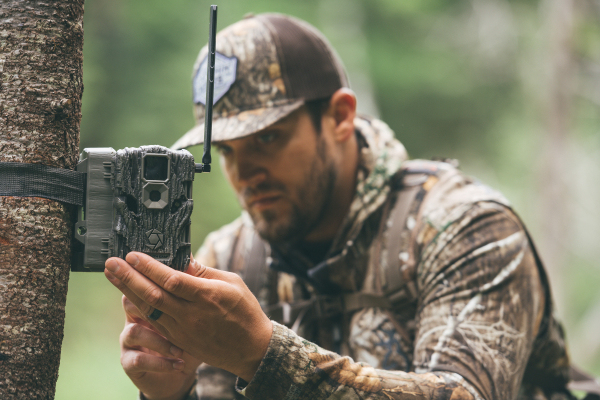
This year, the DNR has six confirmed reports of cougars in Michigan, all in the Upper Peninsula: one each in Chippewa, Ontonagon and Schoolcraft counties and three in Delta County. In February, DNR Wildlife Division staff confirmed two of those reports after finding cougar tracks while conducting the U.P. winter wolf track survey. Four additional sightings were confirmed after residents submitted trail camera photos of cougars.

a cougar picture from a trail camera in Michigan

The confirmed reports are rare. Since 2008 there have been 55 confirmed reports of cougars in Michigan and all but one have been in the Upper Peninsula. It’s also important to note that the reports could be multiple sightings of the same animal.

Though originally native to Michigan, cougars were driven from the state’s landscape due to several factors, including habitat loss, around the early 1900s. Despite the occasional reported sightings, wildlife experts say there’s no evidence of a breeding population in the state.

“DNA analysis of two cougars poached in the U.P., for example, showed the animals likely dispersed from their established populations in South Dakota, Wyoming and Nebraska,” said Cody Norton, large carnivore specialist with the DNR. Read more

POMA and Mossy Oak Announce Pinnacle Award Winners

Johnstown, PA – The Professional Outdoor Media Association’s (POMA) 2020 Pinnacle Award honorees were announced by Jake Meyer, Public Relations Manager at Mossy Oak, during POMA’s Virtual Conference on Tuesday, August 11. Mossy Oak has been the presenting partner of the Pinnacle Awards since the program’s inception in 2008, and this year they were joined by Duluth Pack.

The Pinnacle Awards honor content creators for remarkable achievement in traditional outdoor sports-focused communications, including writing, photography/illustration/art, and broadcasting as well as content focused on wildlife conservation.

“The outdoor media has always been a key part of what we do,” stated Toxey Haas, founder and CEO of Mossy Oak. “We started our company with their help and we’ve grown it with the same. They’re our business partners as well as our friends.”

“We’re proud to sponsor the Pinnacle Awards to recognize the best of the best every year,” Ben Maki, Mossy Oak’s Chief Marketing Officer, added. “It’s an important way to reward excellence in outdoor journalism and encourage more in the future.”


2020 POMA PINNACLE AWARD WINNERS

Art/Photography:

Winner – Keith Crowley “Danger in Yellowstone”, Hawke Optics – Hawke Life

Outstanding Achievement – Keith Crowley, “Falls Bear”, Hawke Optics – Hawke Life


Book:

Winner – Richard Bernier, “Gleanings from 50 years on the Whitetail Track for Reviewers”, Big Whitetail Consultants

Outstanding Achievement – Kristine Houtman, “Why Women Hunt”, Wild River Press of Oregon


Broadcast:

Winner – Nick Hoffman, “Nick’s Wild Ride – Full Curls and Float Planes”, Outdoor Channel

Outstanding Achievement – Ryan Gresham, “The 24-Hour Antelope”, YouTube


Conservation:

Winner – Michael Fernald, “The Land Between the Lakes”, NWTF TV

Outstanding Achievement – Paul Wait, “Hunter Recruitment”, Delta Waterfowl Magazine


Magazine:

Winner – Shane Townsend, “Fly for a Try: A Day on Scotland’s Famed River Tay”, Hatch Magazine

Outstanding Achievement – Tom Keer, “A Bunny Pulpit”, Outdoor Life Magazine


Newspaper/Web:

Winner – Ken Perrotte, “Mentor Young Hunters”, Fredericksburg Freelance Star

Outstanding Achievement – Phil Phillips, “Antis Cry to Close Hunting as Grizzlies Expand Range”, NRA’s Hunters’ Leadership Forum website Read more

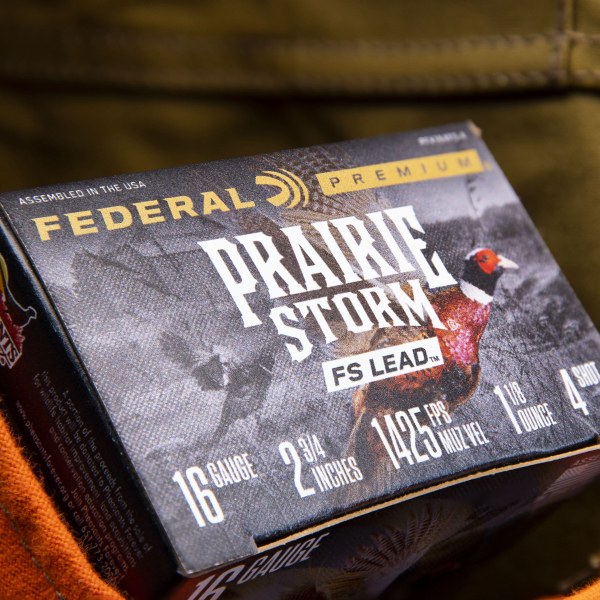
Krieghoff Introduces the K-80 Parcours Competition Shotgun

The new Krieghoff K-80 34” Parcours O/U competition shotgun takes aim at the longer target presentations thrown in Sporting Clays and FITASC. Built on the proven K-80 frame, the 34” Parcours features an extended sighting plane for a distinct and accurate sight picture.

Well-balanced and light-weight, the K-80 34” Parcours facilitates a smoother and more deliberate swing, keeping the shooter online after recoil. Add in Krieghoff’s trademark reliability and the 34” Parcours becomes the top choice for crushing targets.

“As target presentations in Sporting Clays evolve with greater technical difficulty at greater distances, we at Krieghoff saw the need to put the 34” Parcours in our shooters’ hands”, explains Alex Diehl, COO of Krieghoff International. “The level of expertise and the evolution of shooting techniques among competitors shooting the course today is impressive. Our goal with the 34” Parcours is to help certain shooters that benefit from a longer sighting plane to elevate their game even more” Read more

Brown Booby Makes Rare Appearance in Missouri Ozarks

The seabird made history after popping up along the Current River in Ripley County.

JEFFERSON CITY, Mo. – Missouri welcomes numerous flying visitors throughout the year, but the state recently made history after a seabird was spotted in the Ozarks. Missouri Department of Conservation (MDC) staff have confirmed a Brown Booby has shown up along the Current River in Ripley County.

The bird was first spotted by Debbie Prance-Orosz this past Saturday while she and her family were out enjoying the river. Not knowing what the bird was, she snapped a photo and posted it to her Facebook page.

“We first got word of it after it was posted to Facebook this past weekend wondering what it was,” said MDC Forester and avid birder Steve Paes. “We didn’t know where it was, other than somewhere on the Current River. After asking around, I got a tip on its location. On Monday, I set out on the river with Cindy Bridges with the Missouri Birding Society and we eventually found it perched on a dead tree.”

Brown Boobies are large, long-winged seabirds that are often seen from southern Florida south on the Caribbean and Pacific coasts of Central America to northern South America.

According to MDC State Ornithologist Sarah Kendrick, this is the first recorded sighting of a Brown Booby in Missouri. Read more

1 891 892 893 894 895 2,055