Turning a Trout Stream Right Side Up: Colorado’s Swan River

— Craig Springer, U.S. Fish and Wildlife Service—Wildlife and Sport Fish Restoration

Jul 22, 2022
The same source of conservation funding—excise taxes paid by tackle manufacturers via the Sport Fish Restoration Act—that pays for scientific fisheries research and management, boat ramps, aquatic education, and fish population surveys has righted an upside-down trout stream.

Spoils of cobble clog Colorados Swan River prior to restoration. Photo Jim Guthrie

Colorado’s Swan River heads in the craggy and conifer-studded Rocky Mountains near a tourist mecca of Breckenridge. This was gold country. Dating to the 1890s, dredge barges plowing through the supine streamside meadows and the river proper inverted the river bottom and flood plain. Dredges sifted and separated the yellow metal from sands and gravels. Gone is the gold. Left behind was a most unusual spoil of sand, cobbles and rubble that once constituted trout habitat.  The long, meandering pile of spoils looked from a distance like massive gray welts where there was once been a silver river bending through a verdant valley at 9,600 feet above sea level.

The Swan River certainly continued to flow—percolating beneath the long welts—hidden for decades from life-giving sunlight and depriving caddis and midge and mayflies, and the Colorado River cutthroat trout and brook trout that eat them, of their habitats. The nearly 2.5 miles of hidden river were not accessible to anglers, either.

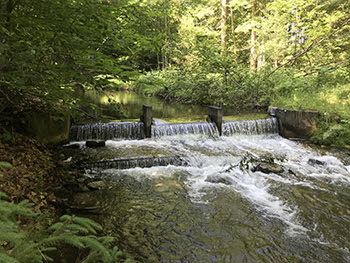
But that has changed. A partnership involving Colorado Parks and Wildlife, the U.S. Fish and Wildlife Service and a litany of other organizations such as Summit County and White River National Forest are well into restoring trout habitat to the formerly hidden reach of river, reconnecting tributary streams to the main stem Swan as well.

A tree stump is trout habitat- Swan River – Amanda Horvath USFWS photo

After much planning and preparation, restoration started in earnest in 2016. Something this massive is taken on in smaller pieces.  Approximately a mile’s worth of the massive pile of stones have been removed and put to good use, and the natural stream channel revealed.  Stones comprising the former valley bottoms are used to shape and steer the river channel, to bend and curl stream flow across the valley floor as flowing water desires to do. The excess spoils have been extracted and reduced to base material for county roads and state highways.

Another 3,100-foot-long river section is presently under restoration with streamside and upland vegetation planting to secure the soils in place and provide eventual cooling shade over the water. Woody debris and boulders set in place direct and slow stream flows and make lairs for trout to hold and feed—and await an angler’s properly drifted elk-hair caddis.

Cutthroat trout USFWS – NCTC

The trout have returned. Fish population surveys by Colorado Parks and Wildlife biologists revealed that brook trout have taken to the newly renovated stream sections. In 2016, a fishery survey documented only a few hundred brook trout larger than six inches per mile of stream. Three years later the renovated Swan River sections contained more than 1,800 brook trout per mile of stream, six inches and bigger. Moreover, fish biologists discovered that the numbers of mottled sculpin, a curious looking finger-sized fish with broad fanning pectoral fins that hold it in place on the river bottom in fast waters, have proliferated. The sculpin’s presence in impressive numbers is indicative of quality fish habitat.

The Swan River restoration in not complete. There is more stone to remove and re-purpose instream and elsewhere. More streamside plantings to come. In the end, expect more habitat for anglers where there had been none for more than a century.

To learn more, visit Partner with a Payer.


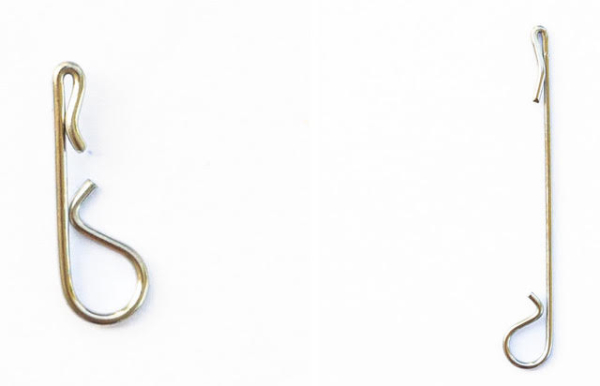
Change Lures and Flies in No Time Using Al’s Kwik Klips

ELIOT, Maine (July 21, 2022) -When you’re on the water, time spent doing anything that does not involve working baits and lures in the strike zone takes away from your ability to maximize your catch rate. So when you can employ a small, simple, fail-safe product that will make changing lures and flies an easy, lightning-fast proposition, why wouldn’t you? That’s what Al’s Kwik Klips from Al’s Goldfish Lure Company will do for you.

Originally designed for use when fly fishing – they’ll float with your dry flies – innovative anglers like Al’s Goldfish Lure Company’s Wisconsin Fishing Ambassador TJ Gramberg use them for all their fishing. “I love using Al’s Kwik Klips because they offer the ability to switch baits quicker, allowing me to cover more water in a short amount of time,” Gramberg said. “They also provide me with confidence that I have a secure connection to any bait I use. The different sizes of Kwik Klips allow me to vary my bait sizes, and I like to put different-sized Kwik Klips on different rods, which lets me quickly change from using a 1/2 oz. Al’s Goldfish lure on one rod, to using a 3/16 oz. Goldfish on a different rod. Best of all, Kwik Klips have the strength to pull in fish of all sizes without fail. I never head out without them.”

Gramberg uses the smallest sizes (small/medium) when vertical jigging while ice fishing, and the medium/large/extra-large sizes when casting and trolling in open water, depending on the size of the lure she’s using. She’s used them to successfully land everything from small panfish to medium-sized bass and walleye to large northern pike. Read more

Michigan: fish survey nets to be placed along St. Marys River in August

Member agencies of the St. Marys River Fisheries Task Group will be conducting a fish community survey of the entire St. Marys River during the month of August.

The St. Marys River is a connecting channel between Lake Superior and Lake Huron. The survey work will cover many locations along the 70-mile-long river, from the upper river near Brimley, Michigan, to where the river empties into Lake Huron at DeTour.

Fisheries biologists and technicians will set survey nets at predetermined sites in the river and capture a variety of species to collect information on abundance, growth, mortality and size structure of fish populations.

The information will be compared to the 2017 survey report and data collected in earlier surveys, available on the Great Lakes Fishery Commission’s Lake Huron Committee webpage.

“This survey series provides the opportunity to look at the status of the St. Marys River fish community and look at any trends over time,” said Neal Godby, Michigan Department of Natural Resources fisheries biologist. “In addition to the ongoing St. Marys creel survey — where staff along the river talk with people about their fishing experiences and help us estimate harvest — the collective data will allow us to better understand the overall health of the river’s fish population and fisheries.” Read more

Michigan: $45.6 Million in Development and Acquisition Grants Approved

Michigan’s governor signed legislation creating more opportunities for quality outdoor recreation by authorizing $45.6 million in Michigan Natural Resources Trust Fund grants.

“Outdoor recreation in Pure Michigan is essential to the high quality of life Michiganders and visitors enjoy in our beautiful state,” said Gov. Whitmer. “These Michigan Natural Resources Trust Fund grants support so many of the world-class outdoor opportunities we have in Michigan, including fishing, hiking, kayaking or simply enjoying an accessible playground. In communities across the state, the grant program makes much of this possible with critical investments so people of all abilities can get outdoors. Let’s keep working together to invest in our parks, recreation and public lands so future generations can enjoy everything that Pure Michigan has to offer.”

Senate Bill 1028 approves funding for 117 recreation development projects and land purchases recommended by the board. It is now Public Act 151 of 2022. Read more

California: Public Comment Invited on Petition to List Southern CA Steelhead as Endangered

Southern California steelhead, CDFW photo by Kyle Evans

Public Invited to Comment on Petition to List Southern California Steelhead as Endangered

The California Department of Fish and Wildlife (CDFW) has initiated a status review for Southern California steelhead and invites data or comments on a petition to list Southern California steelhead as an endangered species under the California Endangered Species Act (CESA).

Southern California steelhead (Oncorhynchus mykiss) are found in streams from the Santa Maria River at the southern county line of San Luis Obispo County down to the U.S.-Mexico border. Southern California steelhead as defined in the CESA petition include both anadromous (ocean-going) and resident (stream-dwelling) forms of the species below complete migration barriers in these streams. Read more

Michigan’s 2023 budget provides $34 million for fish hatchery upgrades, new Great Lakes research vessel

Fish hatchery infrastructure and maintenance and fisheries survey vessel modernization efforts will benefit from the state budget recently approved for fiscal year 2023. The budget includes $30 million for fish hatchery infrastructure improvements and $4 million to replace an outdated Great Lakes survey vessel – all of which are critical to better supporting and understanding Michigan’s world-class fisheries.

“Michigan’s fish and aquatic habitats are among our state’s greatest natural, recreational and economic assets, and we must continue working together to protect them for future generations,” said Gov. Gretchen Whitmer. “Together with the historic, $450 million investments in our parks and public lands under the Building Michigan Together Plan I signed earlier this year, our bipartisan budget represents a once-in-a-generation investment that will help us continue safeguarding our most precious natural resources.”

For more than 120 years, the Michigan Department of Natural Resources has operated fish hatcheries to produce fish for stocking lakes and streams across Michigan. Today, there are six hatchery facilities – in Alanson, Beulah, Harrietta, Manistique, Marquette and Mattawan – vital to managing and maintaining the state’s fisheries. At 20 years old, Oden State Fish Hatchery is the newest facility, with the others ranging from 40 to over 50 years old. Though staff have done their best to keep operations running and fish thriving, the aging facilities have developed a large backlog of critical infrastructure maintenance needs.

With the $30 million investment in hatcheries, the DNR will upgrade production water supplies, replace roofs, upgrade outdated electrical distribution systems, repair and replace deteriorating asphalt, upgrade water aeration systems, replace outdated backup power generators and provide biosecurity enhancements that better protect fish health.

“Upgrading electrical distribution systems, replacing outdated backup power supplies and improving water supplies would all reduce the likelihood of catastrophic fish loss and increase our ability to manage disease issues,” said DNR Director Dan Eichinger. “Overall, this investment will improve rearing conditions, which will translate into more consistent fish production levels and high-quality fish.” Read more

WSF: HR 8167 Wrong for Sportsmen, Conservation, Second Amendment

Bozeman, Montana. July 8, 2022. Wild Sheep Foundation (WSF) today expressed its staunch opposition to a bill that, if passed, would cripple wildlife conservation permanently.

H.R. 8167, the so-called Return Our Constitutional Rights Act of 2022, will eliminate the 85-year-old program that helped save wild sheep and other wildlife from extinction and continues expanding their populations today. The bill disguises this senseless result by claiming to defend Second Amendment rights.

“Sportsmen – the millions of men and women who hunt and target shoot – are the best promoters of our Second Amendment rights,” said Gray N. Thornton, President and CEO of the Wild Sheep Foundation. “This is an unbelievably confused bill. It would destroy the nation’s most powerful wildlife conservation funding program in the name of the Second Amendment, contrary to the wishes of the Second Amendment’s strongest supporters. Our ethical exercise of these rights is inseparable from the Wildlife and Sportfishing Restoration Program this bill would eliminate.” Read more

Frabill ReCharge Deluxe Aerator

Market-leading bait management product sets the new standard in aeration

COLUMBIA, S.C.  For over 80 years, Frabill has been the market leader in the bait management space, and the new ReCharge Deluxe Aerator continues the tradition of bringing new innovative products to anglers. The Frabill ReCharge Deluxe Aerator is a mobile livewell aeration system with an induction motor that provides time-after-time use to keep bait lively.

Outfitted with a rechargeable lithium battery, the ReCharge Deluxe Aerator can be conveniently recharged with the included 10V adaptor or through a USB cable.
A water-resistant gasket designed with an anti-back flow check valve keeps water out and bait alive longer. The universal hang-on clip with stability posts allows anglers to bring it on fly-in trips, shore fishing, or on any boat. Now a bucket or nearly any waterproof container can become a viable minnow bucket. Read more

Expedition Outside Connects Fly Fishermen to Private Rivers in Colorado

Private Land on Demand: Expedition Outside Connects Fly Fishermen to Private Rivers in Colorado

Durango, CO – Fly fishing enthusiasts wanting to fish private stretches of river throughout Colorado can now turn to Expedition Outside (ExOut) for access to hundreds of miles of trout-abundant rivers.

Just like when renting through Airbnb, an angler would simply go to ExOut’s website, find a river in the area where they’d like to fish, and book a day. ExOut delivers just as its tagline states — “Private Land on Demand.”

What most anglers may not realize is that Colorado landowners who have a river running through their property actually own the riverbed too. While this can make river access very limited in some places, ExOut is working with both landowners and fly fishermen to make those private stretches of river accessible.

“We are a conservation-minded company that uses technology to help fly fishermen and women find their perfect spot,” said Christian Barnes, Expedition Outside’s founder. “Our goal is to preserve our public natural resources by pulling pressure away from those areas and giving those who seek quality fishing and solitude a day on the river they’ll never forget.” Read more

Michigan: learn about wild mushrooms, bear hunting, fly fishing and more

The DNR Outdoor Skills Academy will offer opportunities to learn more about foraging for wild mushrooms, bear hunting and outdoor survival with July classes at the following locations.

Carl T. Johnson Hunting and Fishing Center in Cadillac

  • Wild Mushroom Clinic, July 10
    Learn how to identify a variety of Michigan’s edible wild mushrooms, where to start looking, and proper handling techniques for transport, cleaning, consumption (including some sampling) and home preservation. Cost is $40 and will include lunch. This class will be offered again Aug. 20.
  • Bush Craft, Survival and Wild Edibles Clinic, July 15-17
    In this unique, three-day class, you will learn the basics of what you need to survive if you ever find yourself stranded in the outdoors, including some wilderness first aid; how to safely prepare water for drinking; how to identify animal tracks and scat; plants you can gather as wild edibles and for medicinal uses, and which plants to avoid; how to safely start a fire without matches; how to shoot a bow and arrow; and more.
  • Bear Hunting ClinicJuly 30 and July 31
    Students will learn the ins and outs of bear hunting with experienced hunters and knowledgeable DNR educators. The class will cover habitat, gear, stand placement, baiting, rules and regulations, carcass care, and hide care.

Wolf Lake State Fish Hatchery Visitor Center in Mattawan

  • Fly Fishing 101, July 22-23
    Learn the fundamentals of fly fishing in this two-day class. Topics covered include knots, casting, fly tying, stream etiquette, catch and release, stream dynamics, macroinvertebrates, reading the water, and presentation. On Saturday afternoon, participants will head to local waters to bring it all together and catch some fish. Loaner gear is available.
  • Damsels Fly: Fly Fishing for Women, July 30
    For women who are new to fly fishing, this all-day workshop will teach participants enough of the basics to get out fly fishing with confidence. Topics covered include gear, rods and reels, casting, knot tying, macroinvertebrates, where to fish/reading the water and more. No equipment is needed to participate.

The DNR Outdoor Skills Academy offers in-depth, expert instruction, gear and hands-on learning for a range of outdoor activities at locations around the state. Learn more at Michigan.gov/OutdoorSkills.

1 43 44 45 46 47 140