GW: Liberals have attacked those that supported Michigan’s increased licensing fees, as if it even matters to those that don’t hunt; it was no more than a ploy to discredit honorable lawmakers. (Yes, there are some!) Interestingly, sportsmen and women were the ones that agreed to increase hunting fees marginally so that management efforts could be enhanced. Below is another example of how it’s being accomplished, as promised with those dollars. 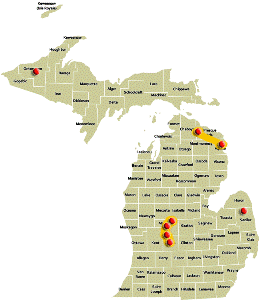
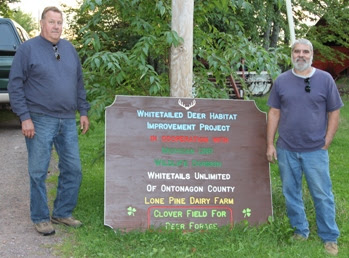
Upper Peninsula – Ontonagon County A grant program in the U.P. between the DNR, sportsmen’s groups, concerned citizens and partners has shown three great benefits – production of on-the-ground deer habitat, education on the importance of habitat work, and great relationships built by like-minded people. Wildlife Unlimited of Ontonagon County planted multiple wildlife openings as part of the Deer Habitat Improvement Partnership Initiative.
Northern Lower Peninsula – Alpena County and Presque Isle County The state forest land around Alpena, and also near the Onaway and Millersburg areas, has an additional 126 acres of wildlife openings available for hunters to target this deer season. The openings had not been farmed the last several years, but this year, with the help of the recent license restructuring, more openings in this area have been planted to buckwheat and rye, ranging from 0.5 acres to 20 acres in size. 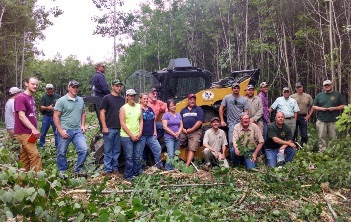
Southwest Lower Peninsula – Montcalm and Ionia County Several DNR State Game Areas are seeing great habitat improvement projects deer hunters will enjoy. Edmore, Langston, Flat River and Portland State Game Areas created many small openings, to provide not only feeding areas for deer, but better access for hunters. The result of recent timber sales at several State Game Areas in this region is providing great cover and browse for deer, with the young, dense forests that are created. The DNR’s partnership with the Ruffed Grouse Society has been instrumental in achieving these improvements.
Southeast Lower Peninsula – Sanilac County With an “up north” feeling in the thumb region of Michigan, Minden City State Game Area just south of Minden City is a great location for deer hunting. Wildlife biologist Don Bonnette said that “extensive timber cuts have been conducted to create mixed-aged aspen stands with plenty of young shoots for deer to eat.” The DNR recently acquired 200 additional acres for the game area, all with excellent deer habitat. About 75 percent of the game area is naturally swampy, making for good winter cover for deer and a challenging hunt for adventurous hunters. Be sure to check it out!


