
Hundreds of geese banded in southeast Michigan
Michigan Department of Natural Resources wildlife biologists, staff and volunteers helped to round up and band over 1,000 Canada geese in Southeast Michigan last month.
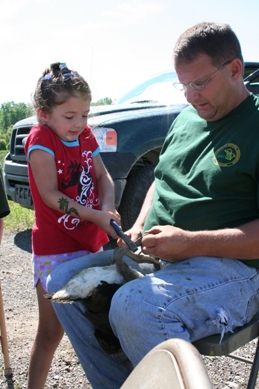 The geese were banded as part of a national effort to track the population and movement of Canada geese in the United States. In North America, biologists band more than 200,000 ducks and nearly 150,000 geese and swans each year.
In the latter part of June, geese molt their primary flight feathers and are unable to fly, making them easier to capture and band.
“We banded 170 birds at three locations in Jackson and Hillsdale counties,” said DNR wildlife biologist Kristin Bissell. “We had 11 very enthusiastic, hard-working volunteers who helped make it a success! We’re happy that a sample of the geese from the south central portion of the state will be represented in the banding effort!”
During the banding process, Read more


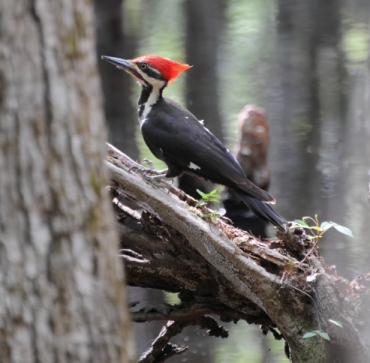 When you see your first pileated woodpecker, your thought might well be, “Now that is a serious woodpecker!” Michigan’s other woodpeckers are substantially smaller, starting with the downy and working up through the hairy, red-headed, black-backed and red-bellied woodpeckers and also including the migratory yellow-bellied sapsucker and northern flicker for good measure. Over the years several people have insisted to me that they have seen ivory-billed woodpeckers in Michigan. Ivory-billed woodpeckers never did nest in Michigan, and if they still exist at all, anywhere, they are extremely rare. There is no doubt that our birds are pileateds.