SAUER S100 Rifles in 6.5 PRC

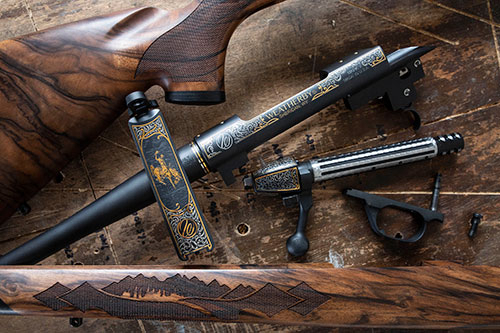
San Antonio, Texas – J. P. Sauer & Sohn, Germany’s oldest gunmaker, is now shipping all versions of its SAUER S100 bolt-action rifle in a 6.5 PRC (Precision Rifle Cartridge) chambering with prices starting at $799.

SAUER is the first to offer a mass production rifle chambered for this popular new Hornady cartridge which is rapidly gaining a following for its accuracy, flat trajectory, and long-range performance. The 6.5 PRC is a magnum version of the 6.5 Creedmoor and has a flatter trajectory and higher impact velocity than the 6.5 Creedmoor. Utilizing moderate powder charges that result in repeatable accuracy, low recoil and high velocities with performance well beyond 1000 yards, the 6.5 PRC is an excellent caliber for F-Class benchrest shooting and hunting medium to large game. Read more

Remington Model 783 Mossy Oak Break Up Country in 6.5 Creedmoor

Huntsville, AL –The Model 783 was designed by American’s bolt action experts and engineered with precision, durability and performance enhancing technology, now available in 6.5 Creedmoor.

The Model 783 features a 22” magnum contour button rifled barrel for unmatched accuracy and the stock is a true performance-enhancer with a dual-pillar bedding platform that free-floats the barrel for shot-to-shot consistency. For shot control, it’s equipped with the crisp CrossFire trigger system that’s user adjustable to suit your preferences. This model comes equipped with a 3-9 x 4 scope mounted and bore sighted. Read more

SIG SAUER Releases Enhanced MPX Pistol Caliber Carbine

Newington, N.H. – SIG SAUER, Inc. is pleased to announce the release of the enhanced MPX Pistol Caliber Carbine (PCC), redesigned and upgraded for performance shooting sports, and to fulfill the needs of competitive and professional shooters alike.

The newly optimized SIG SAUER MPX PCC platform includes a Timney® single-stage trigger, free-float ergonomic slim line M-LOK™ handguard, 16” threaded barrel, 5-position telescoping stock, 3 chamber compensator, and ambidextrous controls. The MPX PCC is a black hard-coat anodized aluminum frame that comes optics ready with a 30-round magazine capacity. Read more

German Precision Optics USA Introduces Passion™ 4X Riflescope Line

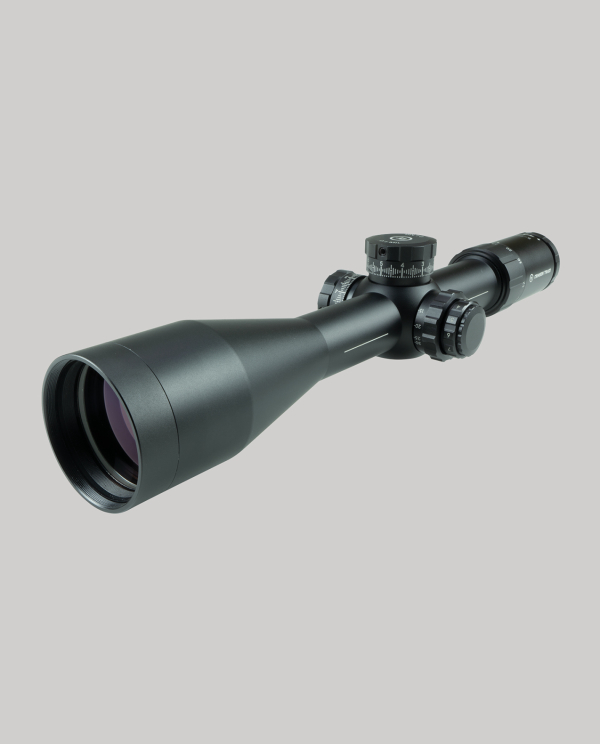
RICHMOND, VA — German Precision Optics (GPO), USA has introduced the Passion 4X premium riflescope line. German designed and engineered, these scopes bring quality and value together in a scope line that offers higher magnification and large low-light objective lenses. The Passion 4x riflescopes are built on a 30 mm machined aluminum main tubes and are available in either 6-24×50 or 3-12×56.

The Passion 3-12×56 is available with or without the GPO proprietary iControlTM illumination on the G4 reticle. The G4i fiber-optic illumination technology system automatically powers down the illumination when the electronic module has been stationary for more than 3 hours and alerts the user when the battery has only 15 percent remaining life. The 3-12×56 is the perfect scope for low-light conditions. The new 6-24X50 30mm scope offers an excellent range of adjustment, a custom MOA ballistic reticle and a custom Kenton turret made for your favorite caliber, making it the perfect scope for long-range shooting.

For optimum light transmission, both riflescopes feature double HD glass and the proprietary GPOBrightTM lens-coating technology. Second focal-plane scopes, the Passion 4x line reticles will remain the same size throughout all magnifications. Additionally, the solid, one-piece dust-proof, waterproof, nitrogen-filled riflescope bodies offer constant point of impact and the ultimate in strength and durability. All GPO products purchased in the USA include the GPO, USA’s Spectacular Lifetime WarrantyTM. Full details of this warranty can be found at www.gpo-usa.com. Read more

Ruger Introduces New Rifles, Pistols

Today we are excited to announce new Hawkeye®, Ruger American® Rifle, LCP® II and Mark IV™ models.

Hawkeye® Long-Range Target: The Hawkeye® Long-Range Target brings extended range capability to the venerable controlled-round feed M77 action. The new 6.5 Creedmoor and 6.5 PRC caliber offerings carry significant energy out to great distances, and the adjustable stock with modern ergonomics easily accommodates a broad spectrum of shooters.

Ruger American® Rifle Predator Left-Handed: The Ruger American® Rifle Predator is now offered in a left-handed configuration chambered in .243 Winchester, 7mm-08 Remington and .308 Winchester. Read more

The WagOne™ Ultimate Ball Thrower from Birchwood Casey®

The new WagOne™ Ultimate Ball Thrower from Birchwood Casey® throws a tennis ball farther and more easily so your dog gets the workout, not you.

The WagOne™ Ultimate Ball Thrower features easy hands-free and slobber-free ball loading. Simply push the steel fingers onto the ball and its picked up for the next throw. The auto-cocking feature makes throwing easy on your arm and the rugged polymer handle provides plenty of leverage for launching the ball long distances. The design of the WagOne™ Ultimate Ball Thrower allows for easy right or left-handed use.

The WagOne™ Ultimate Ball Thrower is proudly made in the USA and sells for a retail price of $30.00.

CCRKBA Seeks SCOTUS Review Of Interstate Handgun Sales Case

BELLEVUE, WA – The Citizens Committee for the Right to Keep and Bear Arms has petitioned the Supreme Court of the United States for review of its case challenging the long-standing ban on interstate handgun sales to law-abiding citizens from other states.

The case, known as Mance v. Whitaker, comes out of the Fifth Circuit and involves a Texas firearms retailer and two would-be customers who reside in Washington, D.C. A federal district court earlier ruled that the interstate handgun transfer ban is facially unconstitutional, which was reversed by a Fifth Circuit panel. The Fifth Circuit denied the petition for rehearing en banc by a fractured vote of 8-7. Plaintiffs in the case include CCRKBA, Andrew and Tracy Hanson of Washington, D.C. and Texas firearms retailer Fredric Mance. They are represented by attorney Alan Gura.

“The ban on interstate handgun sales was adopted decades ago,” noted CCRKBA Chairman Alan Gottlieb, “prior to the advent of the National Instant Check System that is now in place. The Hansons have essentially been denied the ability to legally purchase a handgun from a licensed retailer because of this prohibition. Read more

Red Tides Impact More Than Just Fish

Gulf of Mexico IEA Project

Scientists and fishermenNOAA Scientists and Fishermen at an Ecosystem workshop in the Gulf of Mexico during the Summer of 2018

Massive fish die-offs were just one of many concerns fishermen raised with NOAA scientists during workshops held in the summer of 2018. Fishermen described how the spread of toxic algae otherwise known as a “Red Tide” event along the west coast of Florida is impacting many parts of their lives including local business. This made it clear the issue was bigger than just fish die-offs and requires a solution that is bigger than just conserving fish populations. An ecosystem-wide approach can provide such a solution.

Red tide events occur when toxic algae (Karenia brevis) populations grow rapidly in the water. While these are naturally occurring events, the 2018 event is worse than usual, leading to massive die-offs of marine species and possible respiratory symptoms in humans.

Typically, the impacts of red tides are incorporated into the decision-making process through stock assessments. Stock assessments can estimate the amount of fish that will die as a result of this red tide event and provide an appropriate and sustainable level of fishing mortality, in light of these events. Read more

Long Overdue Revision of the Endangered Species Act

By Glen Wunderlich

The U.S. House on November 16th voted 196-180 to pass a bill named the Manage Our Wolves Act. If passed by the Senate and signed into law, a 2011 rule would be reissued by the U.S. Fish and Wildlife Service (FWS), which among significant other revisions to the Endangered Species Act, would remove ESA protections for the gray wolf in the lower 48 states including Michigan.

According to the FWS, all three States of the Western Region (WGL) – Wisconsin, Minnesota, and Michigan – have wolf management laws, plans, and regulations that adequately regulate human-caused mortality. Each of the three States has committed to manage its wolf population at or above viable population levels, and this commitment is not expected to change.

The predictable hyperbolic response by the animal-rights crowd includes such language as the following: Republicans are gunning for the ESA; danger comes from conservatives; it will hurt endangered species. Almost immediately, The Center for Biological Diversity (CBD) chipped in with a lawsuit claiming passage would make wolves vulnerable to trophy hunting and trapping, halting their progress toward recovery.

The wolf population in the WGL currently occupies all the suitable habitat area identified for recovery in the Midwest in the 1978 Recovery Plan and 1992 Revised Recovery Plan and most of the potentially suitable habitat in the WGL. However, groups like CBD like to point out that only 5 percent of the original territory occupied by the wolves is now inhabited by them and that makes wolves not fully recovered. Do these folks really want to foster the establishment of wolves in the large metropolitan areas from which they throw their stones? I think not.

These city slickers have a lot of clout and that clout comes from sheer numbers of the unaffected. The phrase “tyranny of the majority” best describes the real danger of an all-powerful force of these voting blocs that could tyrannize unpopular minorities thus marginalizing individuals such as those living in sparsely populated wolf territory.

In actuality, the group of nine bills that comprises the act is aimed at the following amendments to the 45 year-old ESA to:

• encourage voluntary conservation efforts
• provide for greater certainty and improved planning for incidental take permit holders
• provide for consideration of the totality of conservation measures in determining the impact of proposed Federal agency action
• prohibit designation as critical habitat of certain areas in artificial water diversion or delivery facilities
• provide for greater county and State consultation with regard to petitions under the Endangered Species Act of 1973, and for other purposes
• require publication on the Internet of the basis for determinations that species are endangered species or threatened species, and for other purposes
• to increase State and local involvement in management plans
• provide for improved precision in the listing, delisting, and down listing of endangered species and potentially endangered species
• define petition backlogs and provide expedited means for discharging petitions during such a backlog

Under current law, plaintiffs who challenge the federal government under the ESA may be entitled to the repayment of attorneys’ fees. Such payments are made from the federal government’s Judgment Fund, which has a permanent indefinite appropriation. By prohibiting judicial review, the act could reduce the number of civil actions that otherwise would be filed and thus the potential for payments from the Judgment Fund. This would mean that taxpayers’ money could actually be used for the betterment of wildlife through projects such as enhancement of habitat rather than continuing to pad the bank accounts of animal lawyers with permanent indefinite funding.

“This is not about a hatred or fear of predators. This is about actually recognizing that the ESA has done its job, and it’s time for the wolf to be delisted,” said U.S. Rep. Cathy McMorris Rogers, R-Washington. In fact, it’s long past time.


Among Birds-of-Paradise, Good Looks Are Not Enough to Win a Mate

GW: And, may this bird not fly up your nose

Study suggests key physical traits & behaviors evolved in tandem

November 20, 2018

Ithaca, NY—Male birds-of-paradise are justly world famous for their wildly extravagant feather ornaments, complex calls, and shape-shifting dance moves—all evolved to attract a mate. New research published in the open-access journal PLOS Biology suggests for the first time that female preferences drive the evolution of physical and behavioral trait combinations that may also be tied to where the male does his courting: on the ground or up in the trees. There are 40 known species of birds-of-paradise, most found in New Guinea and northern Australia.

Lesser Bird-of-paradise
Lesser Bird-of-Paradise during
courtship dance. Photo by Tim Laman.

Study lead author Russell Ligon, a postdoctoral researcher at the Cornell Lab of Ornithology, suggests females are evaluating not only how great the male looks but, simultaneously, how well he sings and dances. Female preferences for certain combinations of traits result in what the researchers call a “courtship phenotype”—bundled traits determined by both genetics and environment.

Study authors examined 961 video clips and 176 audio clips in the Cornell Lab’s Macaulay Library archive as well as 393 museum specimens from the American Museum of Natural History in New York City. They conclude that certain behaviors and traits are correlated:

  • As the number of colors on a male increases so do the number of different sounds he makes.
  • The most elaborate dancers also have a large repertoire of sounds.
  • Males that display in a group (called a lek) have more colors to stand out better visually amid the competition.

Because female birds-of-paradise judge male quality based on a combination of characteristics, the study suggests that males may be able to evolve new features while still maintaining their overall attractiveness to females—there’s room to “experiment” in this unique ecological niche where there are few predators to quash exuberant courtship displays.

The researchers found that where a bird-of-paradise puts on his courtship display also makes a difference.
bird-of-paradise graphic
Graphic shows which types of displays are most common at varying heights in the rainforest. Birds-of-paradise illustrations by Szabolcs Kókay; background illustration and graphic design by Jillian Ditner. Graphic courtesy of the Cornell Lab of Ornithology. Click image for full-size version. Read more

1 1,074 1,075 1,076 1,077 1,078 2,054