Fall Raptor Migration & Counts Begin


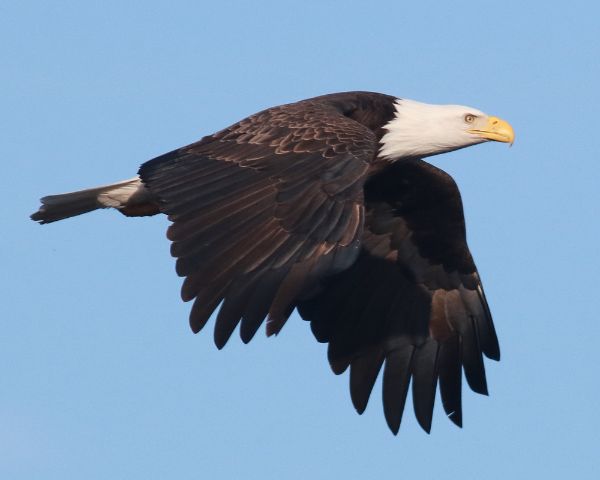
Bald Eagles are among the first and last birds of prey to migrate during fall (photos by Paul Konrad).The early signs of raptor migration across North America and funneling into Mexico began showing loud and clear last week as northern hawkwatch sites from New York to Minnesota began seeing ever-larger numbers of Broad-winged Hawks, Bald Eagles, and Red-tailed Hawks. At the same time, Texas count sites featured impressive migration flights of Mississippi Kites and Broad-winged Hawks. It all becomes very clear when you refer to the Hawk Migration Association’s exceptional resource – HawkCount – where you can see daily totals of each species at 29 count sites to date, with more checking in as migration progresses.

Saturday showed an obvious spike in numbers of raptors migrating at some locations, led by Braddock Bay HawkCount near Rochester, New York where 1,119 raptors were counted with highs of 908 Red-tailed Hawks and 102 Broad-winged Hawks, and 47 Bald Eagles. Farther west on the ridge above Lake Superior in Duluth, Minnesota, 426 raptors were tallied at Hawk Ridge including 322 Broad-winged Hawks, 81 Bald Eagles, 30 Northern Harriers, and 19 Red-tails. But the Corpus Christi HawkWatch led the way Saturday with 1,965 raptors made up of 1,930 Mississippi Kites.
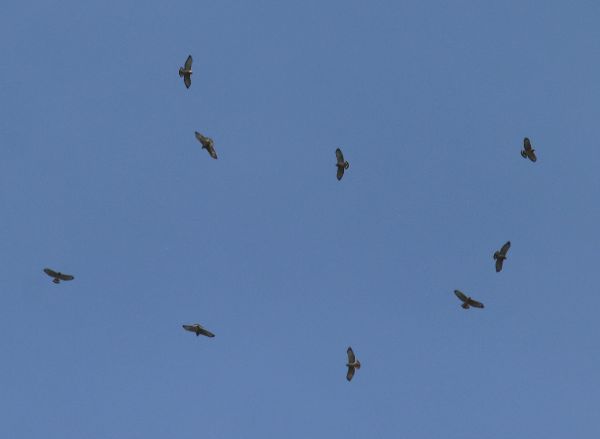
Kettles of Broad-winged Hawks are being seen more often as they soar on rising thermals during migration.The migration surge that continued Sunday was led by Smith Point, Texas where raptor numbers reached 2,416, bolstered by 2,317 Mississippi Kites as they migrated along the Gulf Coast. But all heck broke loose in the raptor count world Saturday when Veracruz, Mexico’s first count of the season produced an exciting total of 8,526 birds of prey (at Chichicaxtle) that included 8,513 Mississippi Kites, all of which would have originated from their nesting range in the southern United States. The same day, the sister count site at Veracruz (Cardel) reported another 1,569 birds of prey that included 1,562 Mississippi Kites to add to the Veracruz mega-count of more than 10,000 raptors!

And that’s just the start of another exciting fall of raptor migration that is documented in daily counts of birds migrating past key count points, and we can monitor the progress of the varied species of hawks, eagles, falcons, kites, and vultures. Plus, some count sites also count songbirds, flycatchers, swallows, waterbirds, and any other bird they could see, so you can get a feel for how fall migration is progressing for many species and species groups from now into November. All this is thanks to the Hawk Migration Association! To monitor the counts, see the HMA HawkCount raptor migration database at HawkCount
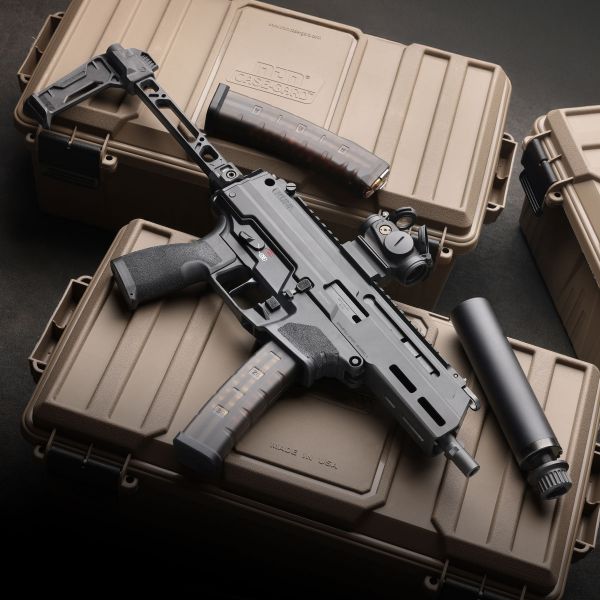
Springfield Armory Announces Launch of the Kuna Tri-Lug 9mm

Springfield Armory® is proud to announce the launch of the new Kuna™ Tri-Lug 9mm pistol. Combining roller-delayed performance with a classic and proven suppressor-mounting interface, the Kuna Tri-Lug is both ruggedly simply and easily adaptable.

The Kuna is a PDW built to deliver exceptional performance in a portable package. Its monolithic aluminum upper provides a durable frame, housing a roller-delayed operating system that dramatically reduces felt recoil. Fully ambidextrous, this feature-rich platform comes with two 30-round magazines. Precision manufactured for optimal fit and function the Kuna’s small profile, nimble handling and prolific capacity make it a fierce personal defense platform.

The new Kuna’s integrated Tri-Lug system features three integrally machined lugs at the muzzle of the 6.6″ barrel, allowing compatible suppressors to be installed or removed quickly and securely without tools. A simple push-and-twist connection makes transitioning between suppressed and unsuppressed configurations fast and intuitive. The result is a platform that combines ultra-reliable roller-delayed operation with a rugged and proven suppressor-mounting system.

The Kuna Tri-Lug is offered in two primary versions — one with a bare strip of Picatinny rail located at the rear of the monolithic receiver, and one with a side-folding Strike Industries FSA brace mounted on the rail. MSRP for the former is $1,179, while the FSA-braced model comes in at $1,330. In addition, both are also offered as part of Springfield’s FIRSTLINE program, offering exclusive discounts to a wide range of qualified professionals. Lastly, “low-capacity” models with 10-round magazines are offered for those residing in restricted locales.

“At its launch, the roller-delayed 9mm Kuna helped set a new standard for large-format pistols,” said Steve Kramer, Vice President of Marketing for Springfield Armory. “The new Kuna Tri-Lug takes this modern and popular design and adds a proven muzzle interface mount, offering shooters the best of both the modern and the classic.”

  • Kuna Tri-Lug 9mm | KN9069BTL | 706397000882 | MSRP: $1,179
  • Kuna Tri-Lug 9mm w/FSA | KN9069BTL-FSA | 706397000899 | MSRP: $1,330
  • Kuna Tri-Lug 9mm “Lo-Cap” | KN9069BTLLC | 706397010980 | MSRP: $1,179
  • Kuna Tri-Lug 9mm w/FSA “Lo-Cap” | KN9069BTLLC-FSA | 706397011055 | MSRP: $1,330

For more information on the Kuna Tri-Lug 9mm, please visit https://spr-ar.com/r/6277. Read more

9th Circuit Panel Rejects Anti-Gun Lawsuit; Plaintiffs Lacked Standing

The Citizens Committee for the Right to Keep and Bear Arms congratulates the three-judge panel of the Ninth U.S. Circuit Court of Appeals for unanimously rejecting a lawsuit by California Attorney General Rob Bonta and the Giffords Law Center (GLC) against the Bureau of Alcohol, Tobacco, Firearms and Explosives (ATF) because they lacked standing as plaintiffs.

The 18-page decision, authored by Circuit Judge Consuelo M. Callahan, a George W. Bush appointee, observed, “Although California and GLC expended resources to combat the spread and use of ghost guns after enactment of the Final Rule, those expenditures were based on their predictions…But we cannot ‘endorse standing theories that rest on speculation about the decisions of independent actors . . . particularly speculation about future unlawful conduct.”

Bonta and the GLC were demanding that ATF adopt tougher regulations on so-called “ghost guns.” But CCRKBA Chairman Alan Gottlieb scoffed at the notion, stating, “The gun prohibition lobby and politicians like Bonta are using so-called ‘ghost guns’ as the new bogeyman of American gun politics.”

Gottlieb pointed to language in Judge Callahan’s ruling which added the proper perspective to this case.

“You can’t litigate based on speculation about possible future unlawful conduct,” Gottlieb observed, “and Judge Callahan was pretty clear about it. Thankfully, the justice system hasn’t gotten to the point of acting on speculation. After all, this isn’t make believe and we live in the real world, not one where litigation is based on science fiction.

“The most significant aspect about the decision,” he added, “is that it came from the notoriously liberal Ninth Circuit. Read more

Michigan DNR remembers the legacy of Dr. Howard Tanner

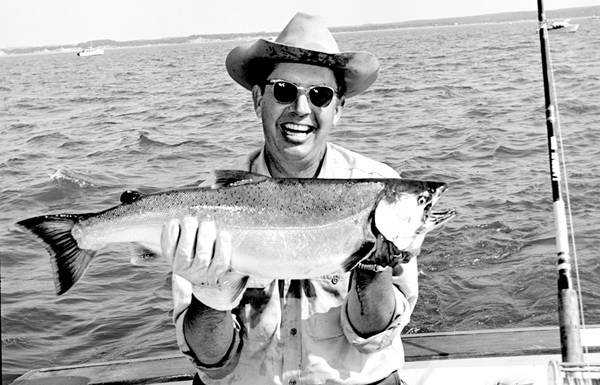
black and white picture of Dr. Howard Tanner, smiling broadly in sunglasses and hat, on a boat holding up a salmon caught on the Great Lakes

Aug. 24, 2026
Contact: DNR-Fisheries@Michigan.gov

The Michigan Department of Natural Resources honors the memory of Dr. Howard A. Tanner, former DNR director and Fisheries Division chief, who passed away Aug. 16 at the age of 102. Dr. Tanner is remembered for his conservation and fisheries management work, which has left an indelible mark on the state and created new fishing opportunities for Michigan anglers.

Dr. Tanner served as the chief of the Fisheries Division of the DNR (then known as the Michigan Department of Conservation) from 1964 to 1966. He was then the director of the Natural Resources program at the Michigan State University College of Agriculture and Natural Resources until his return to the DNR in 1975 as the agency’s director.

Dr. Howard Tanner stocking coho salmon at Platte River State Fish Hatchery in 1966Perhaps best known for his contribution to the recreational Pacific salmon fishery on the Great Lakes, Dr. Tanner, as chief of the Fisheries Division, was charged with addressing the issue of alewife — an invasive species that was washing up on shore in droves, making beaches unusable and throwing Great Lakes ecosystems out of balance. In response, he determined to stock coho salmon and acquired surplus eggs from Oregon. The first of these coho salmon were stocked in the Platte River and its tributaries in 1966, resulting in the start of the “something spectacular” that gives title to Dr. Tanner’s memoir: a Great Lakes recreational salmon fishery that exists to this day.
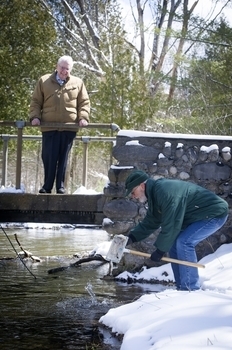
Dr. Howard Tanner watches as coho salmon are stocked in the Platte River.“Dr. Howard Tanner had the vision and courage to imagine a different future for the Great Lakes when few others could,” said Randy Claramunt, DNR Fisheries Division chief. “His decision to introduce Pacific salmon transformed Michigan’s fisheries, created a world-class recreational fishery, and changed the way we think about managing the Great Lakes. “We are the beneficiaries of his bold leadership today, and his legacy will continue to influence fisheries management for generations to come.”
Additionally, Dr. Tanner was instrumental in addressing mercury contamination in Michigan waters and influential in the Milliken administration’s ban on the manufacture and sale of PCBs (polychlorinated biphenyls), toxic industrial chemicals that are harmful to human health, in the state in 1976. Read more

Auto-Ordnance Introduces a Compact Powerhouse: The New 18-Inch Barrel TAO50 Bolt-Action .50 BMG Rifle

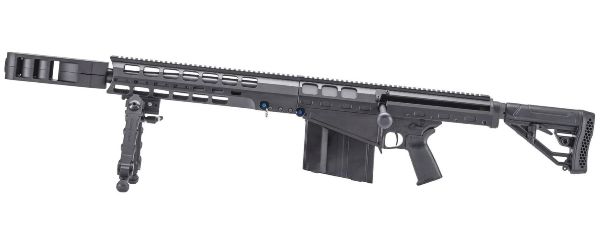
Greeley, PA – Auto-Ordnance is proud to announce the latest expansion to its precision heavy firearms lineup with the introduction of the new 18-inch barrel variant of the TAO50 bolt-action rifle chambered in the devastating .50 BMG caliber. Engineering a compact alternative to standard long-range platforms, this new configuration optimizes maneuverability and operational portability without sacrificing the rugged structural integrity shooters expect from the TAO50 platform.

Built around a massive single-shot bolt-action mechanism machined from high-tensile steel alloys, the platform incorporates a robust, adjustable bipod system and a highly effective proprietary muzzle brake engineered to significantly reduce felt linear recoil. The premium 18-inch barrel features high-grade target rifling to maximize stability for heavy-projectile configurations, matching the exact technical design architecture and receiver specifications of the standard longer-barreled models. Outfitted with an ergonomic pistol grip, a fully adjustable stock assembly for customizable cheek weld and length of pull, and an integrated top Picatinny rail for robust optics mounting, the new 18-inch TAO50 delivers unparalleled anti-materiel precision in a significantly more compact, fast-handling footprint. Each rifle includes a GPS® Tactical Double Rifle Case and one Barrett® M107A1 10-Round Magazine. Read more

Know Your Effective Range


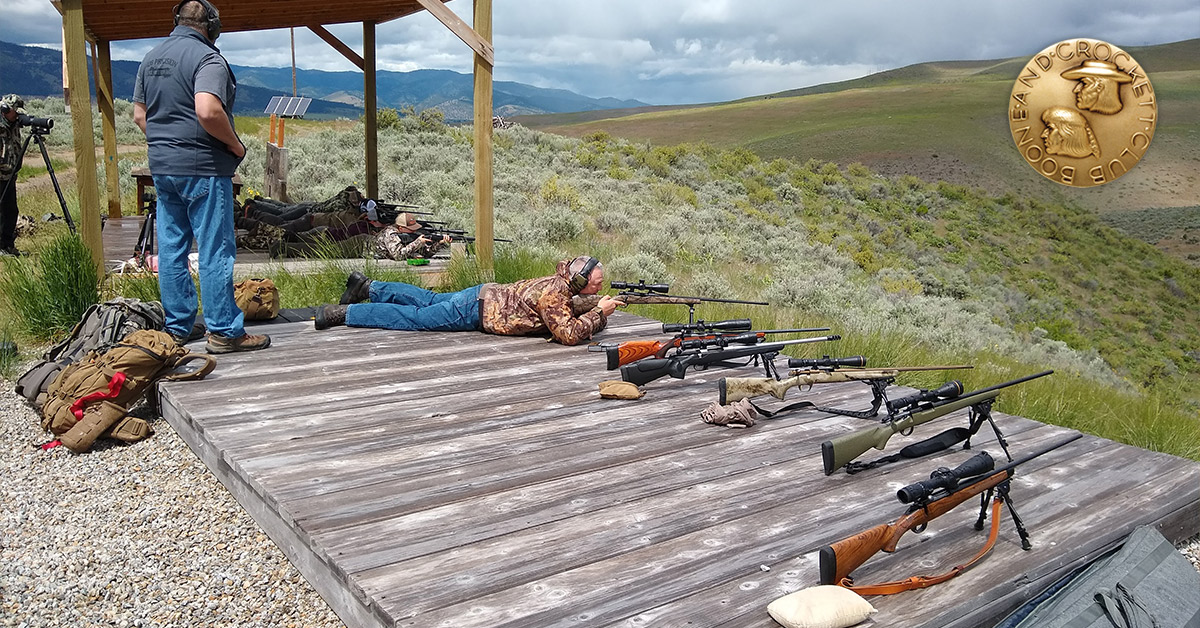
shooting range


By Chad Carman

It’s fun to brag about how far a rifle can shoot. But things get really quiet when someone asks how far we can shoot—and still hit where we aim. They are two different numbers, and the gap between them can be the difference between filling a freezer and wounding an animal.

Rifles have a maximum effective range based on energy, bullet design, and quarry that is easily calculated on any ballistic app. Hunters have an effective range, too. And it’s the only one that matters when an animal is standing broadside and the clock is ticking.

Here’s the catch: effective range isn’t a single number. It’s the product of multiple things working together or against each other: equipment, position, skill, and environment. Change any one of them and the number moves. So the real question is never “How far will this rifle shoot?” It’s “How far will I shoot, with this setup, from this position, in these conditions, today?”

Ground Truth Your Ability

The only honest way to answer how far to effectively hit a target in field conditions is to go find out. To put a number on it, I used a set of Effective Range targets, because they eliminate the need to calculate math at longer distances based on the kill zone of an animal. Set the target at 100 yards, fire five cold rounds from your common hunting position—no bench, no sandbags, no do-overs. Then read the smallest vital ring that holds all five shots. That ring is labeled with a yardage, scaled to the animal’s vital zone, and that yardage is the honest effective accuracy range for that animal, that rifle, that position, at that time. Bigger vitals, like an elk’s, forgive a group that a mule deer won’t. Whatever the rifle used, the point is the same: measure it, don’t guess it.

To break it down, I decided to humble myself on purpose, with two setups from opposite ends of the shooting spectrum.

First, I shot my Browning X-Bolt 2 Speed SPR in 6.8 Western in a prone position. The setup was about as good as it gets. I had an accurate rifle, a high ballistic coefficient (BC), flat-shooting round, and the steadiest field position most of us will ever use.

Then I picked up my 1951 Winchester Model 94 in .30-30 and shot it standing, offhand. It’s an old lever gun with a rainbow of a trajectory. And I shot it using the shakiest position there is. Same shooter, same trigger finger, same afternoon. Five cold rounds each.

shooting target

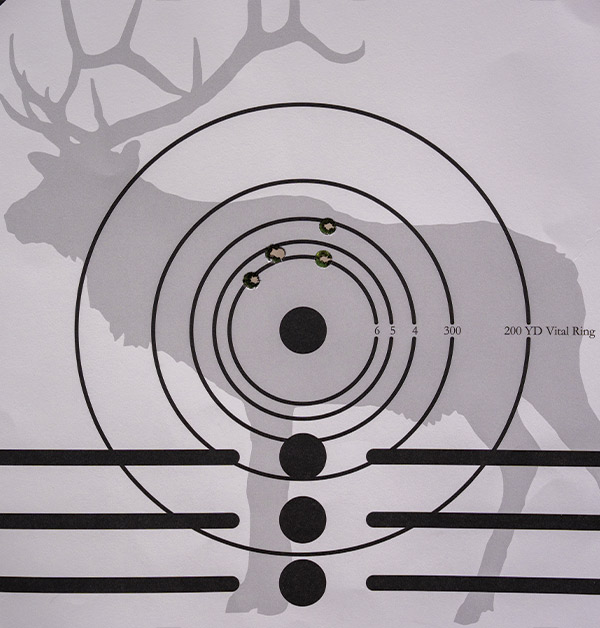
6.8 Western, prone — five-shot group

shooting target
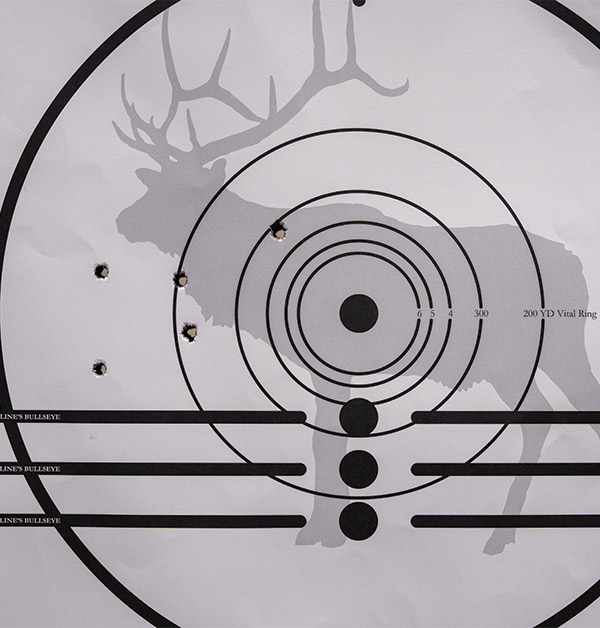
1951 Model 94, standing — five-shot group

The X-Bolt printed a solid group well within the 600-yard accuracy range of the target. You’ll notice I’m zeroed high at 100 yards for this particular rifle, but you get the point. The Model 94 came in consistently left, but I’ll blame that on my lack of experience with iron sights and unwillingness to play with my rear dovetail on a 1951 rifle, printing a respectable 100-yard vital grouping that could potentially be shifted over to a 200-yard ring if I wanted to adjust my rear sight. Same guy. Wildly different numbers. Read more

New Custom & Collectable Firearms Release: Kimber 2K11 Rogue 9mm Series with Trijicon RMR Red Dot

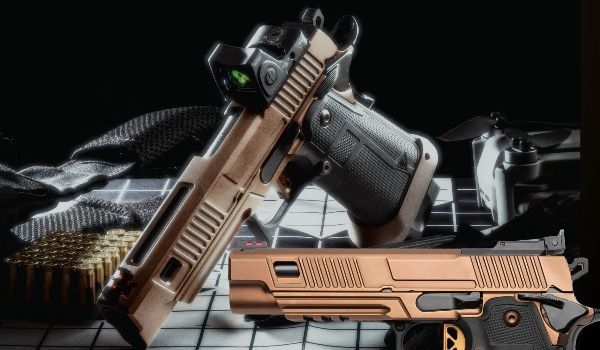
Custom & Collectable Firearms proudly introduces the Kimber 2K11 Rogue 9mm Series, a CNC Firearms Exclusive Limited Edition available in two configurations: a standard model and an optic-equipped model featuring a Trijicon RMR 3.25 MOA Red Dot.

Built on the Kimber 2K11 platform, the Rogue pairs premium components with distinctive custom detailing. A striking Custom Copper PVD finish is contrasted by black controls and a black DLC-coated barrel, while precision slide cuts and serrations give the pistol a sharp, performance-driven profile.

Completing the custom design are MJD Design grips and a Copper Skeletonized GT Trigger, carrying the copper-and-black aesthetic throughout the pistol. The result is a cohesive, unmistakable presentation created exclusively for CNC Firearms.

With limited availability and the choice of standard or optic-equipped configurations, the Kimber 2K11 Rogue Series delivers a unique combination of custom styling, premium components, and the performance-focused design of the 2K11 platform.

To learn more about the Kimber 2K11 Rogue, visit www.cncfirearms.com. Follow Custom & Collectable Firearms on Instagram or join the company’s email community to be among the first to learn about upcoming releases and limited-edition offerings.

Winchester’s Super Match Line of Premium Competition Ammunition

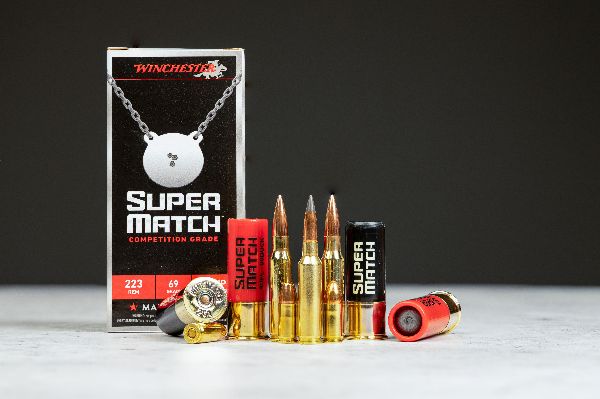
CLAYTON, MO — Super Match™, an all-new line of competition ready ammunition from Winchester is now available. The Super Match line includes match grade centerfire pistol, rifle, and shotshell ammunition that sets the standard for competitive performance.

This extensive line of ammunition is precision-engineered for serious competitors that demand absolute consistency, reliability, and results. From dynamic action shooting to long-range precision, Winchester Super Match™ delivers.

“Super Match is the answer for the competitive shooter,” said Kyle Masinelli, Vice President of Manufacturing at Winchester Ammunition. “The extensive line covers needs for all categories of dynamic action shooting competition, and delivers exceptional accuracy, reliability, and consistency. Our product engineers collaborated with some of the best competition shooters in the world to develop this ammunition and deliver the best possible product for competitive and recreational shooters.”

Centerfire pistol

Brand Symbol Caliber Weight Bullet Type Power Factor Box size
Super Match™ SM9RN115 9mm 115 GR Round Nose Minor 50
Super Match™ SM9RN124 9mm 124 GR Round Nose Minor 50
Super Match™ SM9FN115 9mm 115 GR Flat Nose Minor 50
Super Match™ SM9FN147 9mm 147 GR Flat Nose Minor 50
Super Match™ SM40FN180 40 S&W 180 GR Flat Nose Major 50
Super Match™ SM38SFN130 38 Super Auto +P 130 GR Flat Nose Major 50
Super Match™ SM45RN230 45 Auto 230 GR Round Nose Major 50
  • Centerfire pistol offerings include flat nose projectiles for ultimate accuracy or round nose projectiles for optimal cycling. The 9mm offerings have both flat nose and round nose projectile options along with multiple grain weights.
  • All offerings are primed with high-sensitivity primers to reliably ignite in tuned competition guns.
  • All centerfire pistol offerings are optimized for minor or major power factors.
  • Engineered with premium, match grade components.

Centerfire Rifle Read more

CZ Honors a Defining Chapter in the Legacy of the CZ 75

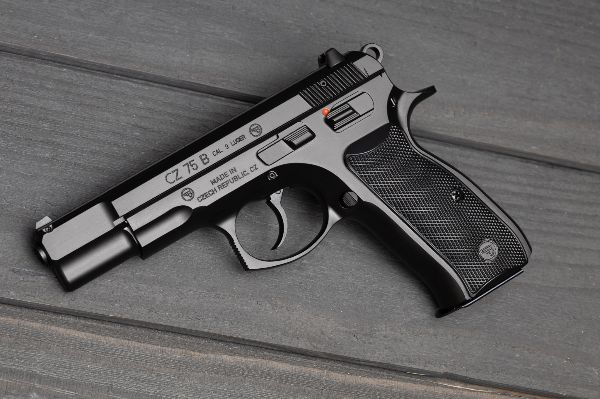
CZ is honoring a defining chapter in the legacy of the CZ 75. For more than five decades, the CZ 75 has stood at the center of the CZ story. Its distinctive design, innovation, and shooting characteristics helped establish CZ’s reputation with generations of shooters around the world and created a handgun legacy that continues to resonate across the firearms industry.

As CZ honors that legacy in 2026, the company will also conclude production of three longstanding members of the CZ 75 family: the CZ 75 B, CZ 75 BD, and CZ 75 Compact.

“Few firearms are as closely connected to the identity of CZ as the CZ 75,” said Chris Sprangers, Director of Marketing for CZ-USA. “For generations, this platform has introduced shooters around the world to what CZ stands for: innovation, thoughtful engineering, and exceptional shooting characteristics. The CZ 75 B, CZ 75 BD and CZ 75 Compact have each carried that legacy forward, and as their production comes to a close, we are proud to honor the role they have played in both our history and the experiences of CZ owners around the world.”

The CZ 75 B, CZ 75 BD and CZ 75 Compact have each played an important role in carrying the CZ 75 design forward. For decades, these pistols have been valued by shooters for their balance, craftsmanship and proven design, becoming lasting parts of the CZ lineup and of the shooting experiences of generations of customers. Read more

What the Big Grass and Tartar Fires Mean for Hunting in Southwest Idaho

Photo courtesy Idaho Fish and Game

Two large wildfires have burned through some of Southwest Idaho’s most popular hunting units this summer, and with some early seasons opening Saturday, Aug. 15, hunters have questions. Here’s what the Big Grass and Tartar fires currently mean for hunting seasons, access, and wildlife in the region, how Idaho Fish and Game is responding, and how you can help.

If you’re a hunter simply looking for the Cliff’s Notes, here they are: No hunting seasons have changed to date. Fires rarely close entire hunting units, and fire restrictions rarely last through a whole season. But access closures are in effect for both the Big Grass Fire and Tartar Fire as of Aug. 14, conditions on the ground are rough, and the situation is still fluid. If there’s one tip we can provide before seasons kick off, it’s that hunters should check official sources for access closures and current fire information before every trip, especially in early-season hunts.

Big Grass Fire (Owyhee County)

The Big Grass Fire has burned more than a half-million acres in Owyhee County and eastern Oregon. The fire remains active.

Closure status: Read more

1 … 22 23 24 25 26 … 2,101