Steiner Launches the MPS-C—A Lighter, More Compact Enclosed Emitter Red Dot
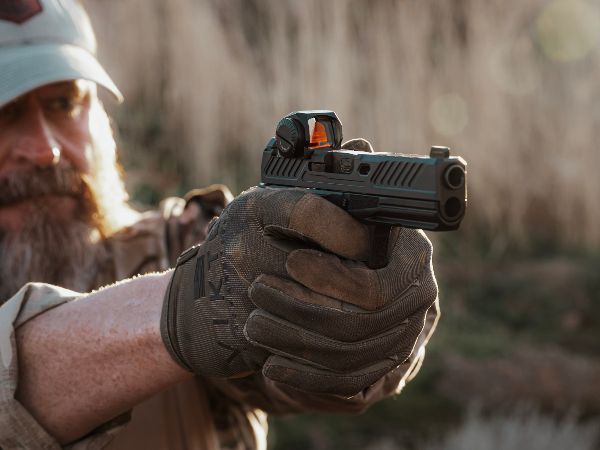
Greeley, CO – Steiner Optics, the leader in high-performance sighting systems for military, law enforcement, and armed professionals, expands its pistol optics lineup with the Steiner MPS-C. Designed for today’s concealed carry users and compact-frame pistols, the MPS-C delivers the same battle-proven pedigree as the original MPS—now in a more compact RMSc footprint optimized for everyday defense.
Purpose-engineered for the demanding environments faced by law enforcement officers and protection-minded citizens alike, the MPS-C retains the same trusted internal architecture of the original optic. A fully sealed, enclosed emitter protects the optic from debris, moisture, and environmental contamination while the hard-anodized Class III aluminum housing with reinforced sidewalls provides exceptional impact resistance. At just 1.13 ounces, the MPS-C adds minimal weight to a carry pistol while maintaining Steiner’s uncompromising durability standards.
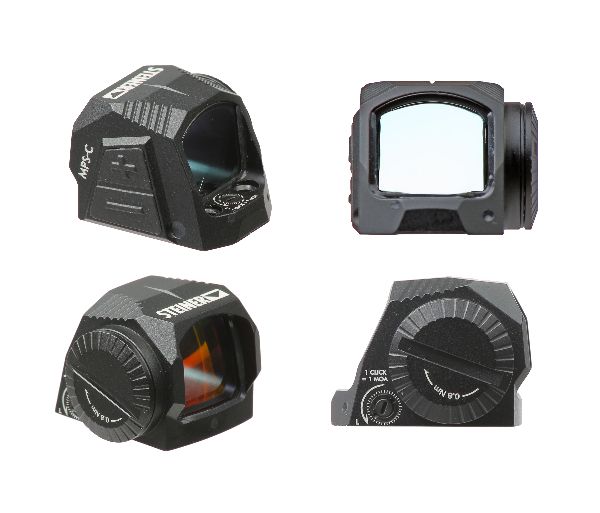
Despite its compact size—measuring just 1.46 x 1.27 x 1.08 inches—the MPS-C gives a clear, distortion-free sight picture through a protected, recessed window shielded by a thick metal shroud. The optic features a true 1x magnification and a crisp 1.6 MOA red dot, enabling fast, both-eyes-open target acquisition for close-range defensive engagements and high-stress scenarios.
User-adjustable brightness includes 12 illumination levels, with 10 visible settings for day and low-light use and two night-vision compatible modes, ensuring adaptability across lighting conditions. Powered by a CR1632 battery, the MPS-C offers an impressive 46,125 hours of continuous runtime on the lowest setting, 13,000 hours at medium brightness, and is supported by an integrated motion-sensing “shake-awake” feature and user selectable 13-hour auto off that conserves power without sacrificing readiness.
The Steiner MPS-C joins the company’s growing lineup of premium pistol optics, giving concealed carry users access to proven durability, enclosed-emitter reliability, and compact concealment performance—without compromise.
Steiner MPS-C Specifications Read more


 Ever wondered where hatchery fish go when they retire? They could be in a body of water near you! Approximately 3,050 adult trout, retired broodstock from Michigan’s state fish hatcheries, were recently stocked by the Michigan Department of Natural Resources. These fish were stocked in the Huron River (Proud Lake Recreation Area, Oakland County) and Spring Mill Pond (Island Lake Recreation Area, Livingston County) in southeast Michigan.