GW: I know this ammo is expensive, but so is any other TSS ammo. The family business has folks that answer their phone, too. Had concerns about damaging the bore on my old fixed choke .410 and they said go ahead and shoot it. Incredible patterns at 40 yards. Took a good gobbler with the ammo last season. Wouldn’t bother experimenting with anything else!
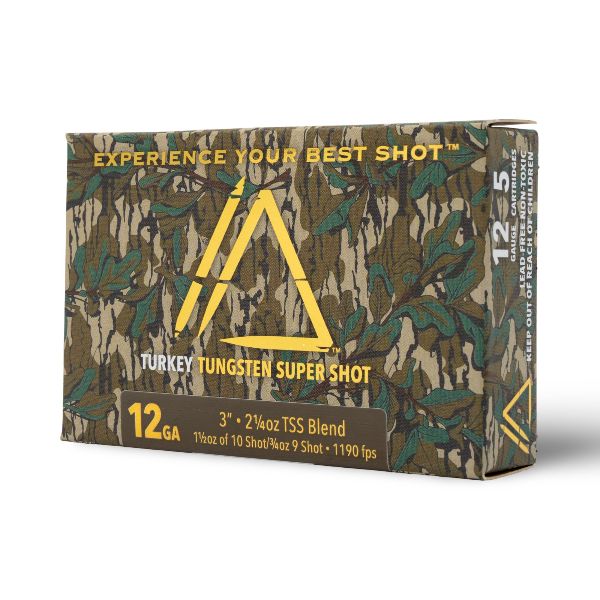
Columbus, Miss. – APEX Ammunition’s 12-gauge Mossy Oak Greenleaf Turkey TSS, featuring a combination of #9 and #10 pellets, has won Outdoor Life’s Editor’s Choice award for best TSS load. After running numerous loads from various manufacturers through two shotguns during their 2026 turkey ammunition test, the APEX Greenleaf was the hands-down best at 60 yards due to “surprisingly good penetration” and “insane pattern density”.
Alex Robinson, Editor-in-Chief of Outdoor Life, had this to say in their patterning and penetration video:
“The real standout here was the APEX Greenleaf load which had a bunch of those little #10 pellets stacked alongside the #9 TSS. Those things shot incredible patterns. They penetrated enough at 60 and….for all-around turkey hunting with a 12 gauge, it’s kind of impossible to beat. That’s the best load that I’ve ever tested.”
The high pellet count of the 12-gauge APEX Greenleaf load (1,096) delivers extreme pattern density for better shot coverage with the smaller #10 shot filling the gaps, especially at longer ranges, for increased lethality.
“The massive payloads of our Greenleaf shotshells deliver exceptional retained energy and the blend of #9 and #10 pellets creates an ultra-consistent, hard-hitting spread when it matters most,” said Jason Lonsberry, President and CEO, APEX Ammunition. “We always appreciate the time and effort the Outdoor Life team puts into their annual turkey ammo test and are honored to be recognized once again for our efforts to deliver top-level performance to our customers.”
All APEX shotshells are loaded under heightened quality control measures designed to ensure the most consistent performance possible from shot to shot. Clean burning powder and APEX’s Tungsten Propulsion Wad System are used in all APEX TSS loads to deliver the tightest patterns possible and maximum barrel protection.
For more information on the Greenleaf line, see: APEX Ammunition.
About APEX Ammunition: What started in 2017 with a few handmade shells for a hunting trip with friends has become an obsession to provide wingshooters with the absolute best performing ammunition possible. Founded by U.S. Veterans and hunting enthusiasts in the great state of Mississippi, APEX Ammunition pioneered the commercial application of ultra-high-density Tungsten Super Shot to create the hardest hitting, most accurate shot loads in the business. The driving principle behind the company’s continued quest for innovation and better performance is its commitment to delivering a hunting experience like no other. For more information, visit ApexAmmunition.com.