Fledging Time
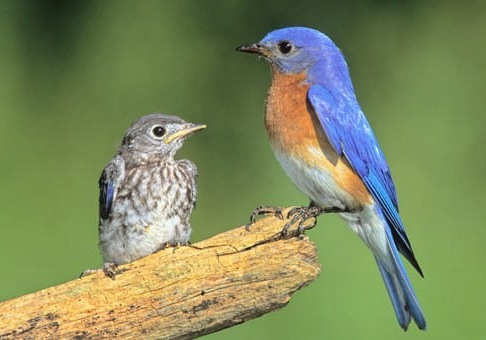
It’s an exciting time as the nesting season becomes more obvious with each passing day, and you may already be seeing some new fledglings that are leaving their nests. As fledglings appear, witnessing the successes of the nesting season is a wonderful experience and a fulfilling part of of providing nesting habitat in our yard, along with foods and fresh water for adults and fledglings. It’s a time we can all learn more about the behavior of birds when they venture beyond their nest, which is a time that’s not often described.
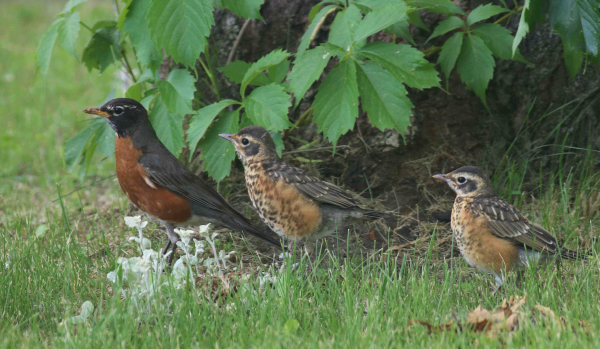
This week we’ve been watching the progress of a particular fledgling American Robin, that on first encounter looked like it was so young that it had fallen out of the nest. But it could fly short spurts to collect food from an attending adult. By the next day, it left its ground-based hangouts for low branches in nearby trees – obviously moving around and flying better. By day 3, it was beginning to stand in a more upright posture, which made it look larger and more adult-like in stature; and by day 4 the fledgling was flying especially strong and reacting immediately to human movements in the area.
And that’s what’s really fun about this time of the year: Everyone enjoys seeing new fledglings such as bluebirds, robins, cardinals, chickadees, screech owls, and others. Part of the learning process for birders is that by observing young birds when they leave the nest, we find out that fledglings are not on their own. The next step is really just a continuation of birds’ development known as the “post-fledging period,” which takes place after new fledglings leave the nest and continue to be protected and fed by adults.
The Post-fledging Period
During this interesting period, Read more